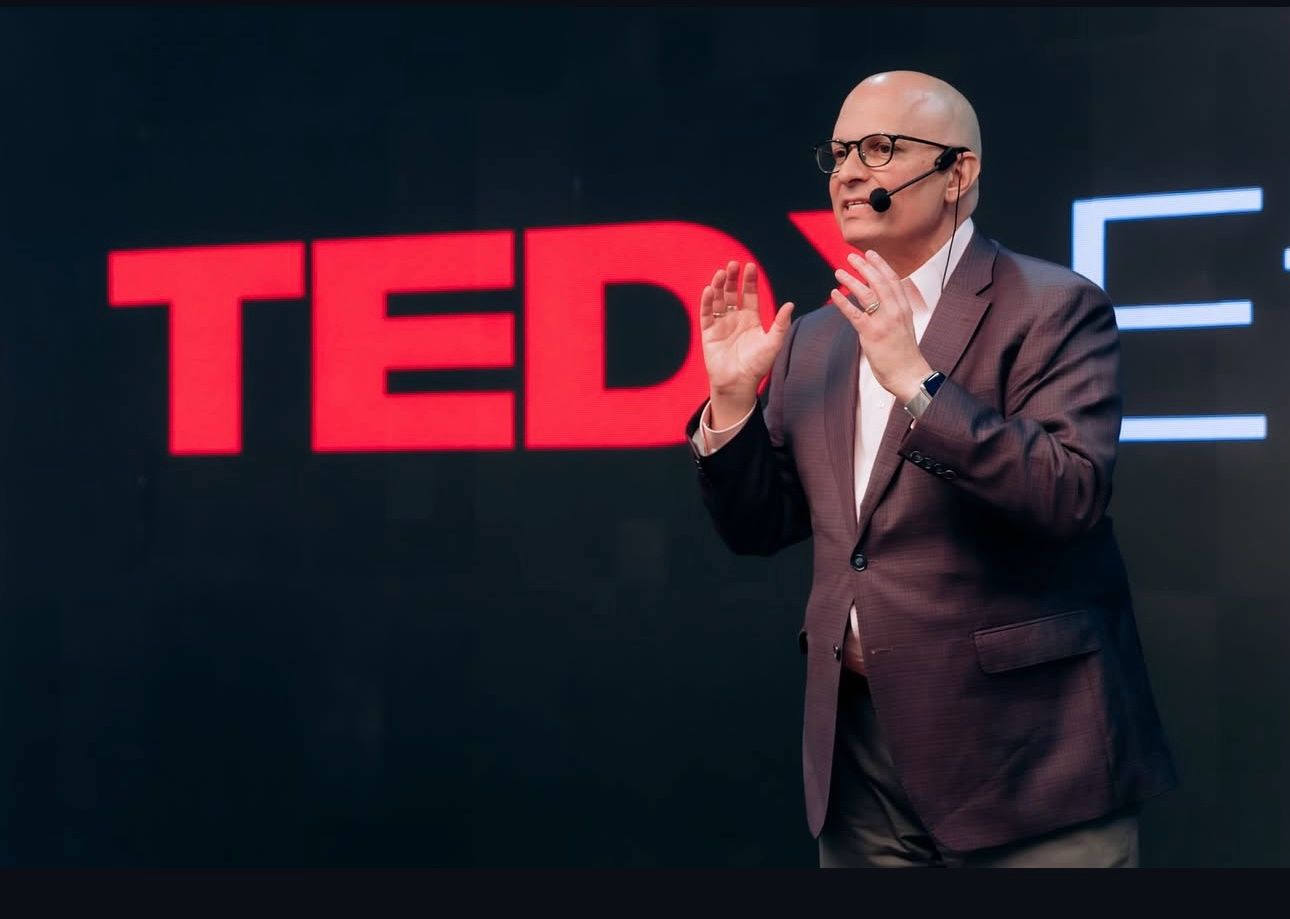
Who is John Taylor McEntire?
John Taylor McEntire is an executive transition advisor and creator of the SYNC Method™ a leadership framework designed for newly promoted SVPs, EVPs, and CXOs navigating the critical first 6–18 months of their role.
With more than 30 years of experience across the United States, Japan, Singapore, China, and the Middle East, John has worked inside multicultural environments where alignment, clarity, and cultural intelligence determine success. His global background spans innovation ecosystems, strategic collaboration, and organizational development, giving him a rare ability to read systems and relationships with precision.
Today, John helps senior leaders quickly synchronize identity, team dynamics, and organizational expectations so they can lead with confidence and sustained impact. Known for his empathetic and strategic advisory style, he guides executives through transition with clarity, presence, and grounded leadership.
Helping newly promoted executives lead with clarity, rhythm, and strategic alignment.
Global Roots, Executive Relevance
John’s understanding of leadership was shaped long before he worked with senior executives. Growing up at a dinner table that routinely welcomed exchange students, foster siblings, refugees, and neighbors, he learned early that harmony is created through genuine understanding, not force. Years later, when he found himself in a Tokyo boardroom watching decisions unfold through silence and nuance, he recognized that every environment has its own rhythm, and leaders thrive when they can read it.
That insight carried him through more than three decades working across the United States, Japan, Singapore, China, and the Middle East. Throughout his global career, he often operated in environments containing more than sixty nationalities, where cultural intelligence and relational clarity were not optional, but essential.
From Innovation Ecosystems to Executive Alignment
Between 1989 and 2022, John worked inside multiple innovation and research ecosystems across the United States, Japan, Singapore, China, and Qatar. These roles required him to interpret complex systems, bridge diverse perspectives, and help organizations harmonize competing priorities. Colleagues came to rely on his dual ability to understand the architecture of systems and the people operating within them; a combination that now defines his executive advisory work.
But the turning point in his leadership philosophy came when he stepped into his own senior role and realized a truth familiar to many executives: what once made him successful would not sustain him at the top. The habits that helped him perform earlier in his career no longer worked in environments defined by ambiguity, culture, and inherited dynamics. The recalibration that followed became the foundation for the SYNC Method™.
Introducing the SYNC Method™
SYNC—Synchronize Yourself Naturally within Your Community™ is designed specifically for leaders entering new senior roles. Its premise is simple: leadership begins with alignment, not acceleration.
Executives inherit existing rhythms, decision flows, and cultural patterns. SYNC helps them interpret these dynamics before making changes. Built around four integrated pillars: Synchronize, Personalize (Yourself), Naturalize, and Communitize. The framework equips leaders to build trust, establish clarity, and create forward momentum in their first months on the job.
The Leader Behind the Framework
Today, executives describe John as someone who listens deeply, sees clearly, and brings steadiness to uncertain environments. His global background and human-centered approach allow him to guide leaders through transition with grounded presence and strategic clarity.
As John often tells his clients:
“You were not hired to blend in. You were hired to sync what matters.”
Editorial Note
John Taylor McEntire’s journey reflects a lifetime spent listening to the rhythms that shape leadership. Through the SYNC Method™, he offers executives more than a framework — he provides a way to enter new roles with presence, awareness, and alignment. His work reminds us that leadership is not about accelerating first, but understanding the environment you inherit. For leaders stepping into higher responsibility, his approach offers clarity, steadiness, and a path toward lasting impact.