

Diane Bosilevac | Education Systems Leader | CEO, Global Alliance for the Education of Nations | Architect of Global Learning, Equity & Language Access
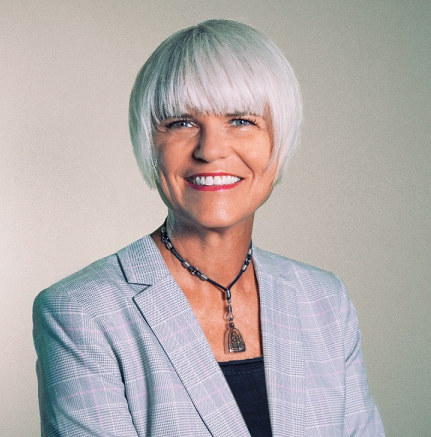
Diane Bosilevac is an education systems leader and global learning strategist with more than 20 years of experience across K–12 education, higher education, nonprofit leadership, and international collaboration. She serves as CEO and President of the Global Alliance for the Education of Nations (GAEN) and holds a leadership role in a large public school district, advancing world language education, equity, and global competency. Holding a Ph.D. in Education with a specialization in policy, leadership, and management, she is known for designing equity-centered education systems and is open to advisory and consulting engagements focused on research, strategy, and systems-level problem-solving.
At the center of Dr. Diane Bosilevac’s work is a conviction that education is not a collection of isolated programs, but a living system that determines who has access, whose knowledge is valued, and how societies prepare for an interconnected future. Over more than two decades across K–12 education, higher education, nonprofit leadership, and international initiatives, she has approached education as infrastructure. Something intentionally designed, continuously maintained, and morally accountable to the communities it serves.
Her career has been defined by a single throughline: expanding opportunity by building systems that recognize language, culture, and identity as assets rather than obstacles. Whether coordinating world language programs in a major public school district, advising institutions on equity-centered reform, or leading international partnerships, Bosilevac’s leadership reflects a disciplined belief that sustainable change requires structure, alignment, and trust.
Foundation: Curiosity, Language, and the Architecture of Learning
Bosilevac’s journey began with curiosity. Raised in the United States in a family that valued education, service, and global awareness, she was drawn early to questions about how people learn and why access to opportunity varies so dramatically. Exposure to multiple languages and cultures sparked an enduring interest in international education and cross-cultural understanding, while her academic pursuits in French, theatre, film, and later education policy deepened her awareness of how systems shape individual trajectories.
She would later articulate this belief clearly:
“Educational opportunities are a human right and a shared responsibility.”
That principle became both a personal compass and a professional framework. Early roles as a language educator and instructor across secondary and postsecondary settings reinforced a lesson that would guide her leadership philosophy. Change begins with listening. Students, teachers, and communities respond not to mandates, but to environments where they feel seen, respected, and supported.
Her academic path culminated in a Ph.D. in Education with a specialization in policy, leadership, and management, equipping her with the analytical tools to pair moral clarity with systems thinking. Rather than viewing education through a narrow instructional lens, she began examining how curriculum, policy, professional development, and global engagement intersect to either reinforce inequity or dismantle it.
Building Systems Within and Beyond Schools
Bosilevac’s ascent into leadership roles reflected both her credibility as an educator and her capacity to design programs that endure. In district leadership positions, She became known for cocreating cohesive world language curricula with educators, aligning instruction with assessment, and building professional learning communities that elevated teacher practice while maintaining high expectations for student outcomes.
Her work in public education extended beyond classrooms. She co-created and led diversity, equity, acceptance, and respect initiatives that addressed school climate, staff development, and inclusive hiring practices. These efforts were not symbolic. They were operational, data-informed, and deeply relational, designed to embed inclusion into the daily functioning of institutions rather than treating it as an add-on.
Colleagues consistently describe her leadership as both disciplined and humane. One senior education leader noted that Bosilevac “inspires trust, confidence, and enthusiasm” while guiding teams through complex challenges. Another described her as someone who “creates an inclusive, welcoming, and innovative space” and fiercely supports educators while connecting schools to broader community and university partnerships. These endorsements reflect a leader who understands that infrastructure is built not only through policy, but through people.
This philosophy reached a broader stage with her founding of the Global Alliance for the Education of Nations, where she serves as CEO and president. GAEN was established to promote intercultural understanding through pedagogy and policy that value all identities as sources of knowledge. Under her leadership, the organization has supported NGOs, governments, and school systems in addressing educational challenges through research, international collaboration, and educator support.
One defining initiative, the Kansas–Senegal Program, combined teacher fellowships with equity-focused professional learning to foster cross-cultural understanding and reduce polarization at both local and global levels. The program exemplified Bosilevac’s belief that language education is not merely academic, but diplomatic. While emphasizing that education is never neutral in its impact, she has said,
“Language opens doors not only to academic success, but to empathy, collaboration, and shared problem-solving,”
Education as Global Infrastructure
Today, Bosilevac’s influence spans continents and sectors. In her concurrent leadership within Kansas City Public Schools, she oversees world language programs that emphasize authentic communication, cultural competency, and student voice. Her work supports educators in creating learning environments where students negotiate meaning, practice real-world language use, and connect classroom learning to global contexts.
Her broader impact lies in her ability to translate vision into structure. Through international summits, advisory engagements, and research-driven initiatives, she helps institutions align mission, data, and practice. She is particularly sought after for systems-level problem-solving related to equity, language access, global learning, and organizational strategy. In these roles, she challenges leaders to think beyond short-term interventions and instead invest in frameworks that adapt over time.
Bosilevac’s leadership philosophy is grounded in transparency, collaboration, and durability. She believes innovation flourishes when teams are trusted and diverse perspectives are genuinely integrated into decision-making processes. As she often reminds colleagues,
“Sustainable change requires aligning vision, data, people, and purpose.”
This insistence on alignment has allowed her work to outlast individual roles and initiatives, embedding progress into institutional DNA.
Vision for the Future: Designing What Comes Next
As she looks ahead, Bosilevac remains focused on advisory and consulting engagements that operate at the intersection of research, policy, and practice. She is particularly interested in helping education systems navigate complexity with clarity, ensuring that global learning, language access, and equity are treated as foundational components of educational infrastructure rather than peripheral concerns.
Her advice to emerging leaders reflects both realism and optimism. Stay anchored in values while remaining flexible. Build relationships before they are needed. Understand that leadership is less about authority and more about responsibility. Above all, remember that the most impactful leaders are those who design systems that allow others to thrive.
In an era marked by polarization and rapid change, Diane Bosilevac offers a model of leadership rooted in discipline, empathy, and global perspective. By treating education as infrastructure, she continues to build systems that expand opportunity across cultures, languages, and generations.
Editorial Note
Dr. Diane Bosilevac’s work reminds us that education shapes not only individual futures, but the civic and global systems we inherit. Her career challenges leaders to move beyond programs and toward purpose-built structures that honor dignity, access, and shared responsibility.