The hospital lights are a specific kind of cold. They hum with a clinical indifference that ignores the frantic pace of the world outside. A few weeks ago, Serena Fordham lay under those lights, her body in a state of total revolt. The chronic pain from a 2023 injury had finally breached the walls of her endurance. Shaking, feverish, and unable to sit upright, she watched the digital machinery of her life grind to a sudden, forced halt. It is a moment of profound tension that every high-achiever fears: the day the engine finally seizes.
For most, this would be a point of surrender. For the stranger looking in, it might seem like the end of the road for a high-profile CEO. But for Fordham, this was not a derailment. It was a data point. It was the physical manifestation of the very problem she has spent the last decade trying to solve for women across the globe. We have built a corporate world that views human capacity as an infinite resource, yet we are surprised when the well runs dry.
Success, as Fordham has learned through scans, surgeries, and mobility setbacks, should not be something you have to recover from. This realization is the heartbeat of ProspHER. It is why she is currently scaling a digital upskilling platform designed to catch the women that the current system is designed to drop. In the regulated world of financial and professional services, the “leaky pipeline” is often discussed in hushed tones behind closed boardroom doors. Fordham is shouting about it from the rooftops of Norfolk.
The Systemic Glitch
The corporate arc of many women follows a predictable, painful pattern. It starts with a rise, hits a plateau of “life demands,” and ends with a quiet exit. Fordham’s own catalyst arrived in 2013 in the form of a redundancy notice delivered during her maternity leave. It was a cold introduction to a universal truth: talent is often secondary to convenience in the eyes of a rigid system.
When the system failed her, she didn’t just look for a new job. She began building a new system. Launched in 2015, ProspHER began as an idea to support business founders, but it quickly evolved into something much larger. It became a community ecosystem for the ambitious woman who is tired of choosing between her health, her family, and her career.
The tension in Fordham’s story is the tension of the modern workforce. We are currently seeing 200 beta users and a 700-person waitlist for a platform that treats professional development as a holistic endeavor. Why? Because generic L&D platforms are failing. They offer skills without context. They provide “how-to” videos for software but offer nothing for the woman navigating a mid-level leadership crisis while managing a chronic illness or a household.
Fordham’s expertise as a Chartered Manager and Fellow of the CMI allows her to speak the language of the enterprise, but her lived experience allows her to speak the language of the human. She knows that for a company with over 250 employees, losing a female leader isn’t just a DEI statistic. It is a massive loss of institutional knowledge and a hit to the bottom line. Gender equity isn’t just good ethics. It is, quite simply, good business.
The Power of the Pause
There is a radical honesty in the way Fordham communicates. She does not hide behind the polished veneer of “hustle culture.” Instead, she reposts stories of activists in Washington D.C. and highlights the statistical improbability of black female founders in AI. She understands that her platform is not just about training; it is about belonging.
This philosophy culminated in the “ProspHER Fest & Rest,” a concept she calls a “Restival.” It is a deliberate middle finger to the idea that growth requires burnout. In the Norfolk countryside, she brings women together to talk about business strategy and mindset, but she also mandates stillness.
“Founders don’t burn out from hard work,” she notes, echoing a sentiment that resonates through her network. They burn out from carrying weight that was never theirs to carry. Fordham has stopped carrying the weight of trying to appear “perfectly able” in a world that fears disability. She has integrated her struggle into her leadership.
When her surgery was cancelled or when mobility setbacks occurred, she didn’t go quiet. She shared the low. In doing so, she gave her community permission to do the same. This vulnerability is not a weakness; it is the ultimate differentiator in a world of AI-generated corporate personas. It is why three major corporate contracts are currently in the pipeline. Companies are beginning to realize that the leaders of the future are not those who never fall, but those who build the infrastructure to get back up.
The Fordham Playbook: 5 Lessons
1. Equity by Design: Build systems that assume life will happen. Stop creating career paths that only work if a person stays at 100% capacity for forty years without interruption.
2. The 3 to 5 Line Rule: Clarity beats volume every time. In communications and in life, if you cannot make your point or your impact felt quickly, you are losing your audience’s most precious resource: their time.
3. Rest as a Metric: Measure your success by your ability to pause. If your business or career requires you to be in a constant state of recovery, your model is fundamentally broken and unsustainable.
4. Data-Led Upskilling: Move beyond generic training modules. True progression for women in regulated sectors requires specific, measurable outcomes in confidence and capability that are backed by hard data.
5. Source over Channel: Trust your foundation, not just the next deal. People and opportunities are channels for growth, but your internal resilience and purpose are the only reliable sources of long-term stability.
Shifting the Power Structure
As Fordham looks toward 2030, her target is clear: 1 million women. This is not just a vanity number. It is a calculated mission to reach a tipping point where female-led innovation is the norm rather than the exception. With a £500k SEIS/EIS round in motion, she is moving from the community phase into the scale phase.
She is no longer just a mentor or a strategist. She is an architect of opportunity. Her work as a delegate to the United Nations Commission on the Status of Women (#csw68) shows that her vision is no longer local. She is looking at how global power structures can be dismantled and rebuilt to be more inclusive.
The beauty of Fordham’s approach is that it is not anti-ambition. It is pro-sustainability. She is teaching women to lead with power and purpose, but also with an acute awareness of their own limits. She is proving that you can be a CEO, a mother, a patient, and a visionary all at once, provided you have the right ecosystem supporting you.
She is building ProspHER for the woman she was in 2013, alone and redundant. She is building it for the woman she was a few weeks ago, lying in a hospital bed. And she is building it for the stranger reading this today who feels like they are one “busy” day away from a total collapse.
The goal is not to shine brighter by burning out. It is to build a life where you can shine steadily, backed by a community that refuses to let you be overlooked.
Growth should be a journey toward wholeness, not a race toward depletion.
Editorial Note
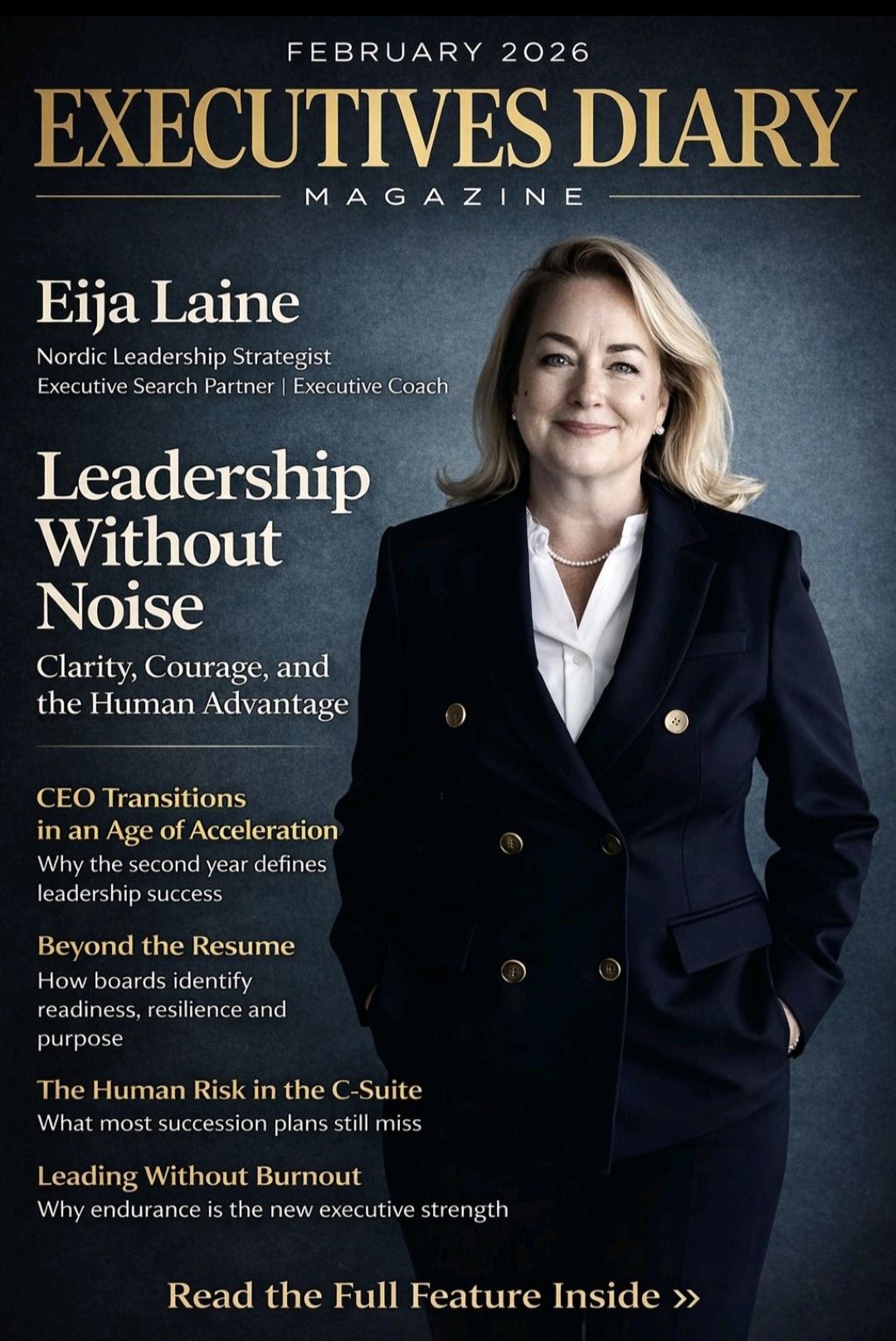
This biography was crafted for Executives Diary Magazine using direct interviews, professional history, and leadership insights from Serena Fordham. Our mission is to document the lives of leaders who are not just building businesses, but reshaping the social and corporate fabric of their industries. Serena’s work with ProspHER represents a pivotal shift in how the UK financial sector approaches female retention and leadership development.