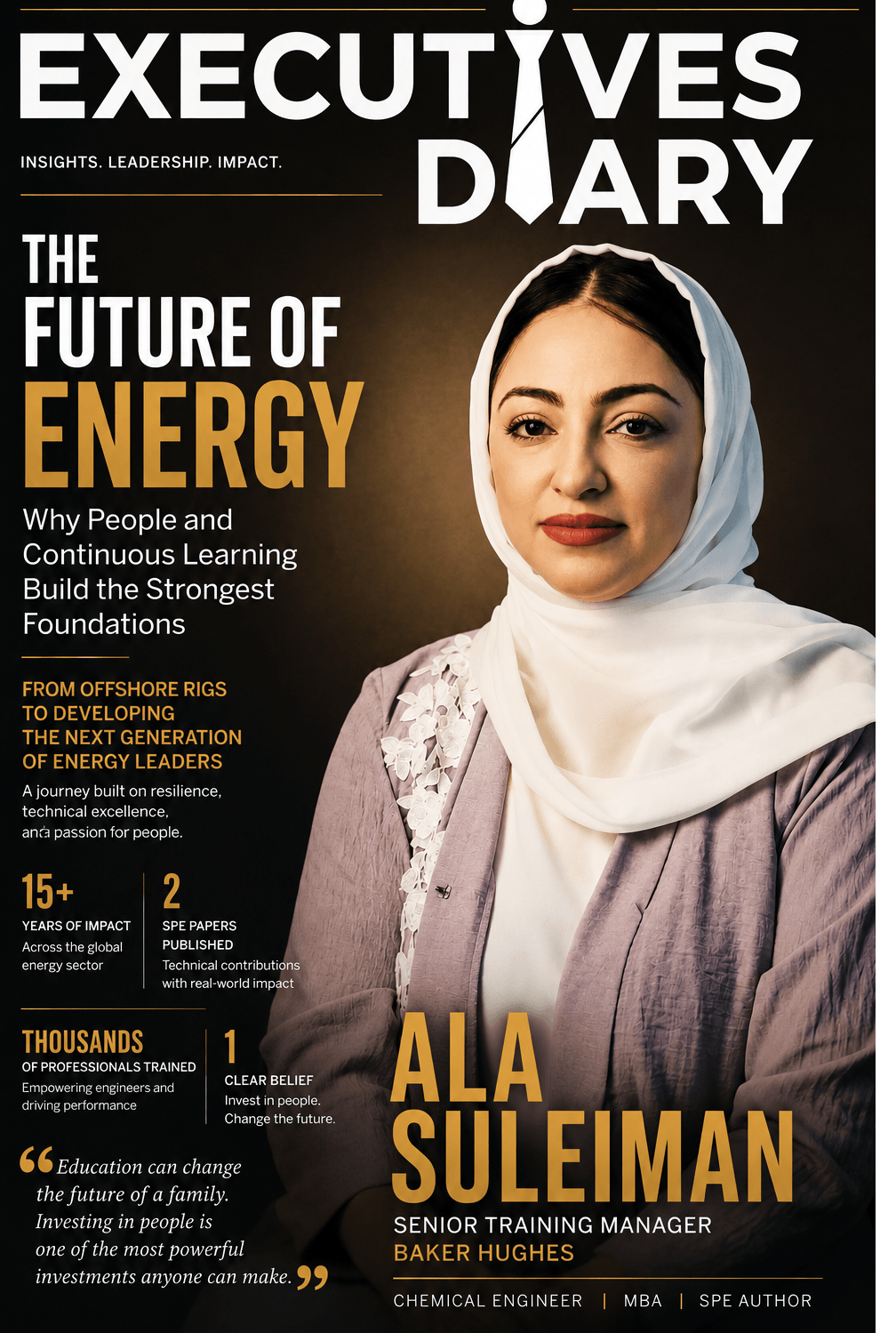
Ala Suleiman on the Future of Energy: Why People and Continuous Learning Build the Strongest Foundations
From Offshore Rigs to Developing the Next Generation of Energy Leaders | Senior Training Manager | Chemical Engineer | MBA | SPE AuthorThe Investment Every Energy Company Is Undervaluing
The energy sector is pouring billions into artificial intelligence, automation platforms, and digital systems that promise to reduce human error and accelerate output. The technology is impressive, the potential is real, and most companies are missing the critical factor that determines whether any of it actually works.
Ala Suleiman has spent fifteen years watching this unfold from positions where the stakes are measured in millions of dollars per decision. She has supervised cementing operations on offshore and onshore rigs, managed accounts worth enormous sums, and led teams through crises that tested every system. Her conclusion is not popular in boardrooms chasing automation metrics, but it is backed by results that are difficult to argue with.
The strongest foundations in energy are not built from algorithms or steel. They are built from people who never stop learning how to lead the technology, rather than be replaced by it.
The Authority Behind the Argument
Ala Suleiman is a Senior Training Manager at Baker Hughes, responsible for managing the Eastern Hemisphere Training Center based in Dubai. She oversees technical and professional development programs for talents, engineers, and oilfield professionals across one of the largest operational footprints in the energy sector. The professionals who pass through her programs go on to manage operations where a single mistake can cost millions and safety failures can be catastrophic.
Where the Philosophy Was Forged
Ala’s story began in the United Arab Emirates after her family moved from Jordan in 1996. She grew up in a family that believed opportunities should never be limited by gender. Her parents raised her and her siblings with a simple expectation: work hard, pursue your education, and never let anyone decide what you can or cannot become.
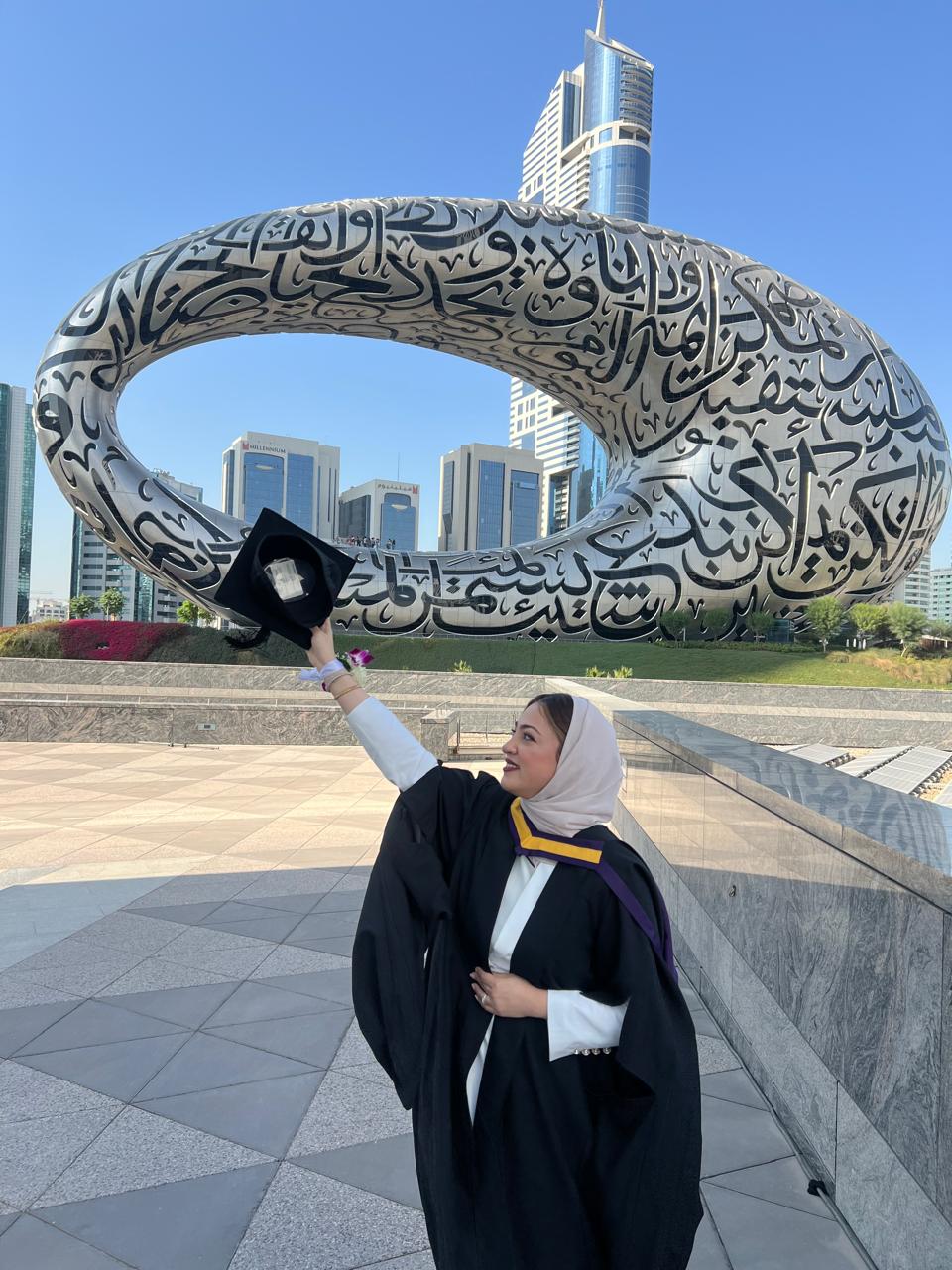
School was never viewed as an obligation. It was viewed as a responsibility and a pathway to a better future. Ala embraced that mindset early, consistently pushing herself academically and eventually earning admission to the American University of Sharjah to study Chemical Engineering.
The decision came with sacrifices. Her family was not wealthy, and funding a university education required difficult choices. Watching her parents work tirelessly to invest in her future left a lasting impression. It taught her that success is rarely built on talent alone. It is built on sacrifice, discipline, perseverance, and the willingness to invest in long-term growth.
Growing up in a household where both parents worked in education, she was surrounded by a simple but powerful belief: education is the most valuable investment anyone can make. Learning was never viewed as a requirement to pass exams or secure a job. It was viewed as a pathway to opportunity, independence, and a better future.
When it came time to enroll at university, the tuition fees represented a significant commitment for a middle-class family. Ala still remembers the moment her father counted the money and said words that would shape her outlook for years to come:
Those six words represented much more than financial support. They reflected sacrifice, commitment, and an unwavering belief in the power of education.
Her parents worked long hours, prioritized their children’s future over personal comforts, and reinforced the message that success is earned through effort and persistence.
That lesson became one of the defining principles of her life.
Years later, while balancing a demanding career and raising two children, she would return to the classroom herself, earning an MBA from Alliance Manchester Business School. She did not pursue the degree because it was required. She pursued it because she believes learning should never stop.
Building Credibility Through Experience
Ala joined Baker Hughes in 2012 as a Field Engineer, choosing one of the toughest specializations in energy services: cementing and pressure pumping operations. Offshore rigs in the Arabian Gulf. High-pressure, high-temperature applications where technical precision was not negotiable.
The resistance was immediate and direct. She was asked what she was doing there. She was told she could not do the job. In an industry where leadership roles were traditionally dominated by men and fieldwork was seen as a proving ground, her presence alone challenged established assumptions.
Her response was not a speech about inclusion. It was technical excellence that could not be argued with. Her field years produced two published papers in the Society of Petroleum Engineers, covering cement waste disposal on zero-discharge artificial islands and novel approaches to long-term zonal isolation. These were original contributions to a highly specialized field from someone who had been questioned simply for showing up.
Over the following years, Ala progressed through a variety of leadership roles, including account management, quality leadership, and operations management. Each role brought new responsibilities, larger teams, and increasingly complex challenges.
Throughout every transition, one principle remained constant: success is built by developing people and creating an environment where they can perform at their best.
The Confidence to Keep Moving Forward
While Ala’s career continued to advance, the journey was not without moments of doubt.
After becoming a mother, she questioned whether returning to work was the right decision. Like many women balancing family responsibilities and professional ambitions, she felt the tension between wanting to be fully present for her children and continuing to pursue her career.
Later, as leadership opportunities emerged, another question surfaced: Was she ready?
The answer did not come from certainty. It came from courage.
With the encouragement of her parents, family, and mentors who saw potential she sometimes struggled to see in herself, she chose to keep moving forward.
Looking back, she believes confidence rarely arrives before the challenge. Instead, confidence is built by accepting the challenge, stepping forward despite uncertainty, and proving to yourself that you can overcome it.
The Crisis That Proved Her Theory
In March 2020, Ala became Senior Service Delivery Manager for Cementing Pressure Pumping in the UAE, responsible for over one hundred frontline employees and full accountability for revenue and operating income targets. Days later, the world changed.
Her people could not work remotely. They faced quarantine protocols, vaccine requirements, location uncertainty, and the psychological weight of being essential workers during a global crisis. The conventional response would have been tighter control, stricter reporting, and harder targets to compensate for the disruption.
Ala chose the opposite approach.
The results were not symbolic. They were financial and strategic. Under her leadership, cementing and stimulation operations generated record-setting profitability and expanded market share during one of the most challenging periods in recent history. She also secured major contracts that helped ensure business continuity well into the future.
Care and performance, it turned out, were not competing priorities. Together, they created the resilience that produced exceptional results when others were focused only on survival.
Building Tomorrow’s Workforce Today
Since January 2023, Ala has led the Eastern Hemisphere Training Center at Baker Hughes, managing daily operations, planning budgets across product lines, and aligning training programs with what the business actually needs from its people. Her mandate extends far beyond scheduling classes. She is responsible for keeping a workforce future-ready in an industry where tools, regulations, and expectations change constantly.
Her philosophy is direct and grounded in fifteen years of evidence.
This is not sentiment. It is a practical observation about where competitive advantage actually lives in the energy sector. Companies that invest in their people’s ability to learn, adapt, and lead technology will outperform companies that invest in technology alone. The tools can evolve at any speed, but without people who understand them, question them, and improve them, progress stalls.
She carries a line of Arabic poetry that frames everything she builds:
In an industry where the consequences of unpreparedness can be measured in equipment failures, safety incidents, and lost contracts, that line is not poetic license. It is operational truth.
When she speaks to younger professionals entering the field, her message cuts against the prevailing culture of shortcuts and instant results.
She also leaves them with a message shaped by her own journey:
The Foundation That Cannot Be Automated
The energy industry will continue investing in technology, and it should. The tools will keep improving, the platforms will keep evolving, and the automation conversation will keep advancing. None of that is wrong.
But Ala Suleiman’s career provides evidence for something the technology investment alone cannot deliver. The strongest foundations in this industry are not built from capital expenditure or code. They are built from people who know what they are doing, believe in why they are doing it, and never stop learning how to do it better.
The future of energy belongs to companies that understand this distinction. The question her father asked about wanting the best for her has become the question she asks about every person who passes through her programs: Are we giving them what they need to lead the technology, or are we simply hoping the technology will carry them?
In an industry built on extraction and pressure, the most valuable resource remains the human capacity to adapt, learn, and build something stronger than what existed before.