

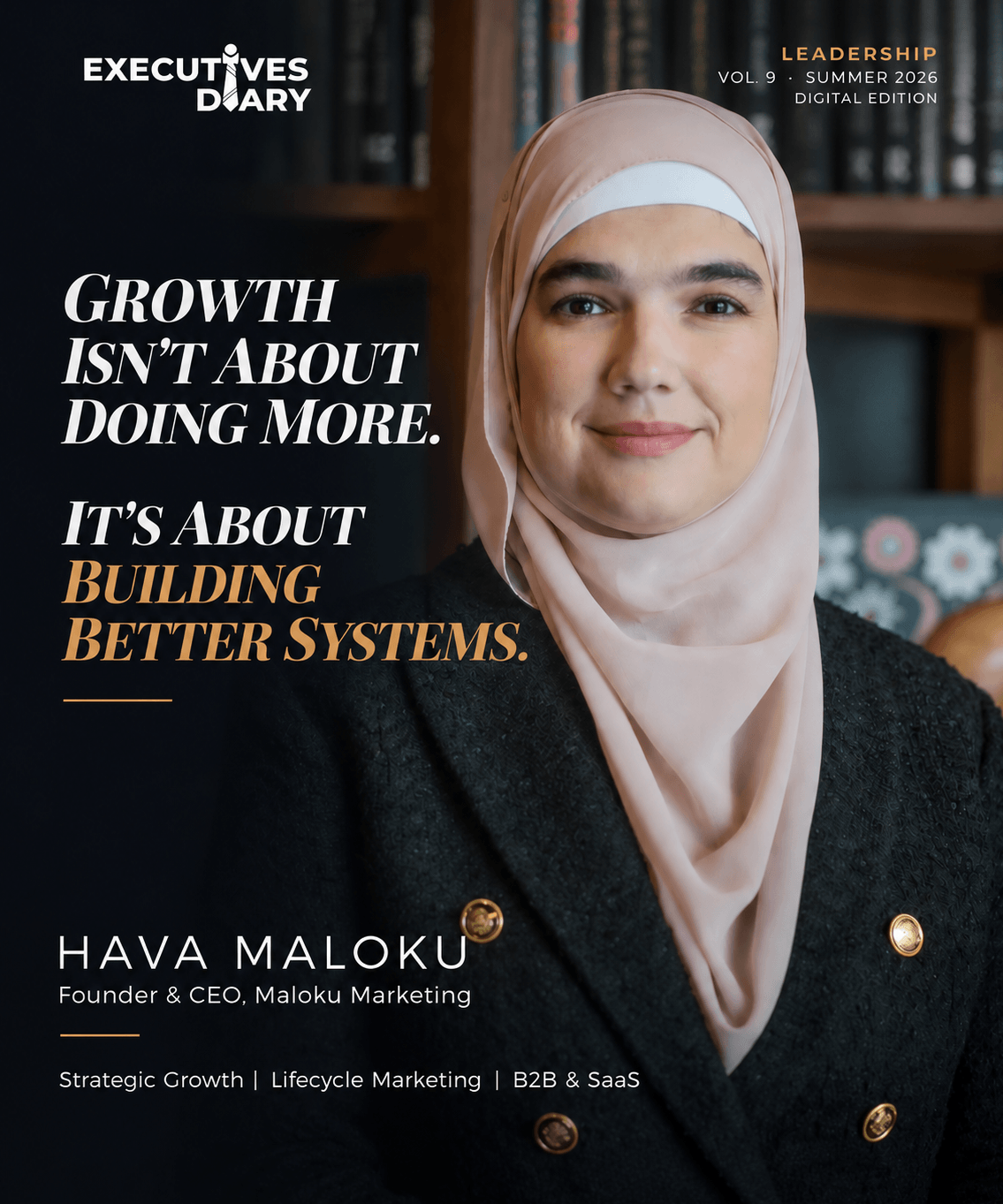
Hava Maloku: Building Systems That Make Growth Repeatable
Founder and CEO of Maloku Marketing, a B2B growth consultancy that helps established, sales-led companies build the marketing infrastructure and revenue systems that make growth measurable and repeatable.What Does Growth Look Like When More Activity Is Not the Answer?
There is a question Hava Maloku keeps returning to, whether she is talking about lifecycle marketing, leadership, or building her own company: how do you create something that continues to create value after the initial effort is over?
It is a simple question, but it runs against a familiar instinct in business. When results are not where they should be, the response is often to add more. More campaigns. More meetings. More activity. More pressure.
Maloku has spent enough time working at scale to become skeptical of that approach.
Her experience has led her toward a different view of growth. Sustainable results are not necessarily produced by the organizations doing the most. They come from clear strategy, strong alignment, and systems that allow good work to continue producing value.
That distinction now sits at the center of what she is building at Maloku Marketing.
The Problem Beneath the Activity
Maloku’s expertise is lifecycle marketing, but the problem she sees is broader than email.
Her professional experience across LinkedIn, Expedia, and LegalZoom gave her years of exposure to the mechanics of customer communication at scale. At LinkedIn, she managed more than 35 lifecycle campaigns, led the company’s first referral program, and contributed to more than $47 million in annual bookings. She also led a 100 million email send over five days and later reduced email volume by more than 70 percent while improving conversion.
Those numbers establish experience. They do not, however, explain the philosophy that came from it.
For Maloku, the lesson was not that bigger programs require more effort. It was almost the opposite.
She saw talented people working extremely hard, while the organizations producing sustainable growth were not necessarily the busiest. They had clearer strategy, better alignment across teams, and processes that could scale.
That distinction has become one of the clearest ideas in her work. She does not dismiss effort. She questions what happens when effort becomes the substitute for structure.
In her view, a well-designed onboarding experience, customer lifecycle strategy, or operating process can continue creating value long after it has been built. The question therefore changes from how much a team can accomplish today to what it can build that keeps working tomorrow.
That is a different way to think about marketing, but it is also a different way to think about leadership.
From Campaigns to Systems
Maloku’s public writing makes the distinction especially clear.
She argues that many SaaS companies do not have an email problem. They have a lifecycle problem that happens to appear in email. Campaigns are running. Automations exist. Messages are being sent. Yet activation, retention, and revenue can still fall short of what the product is capable of producing.
Her response is not simply to improve the next campaign.
It is to examine the structure underneath.
That means understanding activation, segmenting according to behavior, building customer journeys rather than isolated campaigns, creating a testing roadmap, and making onboarding more relevant to the individual user. The framework reflects the way Maloku approaches problems more generally: understand what is actually happening before deciding what should be changed.
The principle became even more explicit after she founded Maloku Marketing.
For Maloku, that means taking time to understand the root cause before jumping to a solution. It is a principle that applies naturally to lifecycle strategy, but it also explains why she has become less interested in activity for its own sake.
She has written about the difference between being busy and creating value. The marketer who launches the most campaigns is not necessarily the one creating the most value. The leader who works the latest is not necessarily the one contributing the most either.
The underlying question is more useful:
That question is now part of how Maloku evaluates both marketing work and leadership.
And beneath the systems is a simple human consideration. As she has written:
That perspective matters because it explains what her systems thinking is actually for. The objective is not simply to make marketing more efficient. It is to make the experience better for the person on the other side of the system.
The Space to Think
After a decade at LinkedIn, stepping outside corporate life did not mean rejecting what those years had taught her.
Maloku is clear about that. Her corporate career gave her discipline, collaboration, and experience leading marketing initiatives at scale. She remains grateful for those years because they shaped the professional she became.
What changed was the amount of space she had to think.
After building Maloku Marketing, she wrote that one of the biggest surprises of building something of her own was having more room to sit with a problem, follow an idea further, and change her mind when new information emerged.
There was another adjustment as well. Inside a large global organization, established teams, resources, systems, and a recognized brand already existed around her. Building Maloku Marketing meant creating those foundations herself. It required her to become more comfortable with uncertainty, trust her own judgment, and experience firsthand many of the challenges that come with building a company from the ground up. In many ways, she had spent years building systems for large organizations. Now she had the opportunity to apply those same principles while building her own.
That additional space has influenced how she defines success.
She is less interested in how many campaigns can be launched and more interested in whether a business is strengthening customer relationships, improving retention, and creating sustainable growth.
That distinction also explains the ambition behind Maloku Marketing.
She does not want to build the largest marketing agency. She wants to build one of the most trusted strategic growth consultancies for organizations that want to grow intentionally and sustainably.
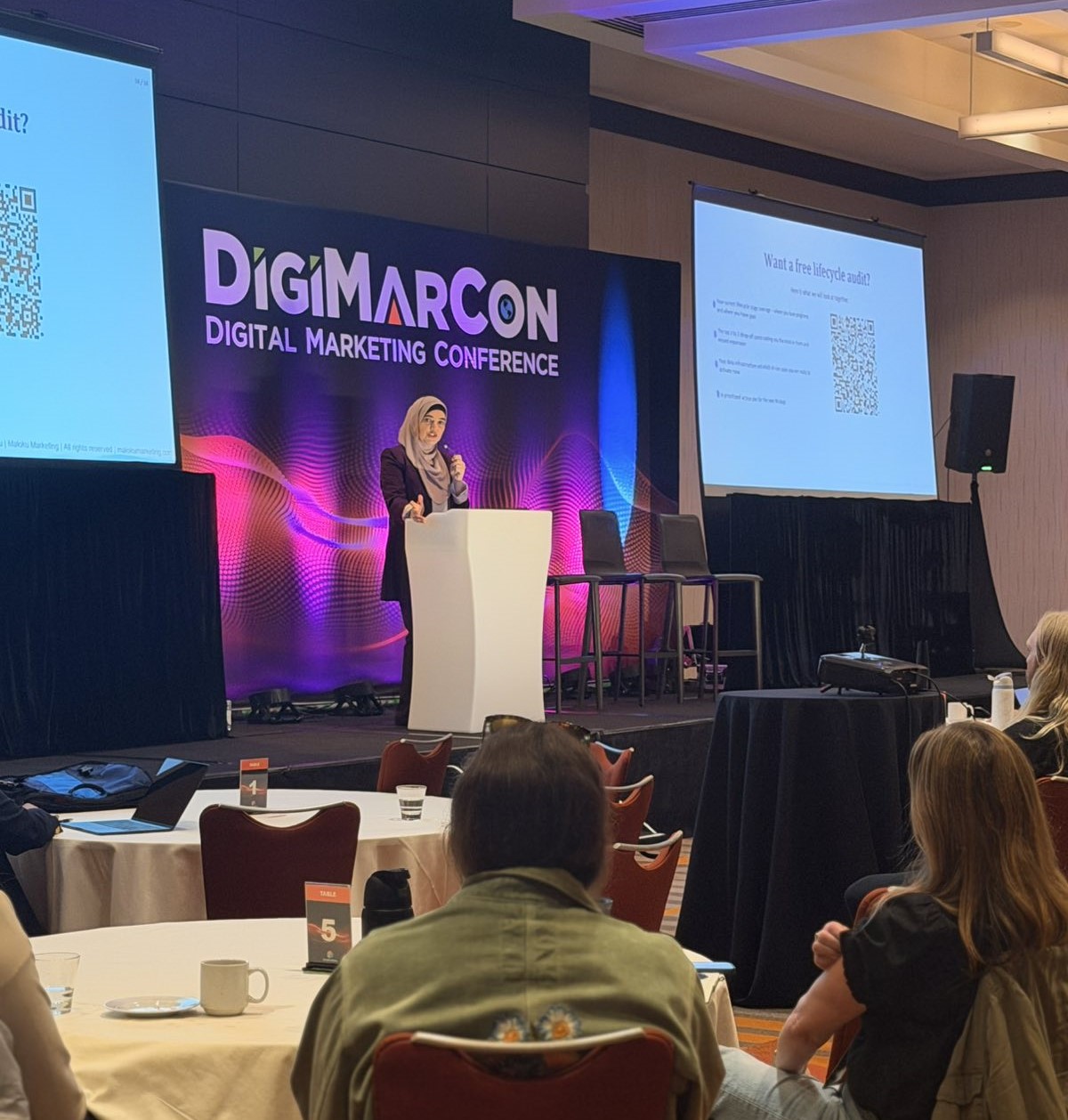
Her stated plans extend beyond execution into executive advisory work, workshops, speaking engagements, and thought leadership around lifecycle marketing, artificial intelligence, and sustainable business growth.
The direction is consistent with the philosophy that brought her here.
Marketing should not exist as a collection of disconnected activities. It should function as an integrated business capability that strengthens customer relationships and contributes to measurable business outcomes.
Technology Still Needs Judgment
Artificial intelligence is becoming an increasingly visible part of Maloku’s work, including her focus on AI-powered customer retention and lifecycle growth.
But she does not describe AI as a replacement for strategic thinking.
Her position is more measured. AI can help organizations create content, automate workflows, analyze data, and improve efficiency. What it cannot do by itself is create trust, customer loyalty, or meaningful relationships.
Those still require an understanding of people, better questions, and thoughtful decisions.
That belief fits naturally into the broader way Maloku thinks about systems.
Technology can make a process more capable. It cannot determine whether the process is solving the right problem.
That is why her emphasis remains on diagnosis, customer behavior, strategy, and judgment. The technology matters, but the thinking that directs it matters more.
For business leaders, that distinction is increasingly relevant. Efficiency is easier to measure than judgment. Automation is easier to deploy than trust. Yet the value of a system ultimately depends on what it is designed to accomplish.
What Leadership Is For
There is another side to Maloku’s thinking that becomes visible when the conversation moves away from marketing.

She grew up in Kosovo and describes resilience, education, hard work, and appreciation for opportunity as values shaped by that environment. Her parents taught her to treat the janitor and the CEO with the same respect. Looking back, she says those lessons became the foundation of her leadership philosophy.
Her conclusion is simple:
That belief has remained visible in the way she talks about leadership.
She has written that some of the best leaders she worked with at LinkedIn did not manage her tasks. They managed her growth. She has also described the kind of culture she wants to create at her own company as one built on trust, clarity, and giving people room to do good work.
In her interview, she puts the philosophy even more directly:
For Maloku, service means helping people accomplish more than they believed possible and creating environments where others can grow. It means investing in people, sharing knowledge, and treating professional relationships as something that matters beyond the immediate result.
That perspective gives her systems philosophy a human dimension.
The purpose of a system is not simply to make an organization more efficient. It is to create an environment where people and businesses can do better work.
Building for Value That Compounds
Maloku’s current chapter is still taking shape.
Maloku Marketing is young, but the thinking behind it is not. The company brings together more than fifteen years of experience in lifecycle and digital marketing with a clearer definition of the kind of work Maloku wants to do now: helping established B2B companies replace manual outreach, disconnected tools, and inconsistent follow-up with revenue systems that make growth measurable and repeatable.
The distinction is important.
She is not simply carrying a corporate skill set into a new business.
She is carrying forward the lessons that came from working at scale and applying them with greater room to question, diagnose, and choose.
That may be the most useful idea in Maloku’s approach to growth.
More activity can produce the appearance of progress. Better systems can produce something that lasts.
And the same principle applies beyond marketing. Leaders can spend their time solving every problem, or they can build environments in which fewer problems need to reach them. Companies can chase the next campaign, or they can build customer systems that become better with each interaction. Technology can make work faster, or it can give people better information with which to make decisions.
For Maloku, the question is increasingly the same in each case: what can be built today that continues creating value tomorrow?
Her answer is not a formula.
It is a way of thinking.
And it begins with understanding what is truly worth building before rushing to build more.
