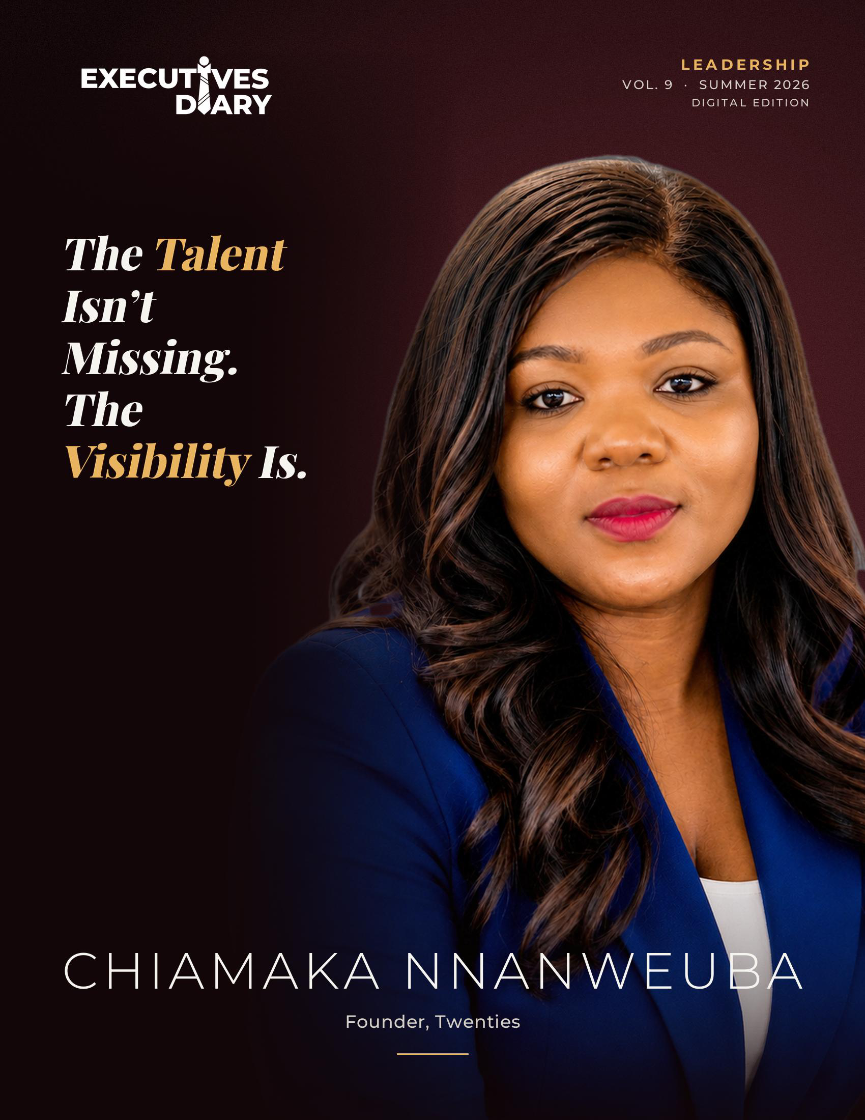
Chiamaka Nnanweuba
Is Giving SMEs A New Way To See What Early Talent Can Actually DoThe Wall Between Education and Employment
An early-career professional had the right education and a deep willingness to work. They applied everywhere they could find an opening. Every application ended with the exact same rejection. Employers wanted experience before they would offer a chance to gain experience.
It was a closed loop that kept highly capable people locked out of the market. The candidate had qualifications on paper but no way to prove their practical value. They just needed an opportunity to show what they could do. Breaking that frustrating cycle became a singular focus for Chiamaka Nnanweuba as she watched it happen.
Building the Missing Infrastructure
Chiamaka Nnanweuba is the founder of Twenties, a Canadian platform built to connect students, post-secondary institutions, and small-to-medium enterprises. She does not view the gap between graduation and employment as a simple hiring failure. She sees it as a fundamental engineering problem that requires a completely new infrastructure to solve.
An Engineer Learns to Read the Room
Her perspective is rooted in a background that crosses borders and disciplines. She earned a Bachelor of Engineering in Polymer and Textile Engineering from the Federal University of Technology Owerri in Nigeria. Engineering taught her how to design systems and look for structural flaws. Her subsequent transition into business development taught her how to understand people.
She built a career spanning roles across Nigeria, the United Kingdom, and Canada. Much of that work happened remotely. That cross-continental experience proved very early that capable people exist everywhere. Geography was no longer a limiting factor for finding good work.
Working across three distinct markets revealed a stubborn pattern. Employers everywhere wanted people who could contribute from day one. Students everywhere wanted a chance to prove their worth. Educational institutions wanted better pathways into employment for their graduates. The cultural context changed, but the underlying friction remained exactly the same.
She also spent time evaluating artificial intelligence systems at Mercor. That role provided a front-row seat to a massive shift in how work actually gets done. It became clear that technical knowledge alone was no longer enough to secure a lasting career. The market was starting to demand verifiable proof of human capability.
Her involvement with the Young African Leaders Initiative and the Calgary Black Chambers Impact Committee reinforced a core belief. People often have capabilities far greater than the opportunities available to them. They just lack the stage to demonstrate their competence. She decided to build that stage.
Turning Business Problems Into Proof of Capability
Small and medium-sized enterprises drive the economy, but they struggle to compete for early talent. They need help, but they rarely have the time or resources to build formal internship programs. Universities need real-world projects for their students to complete. Nnanweuba connected those two isolated needs into a single working system.
That single observation drives everything her company does today. Twenties allows employers to take real business challenges and turn them into structured, course-aligned projects. Students complete these projects as an integrated part of their formal education. It gives small businesses affordable access to emerging talent while generating actual business outcomes.
“We realized workforce development is an ecosystem challenge, not a hiring problem alone,” she notes. “SMEs need affordable access to emerging talent, institutions need more employer-connected learning opportunities, and students need real projects that develop workplace capability.”
By treating all three groups as a single ecosystem, she removes the friction that usually stops small businesses from engaging with students. The platform handles the scoping, matching, and coordination. Employers get actual work completed without managing a heavy internship program. Students get a permanent record of their practical abilities.
Résumés only tell an employer what someone has studied in a classroom. A completed project shows an employer how a candidate thinks, communicates, and solves complex problems. The platform uses artificial intelligence to help capture this evidence objectively. It removes the bias that often clouds entry-level hiring decisions.
The economic stakes are high. Nearly half of small businesses report that skills mismatches directly limit their growth. Twenties addresses this by ensuring students are tested on the exact challenges businesses face today. The early results prove the model works. She has established strong relationships across the Alberta innovation sector and is securing pilot discussions with post-secondary institutions.
“Our goal isn’t just to place students into projects,” she says. “It’s to build the infrastructure that allows employers, institutions, and students to work together continuously.”
Dozens of employers and workforce stakeholders are already engaging with the platform. They are finding a more effective way to discover and develop talent. Every completed project builds a stronger pipeline for the future.
A System Where Potential Meets Proof
The closed loop of needing experience to get experience is finally breaking. Capable graduates no longer have to hope an employer will take a blind risk on their potential. They can point directly to real business outcomes they have already delivered.
Nnanweuba built the bridge that was missing all along. Now, talent is no longer a hidden variable.