

From the Diary of Daniel Erbe
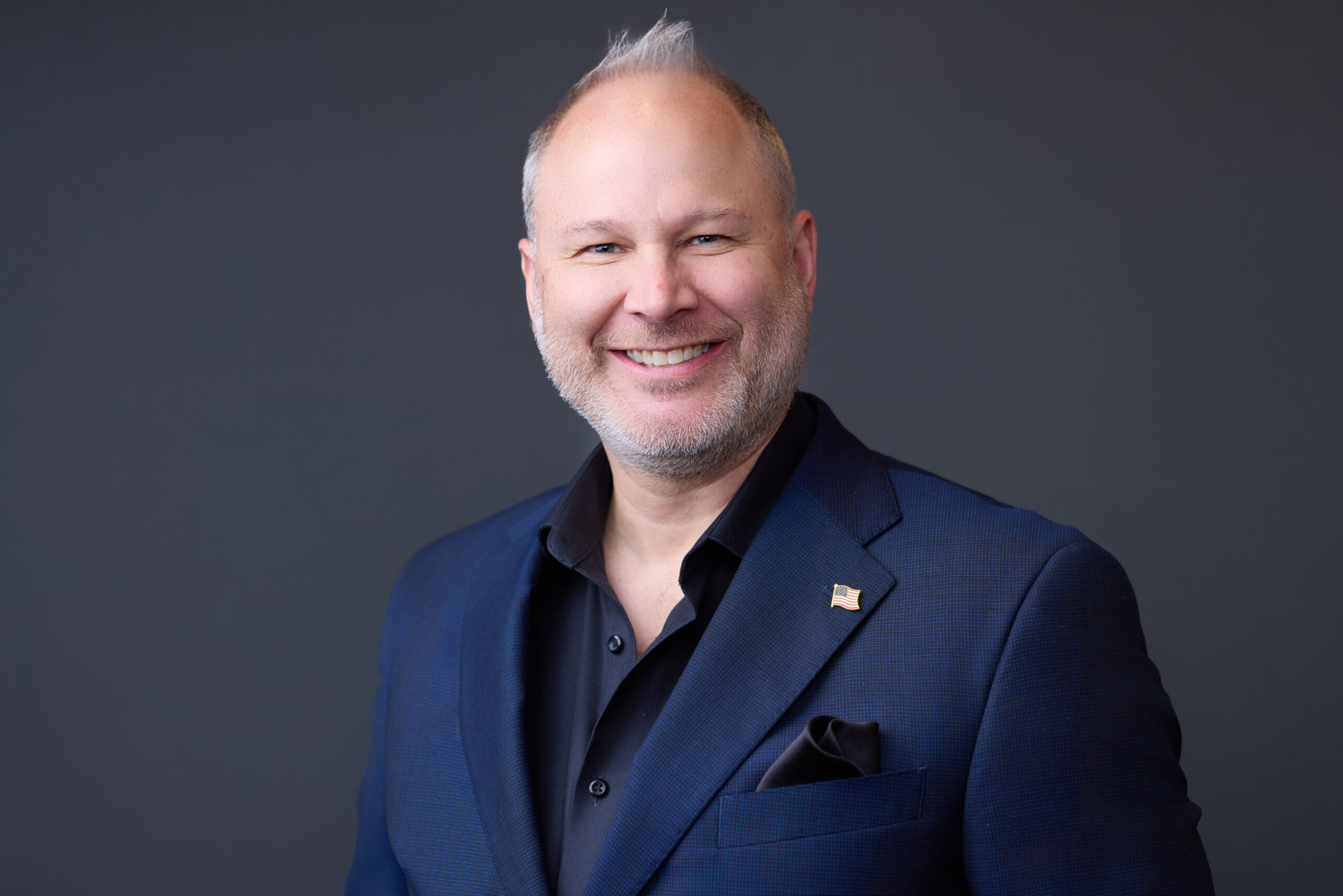
Daniel Erbe is a Washington, D.C. based Executive Voice and Captivation Expert and the founder of Daniel Erbe International.
Audiences decide about you before your second sentence. Here is what they are deciding, and how to change it.
A room full of qualified people is not a room full of people who get chosen. In a 2014 study published in PLOS ONE, 320 listeners rated 64 recordings of a single spoken word, the word hello, and their impressions of trustworthiness and dominance lined up closely with one another. The judgment arrives before the argument does.
Daniel Erbe has spent three decades on the other side of that judgment, in audition rooms where one phrase decided who worked and who went home.
The pattern holds in business. In a 2015 experiment published in Psychological Science, evaluators including professional recruiters rated the same pitch as more competent, thoughtful and intelligent when they heard it than when they read the identical words, and they were more interested in hiring the candidate. LinkedIn’s latest Skills on the Rise list, which tracks the skills held by members who were actually hired over the past year, places public speaking among the fastest growing skills in the United States.
The delivery is being scored. Erbe’s case is that most professionals train the wrong half of it, and that the neglected half can be taught.
The Advice He Keeps Turning Down
People keep telling Erbe to sell something else. Teach speakers how to get booked. Add marketing. Become a business coach. Do something with AI.
He listed that advice in a recent post and answered it in one word. “No.”
You can have a perfectly structured keynote. You can have a beautiful speaker reel. You can have the one-sheet, the website, the booking strategy, and even get yourself on the stage. But when you get there, you still have to deliver. And if you can’t deliver, you’re not fooling anyone.
His objection is not that structure and marketing are worthless. It is that they solve for getting into the room, and the room is where the decision is made. “If your voice lacks authority, people feel it,” he wrote. The same goes for the other failures on his list: looking like an amateur, boring the audience, letting body, voice and message pull in three directions. None of them are content problems, and a better one-sheet does not touch any of them.
The Room in New York That Set the Question
Early in his career, Erbe sat beside Darren Keith Woods, one of the opera world’s most respected artistic directors, through auditions in New York City. Singer after singer arrived with a trained voice and a credible résumé. Only a handful were still in the room after they had left it.
Erbe had trained as a tenor apprentice with Lyric Opera of Kansas City, so he knew what the technical standard cost to reach. What he could not explain was the gap between qualified and unforgettable.
I discovered that captivation is not a personality trait reserved for naturally charismatic people. It is a trainable performance discipline. I also learned that an audience feels a message before it analyzes it. The voice is one of the primary instruments through which that experience is created.
That reframing is the basis of the business. If captivation is charisma, coaching it is cosmetic. If it is a discipline, it can be diagnosed and drilled, the way a singer drills breath support.
Why an Audience Stops Working to Believe You
Ask Erbe what captivation actually is and the answer is mechanical rather than mystical. It happens, he says, when a person’s voice, body, message and intention align.
What he works on is specific: breath support, resonance, articulation, pacing, vocal color, vocal variety. These are not decoration applied to a message. They decide whether a voice carries authority or puts distance between the speaker and the point.
Audiences can sense when someone is merely reciting words, speaking without preparation, rambling, or trying to perform confidence. But when a speaker is physically grounded, connected to the message, and using their voice intentionally, the audience no longer has to work to believe them. Voice technique is essential to that alignment.
Notice what he is not claiming. He is not telling a nervous executive to perform confidence. He is saying the audience’s effort drops when the delivery stops contradicting the content, and that trust, attention and memory follow in that order. “Qualification may get you into the room, but your ability to captivate determines whether people trust you, remember you, and invite you into the next one,” he says.
What Actually Happens in a Session
One client was a physician leader and TEDx speaker preparing for an upcoming keynote in Los Angeles for the medical community. She had already completed two speaker training programs and worked with a TEDx coach. Nobody had taught her how to build and deliver a message that held a room.
They rebuilt the structure first, so the ideas arrived in an order that carried weight. Then they went to the instrument: grounding her body, connecting her voice to it, strengthening breath support and resonance, varying pace and vocal energy, steadying eye contact, making movement deliberate instead of nervous.
Her verdict was short. “I learned more in two minutes working with Daniel than from two speaker schools and a TEDx coach combined.”
For anyone speaking this week without time to book coaching, the sequence still applies. Fix the order of the ideas before polishing the sentences. Put weight on both feet and let the breath drop before the first word. Then mark two or three places where the pace changes, because a voice that holds one speed makes expertise sound ordinary.
Thirteen Years in Uniform, Five Presidents, One Standard
The credentials are unusual for a communication coach, and every one of them is a performance credential.
Erbe sang for thirteen years as a soloist with the U.S. Army Field Band. He has performed at Carnegie Hall, Lincoln Center, the Kennedy Center, Chicago Symphony Hall and Ford’s Theatre, on the PBS National Memorial Day Concert, and as a soloist with the Atlanta Symphony Orchestra, the Naples Symphony and the Firelands Symphony Orchestra. He has sung for five United States presidents. Since leaving the military he has appeared at CPAC, at Mar-a-Lago, and as a featured soloist at the 2024 Republican National Convention.
He built that second career without the machinery that usually carries one. As he puts it on his profile, he had “no agent, no industry connections, and no guaranteed platform.”
The proof he offers for the method is smaller and more useful. “One client came to me feeling nervous and unsure about how to make an impact with her presentation,” he says. After one session she delivered the talk with more clarity and calm, and was invited back. She now speaks internationally. She described the change in a single word: “liberating.”
The Daniel Erbe Playbook: How to Be Remembered After You Leave the Room
- Treat every appearance as an audition. The meeting, the panel and the podcast are all being scored for the booking that comes after them.
- Fix the structure before the words. Ideas that arrive in the right order survive a shaky delivery. Polished sentences in the wrong order do not.
- Ground the body, then breathe. Weight on both feet and a low, supported breath before the first sentence changes the sound of everything after it.
- Change pace at least twice. One speed and one volume flatten strong material into background noise.
- Rehearse under real conditions. Regular practice in front of an audience develops the vocal range, presence and adaptability you need when the opportunity matters most.
Daniel Erbe coaches executives, entrepreneurs and speakers on voice, presence and delivery at book.danielerbe.com. Connect with him on LinkedIn.
