

From the Diary of
Scott Stafford
What Scott Stafford asks leaders to settle before they approve an agentic workflow, and why he starts with the experience.
“What we make makes us.”
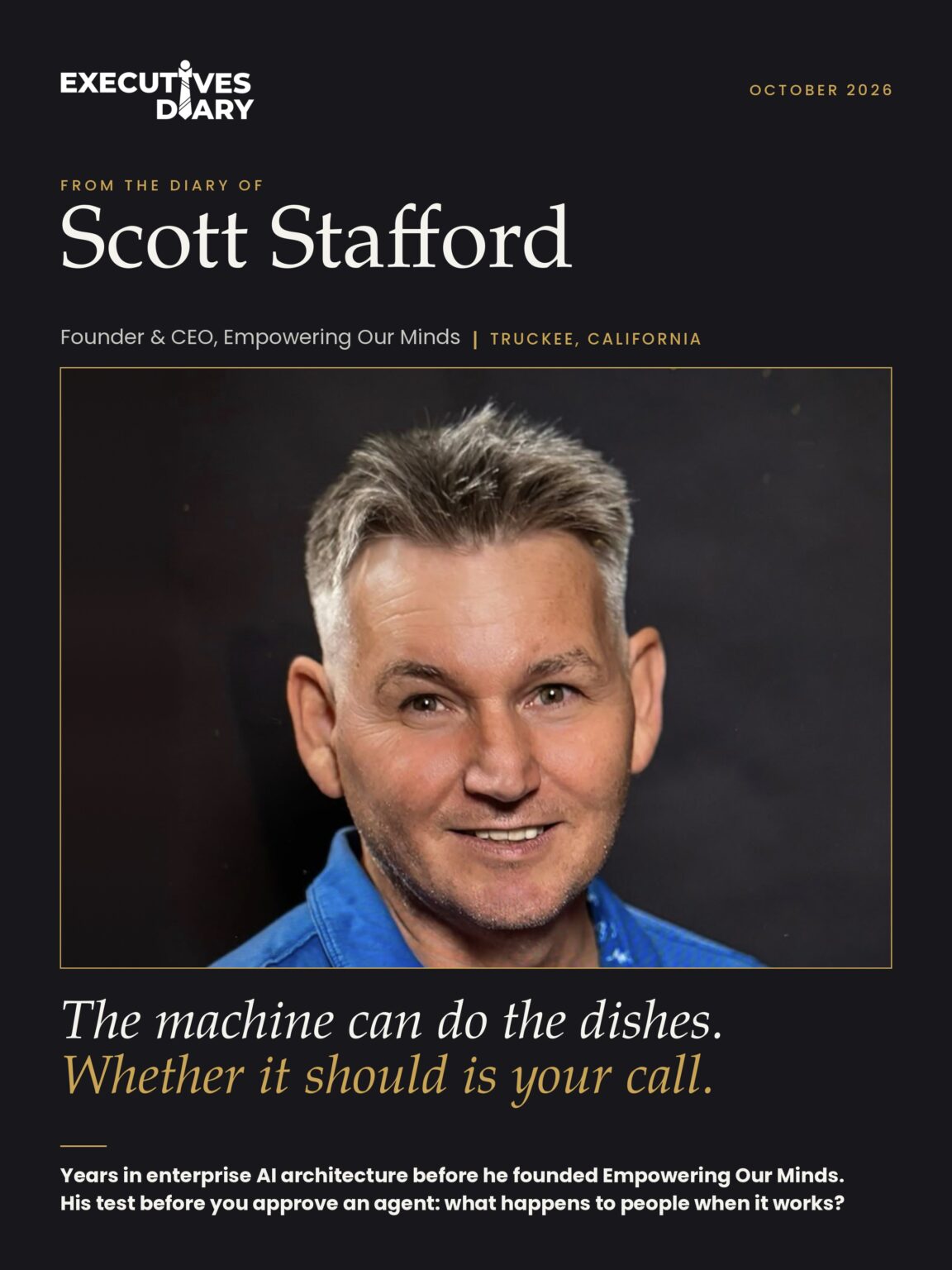
“I realized that if I built the framework around what AI could not do, it would become obsolete almost immediately,” Scott Stafford says. “Technology keeps moving. Tasks we call ‘human only’ today may be automated tomorrow.”
So he starts from a different question, the one he put to us in his first reply: “What kind of human experience do we want to create, and where do we want humans to shine?” Scott is the founder and CEO of Empowering Our Minds, and his work focuses on human centered AI, enterprise transformation, and Human Experience Orchestration. With Melissa Hill Dees, he took that order of questions to the Dreamforce stage in a session called “Mapping the Human Handoff in Agentic Workflows,” about finding the points where AI should step aside so a person can step in.
His background is in enterprise AI architecture, and he says it shapes his perspective without being the story. The story, for him, is what this transformation means for people, organizations and the way we experience work together.
The dishes and the closed street
“Capability will keep changing,” he says. “Intent is what gives the architecture continuity.”
The fact that a machine can do something is not the same as saying the machine should do it.
Organizations already choose not to perform every function they technically could, he says, and “I think we now need to make the same choice with AI.”
The same is true at home. “Sometimes I want the machine to do the dishes,” he says. “Sometimes the act of doing something myself is part of the experience I value.” Either way, he says, the decision has to be intentional.
He has a picture of what an intentional choice looks like, and it comes from the town where he’s based. “Every Thursday night in Truckee, we close the streets,” he wrote in a LinkedIn post. “Cars step aside, and people reclaim the space.” For a few hours, he wrote, “we’ve intentionally created a new social norm that puts human interaction first.”
Writing that into a workflow raises a harder question: who decides where it goes?
Who draws the line
Not one department, in Scott’s view. “I don’t think the human handoff should ever be drawn by one department or one type of expert,” he says.
He wants three kinds of knowledge at the table: senior leaders on goals and where to differentiate, technical teams on what the technology can do and where it is weak, and frontline employees and domain experts on “the reality of how the work is actually experienced.”
What surprised him was how much people from marketing, brand and customer experience added. They often brought “creativity, human behavior, customer perspective,” he says, along with a view of how experiences evolve over time.
He also found that deep technical knowledge can sometimes become a constraint if it arrives too early. “When you know exactly what the current tools can do, it is natural to start designing around those capabilities,” he says.
The line moves, too. Something that clearly requires a human today may not tomorrow, Scott says, and something exciting today may become ordinary once people get used to it. So he keeps asking where each should take part.
AI can provide signals, patterns, probabilities, and recommendations, but there will still be situations where someone has to recognize, ‘This case is different.’
That, he says, is where judgment matters. The answer can differ by person, context, moment or consequence.
Not everyone will accept that a line like this can hold against the economics.
The case against him
When we put the strongest objection to Scott, he didn’t wave it off. He answered: “I think the strongest case against my position is a real one: economics will always matter, and organizations will continue to automate work when doing so lowers cost, improves performance, or creates a competitive advantage.”
“My disagreement is not with that pressure,” he continues. “It is with allowing economics or the current limits of technology to become the permanent design principle.”
He points to electrification. Factories first swapped one power source for another without changing how the factory worked, he says, and the larger gains came later, when they rethought the factory itself. He sees a similar risk with AI: replacing pieces of an existing workflow may improve efficiency “without actually reimagining the experience, the operating model, or the opportunity.”
The data points the same way. In its March 2025 global survey, McKinsey tested 25 organizational attributes against reported bottom-line impact from generative AI. Redesigning workflows had the biggest effect on whether a company saw that impact, yet only 21 percent of respondents using gen AI said they had fundamentally redesigned at least some workflows.
On the charge that a human centered framework only lets an organization feel humane: “I do not think a human centered framework gives organizations permission to automate while simply feeling humane about it. I think it gives them a more durable design principle in a world where the technology itself keeps changing.”
I do not think a human centered framework gives organizations permission to automate while simply feeling humane about it.
That position has a history, and it begins with a career spent inside the technology.
Pulling the lens back
Scott spent years in enterprise AI architecture before founding Empowering Our Minds in October 2023. There was no single moment when he stopped believing in it, he says. “In many ways, the opposite happened. The deeper I went into technology, the more extraordinary I found what was becoming possible.”
What changed was where he saw the hardest problem. “A limitation that looked significant one year could suddenly become solvable the next,” he says. “But people did not always move at the same speed.”
He kept running into the work of helping people go from where technology stands today to what it could do tomorrow, and then to what they were trying to accomplish with it. “That became much more interesting to me than the technology alone.”
The questions followed. What is the ultimate goal? What kind of society are we building? He names Sherry Turkle as an influence, because her work “pushed beyond what technology could do and asked what our relationship with technology was doing to us.”
I did not leave technology behind. I pulled the lens farther back.
That thinking became part of the foundation for Empowering Our Minds. The greatest challenge ahead, he says, is “empowering people to understand change, develop their minds, question where technology was taking us, and intentionally shape the experience we wanted to create.”
The practical test of that thinking comes when a leader has a workflow in front of them and a pen in hand.
Before you sign
We asked Scott what one judgment a leader should get right before approving an agentic workflow. His answer isn’t simply whether the new workflow is more efficient. “I would want them to understand what changing that workflow is going to do to the people and the larger system around it.”
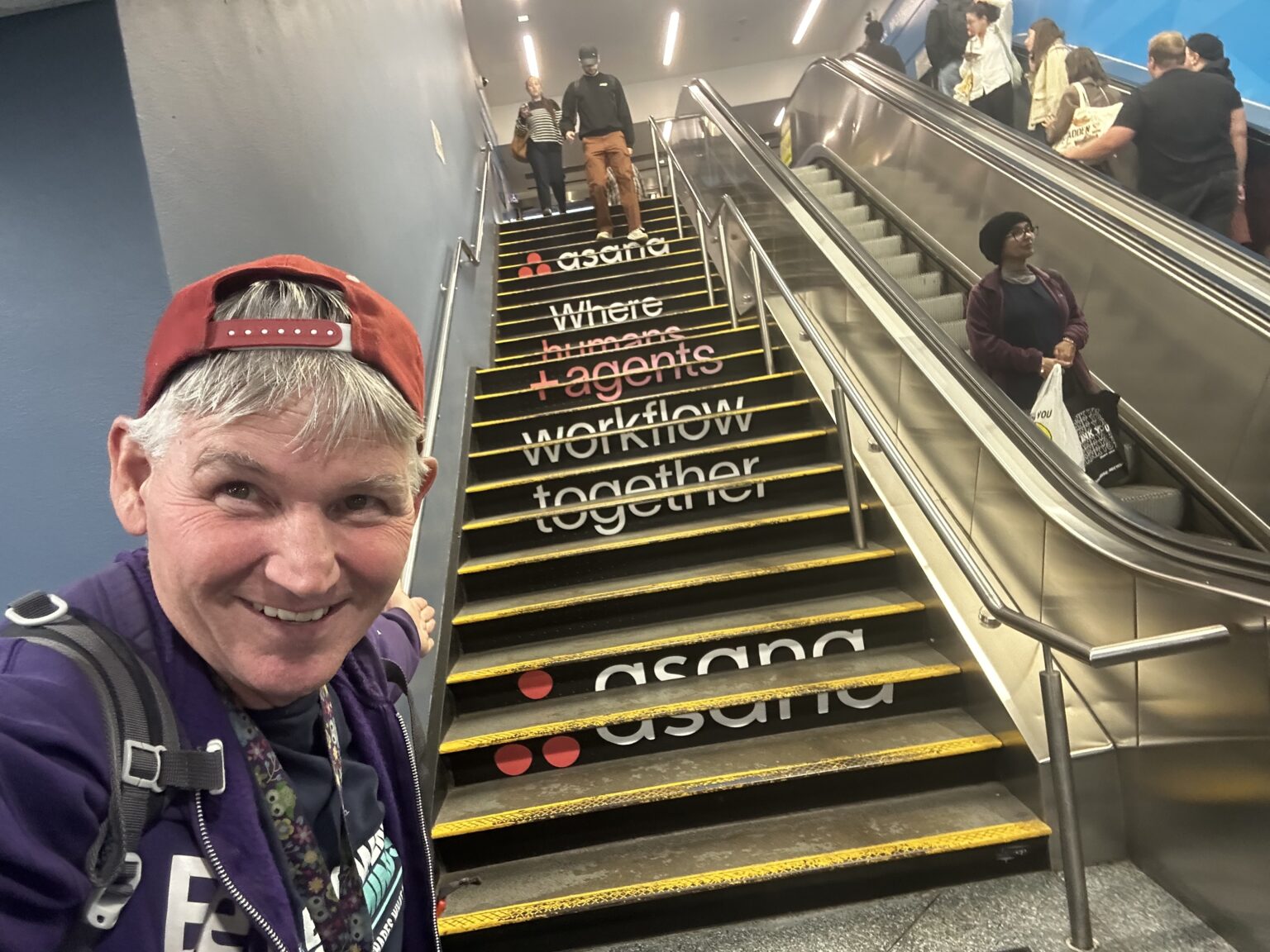
“Every solution creates a new environment,” he says. If an agent takes over work people used to do, people adapt, and roles, skills and needs change. So he asks leaders to look one step past the workflow: “What happens after this works?” Then: “How will people change because of it? What will they stop doing? What will they have more time to do?”
What happens after this works?
He points to remote work during COVID, which solved an immediate problem and also changed commuting, collaboration, where people lived and even areas of consumer behavior. “The solution itself became an input into the next wave of change,” he says, and he expects agentic AI to bring similar second order effects, “often much faster.”
Scott is direct about where his framing stops. “Create the best human experience” is, as he puts it, “a North Star, not a complete operating model.” It doesn’t tell a leader “which model to deploy, what an acceptable error rate is, how to meet regulatory requirements, whether the economics work, or what security architecture is required.” Those calls still need technical expertise, domain knowledge, risk management and financial analysis.
Gartner predicted in June 2025 that more than 40 percent of agentic AI projects will be canceled by the end of 2027, citing escalating costs, unclear business value or inadequate risk controls. Scott’s aim is narrower than solving those. “My framework is meant to keep those decisions pointed toward a larger purpose,” he says.
He is pursuing that purpose in public right now.
Where Scott Is Now
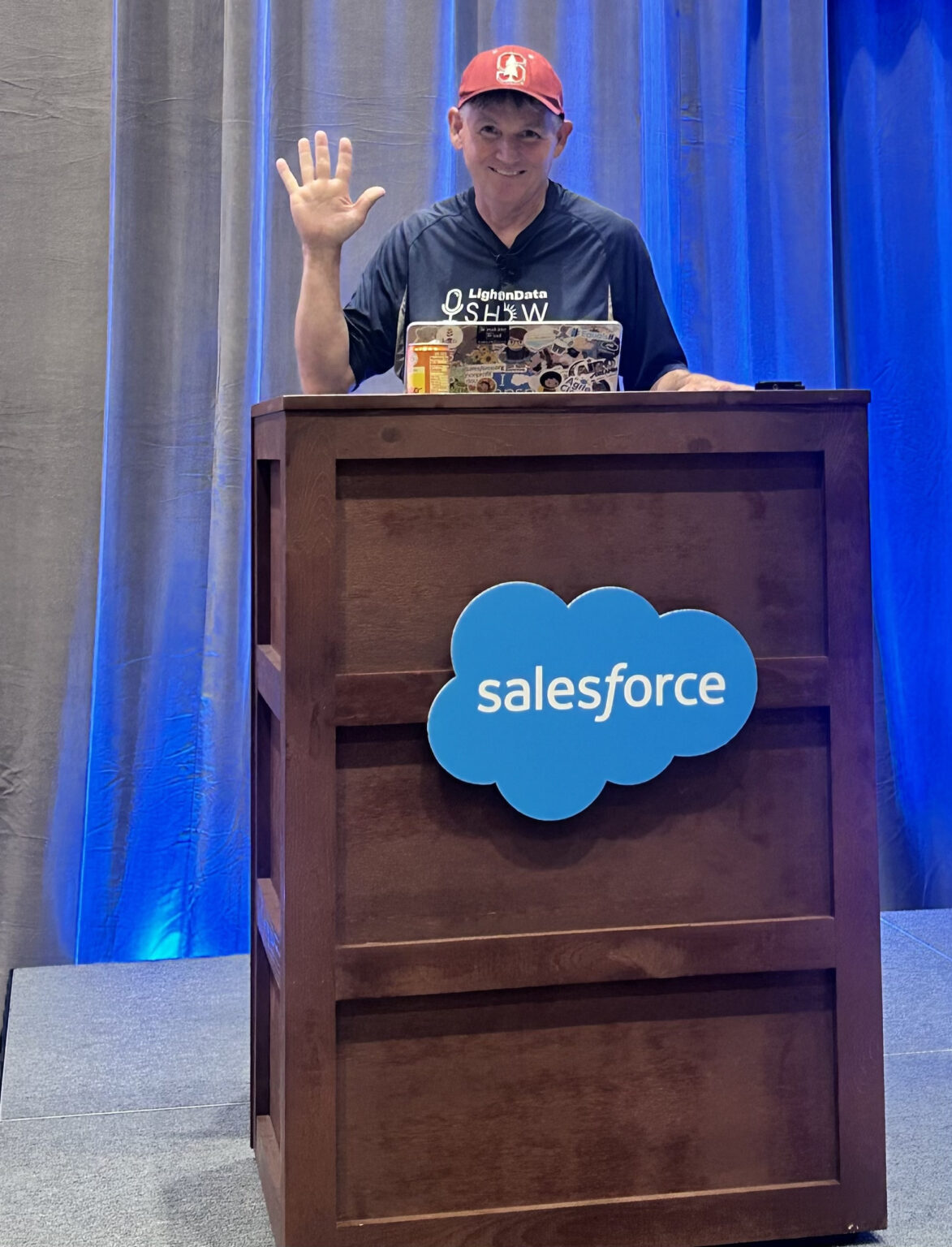
Scott and Melissa Hill Dees are on what he calls a listening tour. The Salesforce stage was the first stop, he wrote, and Casablanca, Morocco, is next, with Mexico City planned and more conferences to follow. “But this isn’t just a speaking tour,” he wrote. “We’re listening.” One question guides it: “Where do you want humans to shine?” What they’re hearing, he wrote, is “People want both”: automation when it removes friction, and a way back to the human moments where empathy, judgment, creativity, connection and care matter most.
He has a name for the practice, Human Experience Orchestration, which he defines as “the deliberate coordination of people, processes, data, AI, automation, and technology around the human experience we intend to create.” His goal, he says, is “to bring the conversation about Human Experience Orchestration to a global audience, exploring how we can shape a future where technology truly serves humanity.”
Away from the work, he says, he is often hiking somewhere in the Sierra Nevada mountains. “Some of my best thinking happens on a mountain trail, far away from technology,” he says. “I find it fascinating that sometimes the best way to think about our technological future is to disconnect from it.”
For the leader with the pen in hand, his advice comes down to two sentences. “Do not only ask whether the workflow works. Ask what happens to people when it does.”
The Playbook
Five Reflections from Scott
- What kind of human experience do we want to create? Decide the outcome first and work backwards, with the technology in service of it.
- Where do we want humans to shine? Some work should be automated completely and some should keep a person deeply involved, and the answer can differ by person, context, moment or consequence.
- Who is in the room when the line is drawn? Senior leaders, technical teams and frontline employees each see something the others don’t, and marketing, brand and customer experience people can add more than expected.
- When does the technology join the conversation? After the experience is clear, because knowing exactly what today’s tools can do can become a constraint if it arrives too early.
- What happens after this works? Look one step past the workflow to how people will change because of it.
Sources
McKinsey & Company, “The state of AI: How organizations are rewiring to capture value,” March 12, 2025.
Gartner, “Gartner Predicts Over 40% of Agentic AI Projects Will Be Canceled by End of 2027,” June 25, 2025.
