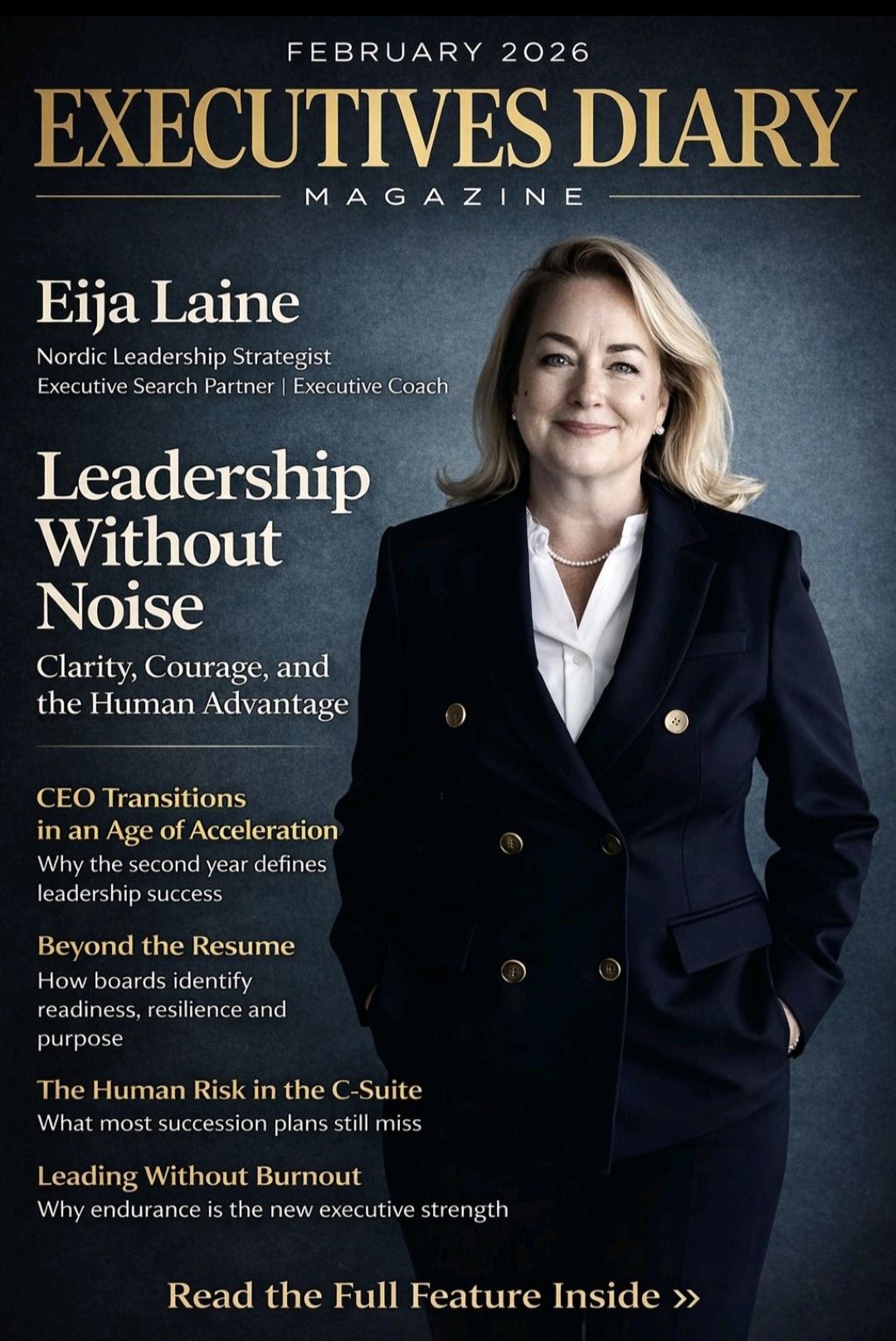
A Biography by Executives Diary Magazine

Mark Kelly: Redefining Modern Leadership
Mark Kelly is a global strategist in workforce health and sustainable leadership performance. A former Global Head of Benefits and Wellbeing and ex-Team GB cyclist, he brings a rare fusion of data discipline, human biology insight, and elite performance mindset. Through Well Humans Thrive, he partners with CHROs and C-suite leaders to redesign leadership ecosystems that lower risk, strengthen culture, and unlock long-term human capacity in an AI-driven world.
The Cyclist Who Saw the Future of Work
Long before Mark Kelly advised global CEOs, he spent his youth training on cold British roads with cyclists who would go on to transform the sport forever. In that world every detail mattered. Sleep, recovery, nutrition, mindset, and movement were treated as core components of performance. High performance was not driven by heroics or intensity. It was engineered.
Years later, inside boardrooms from London to Singapore, Mark recognized the same performance patterns he had studied on the bike, but inverted. Corporations were pushing their “athletes” to the edge without giving them the systems, recovery practices, or cultural environments needed to sustain excellence. This contrast shaped his emerging philosophy. The leaders of the future would not be defined by how much they could endure but by how intelligently they managed their energy, biology, and environment. That belief became the foundation of the Well-Human Advantage and the cornerstone of Mark’s work.
A Foundation Built on Grit, Biology, and Human Insight
Mark’s worldview was forged in two distinct arenas. His early years as an elite cyclist trained him to respect the biological systems that govern human performance. Training alongside world and Olympic champions taught him that mastery begins long before the race. It begins in the commitment to disciplined processes and the intentional balance of stress and recovery. In sport, recovery was not optional. It was a requirement for growth.
When Mark transitioned into the corporate world, he was struck by how far organizations had drifted from these principles. Brilliant leaders were expected to perform at a world-class level while running chronically depleted. Many of them treated their bodies as an afterthought rather than the engine driving their decisions and relationships. His athletic background and his deep respect for human physiology became the lens through which he would later reshape corporate approaches to performance.
Another defining dimension of Mark’s foundation came much later in life. His diagnosis as Dyslexic, ADHD, and Autistic reframed how he understood the relationship between performance and human diversity. He learned firsthand that neurodivergent minds thrive in environments built on clarity, psychological safety, and trust. He often describes neurodivergent thinkers as the first to sense when a system is unhealthy and the first to flourish when conditions support authentic thinking. This lived experience added a powerful layer to his purpose. He was not only committed to improving performance but also to creating environments where different minds could thrive without masking their strengths.
An Ascent Shaped by Seeing What Others Missed
Mark’s ascent through the benefits and wellbeing field unfolded across influential roles at Zurich, Aon, Lockton, and later at Boston Consulting Group. He entered the industry with the curiosity of a systems thinker and the discipline of an elite athlete. He continually asked why people were struggling instead of accepting surface-level explanations. In the process he uncovered a pattern that would reshape his career.
Organizations were investing millions in insurance premiums, wellbeing apps, resilience workshops, and leadership training. Yet very few were examining the claims data that revealed the true sources of risk. Musculoskeletal issues reflected sedentary and high-pressure work environments. Mental health claims mirrored depleted leadership capacity and cultures built around unsustainable workloads. Metabolic issues signaled chronic stress and a lack of recovery.
Mark saw these patterns not as isolated health problems but as symptoms of leadership ecosystems that needed redesign. His ability to translate health claims data into strategic insight became a differentiator. He helped organizations recognize that rising health costs and leadership burnout were not separate issues. They were part of the same systemic story.
During his tenure as Global Head of Benefits and Wellbeing at BCG, Mark elevated the function into a proactive advisory group. He expanded global wellbeing and benefits technology, launched programs across more than forty countries, and introduced the well-known Energize to Thrive initiative. These efforts not only improved outcomes but also turned senior leaders into champions of sustainable performance. What resonated most with him during this period, however, came from private conversations. Many leaders who appeared outwardly successful felt exhausted and disconnected. They did not need another program. They needed a strategic partner who could help them rebuild their operating capacity.
Mark had found the work that aligned with his core philosophy. Leadership performance was not about squeezing more output from people. It was about protecting the human capacity that makes performance possible.
A Career Defined by the Integration of Data and Humanity
Mark’s signature contribution to the field is his redefinition of wellbeing as a commercial and strategic function. In his view wellbeing is not a collection of initiatives but a risk management discipline that directly influences financial performance, cultural health, leadership stability, and long-term organizational value. When medical inflation outpaces general inflation by multiples and when burnout disrupts strategy execution the cost is not personal. It is systemic.
This belief led him to create Well Humans Thrive, a strategic advisory and coaching practice for CHROs, Total Rewards leaders, and C-suite executives. The practice is built on the idea that data and human performance cannot be treated as separate silos. Claims analytics reveal the pressure points in an organization’s culture. Human biology reveals how leaders respond to those pressures. Together they form a blueprint for sustainable high performance.
Mark helps organizations uncover the specific financial risks hidden inside their health data, connect those risks to leadership behaviors and cultural patterns, and guide leaders through rebuilding their capacity with science-backed approaches drawn from performance physiology and psychology. His clients describe him as a rare blend of strategist and coach, someone who understands both the corporate pressure to manage global risk and the human reality of leading in volatile environments.
A Vision for Leadership in an AI-Driven World
Mark believes the future of leadership rests on a simple but powerful truth. As artificial intelligence accelerates and automates more tasks, human capacities become the competitive advantage that cannot be replicated. Judgment, empathy, creativity, adaptability, and connection define the leaders who will shape the future. These qualities do not survive burnout. They require energy, clarity, psychological safety, and intentional system design.
His mission is to prove that the Well-Human is the single most valuable asset an organization possesses. Sustainable performance is not achieved through constant sacrifice. It is achieved through thoughtful architecture that honors the biology and psychology of leadership. One of his most defining insights expresses this clearly. He often says that the real challenge for any elite performer is not only to master the work but to master the human who does it.
Through Well Humans Thrive, Mark continues to partner with senior leaders and organizations committed to redesigning their cultures in ways that strengthen leadership capacity and reduce organizational risk. His work provides a strategic path for teams who want to perform at the highest level without sacrificing wellbeing along the way.
Editorial Note
Mark Kelly’s journey from elite cyclist to global advisor offers a new vision for leadership in a rapidly evolving world. His work reminds us that excellence is not created through unrelenting intensity but through disciplined system design and respect for human capacity. His philosophy challenges leaders to rethink performance, moving from endurance to intelligence and from surviving to truly thriving. As organizations navigate complexity and constant change, Mark’s message is clear. When leaders become Well-Humans, they unlock the greatest competitive advantage of the modern era.