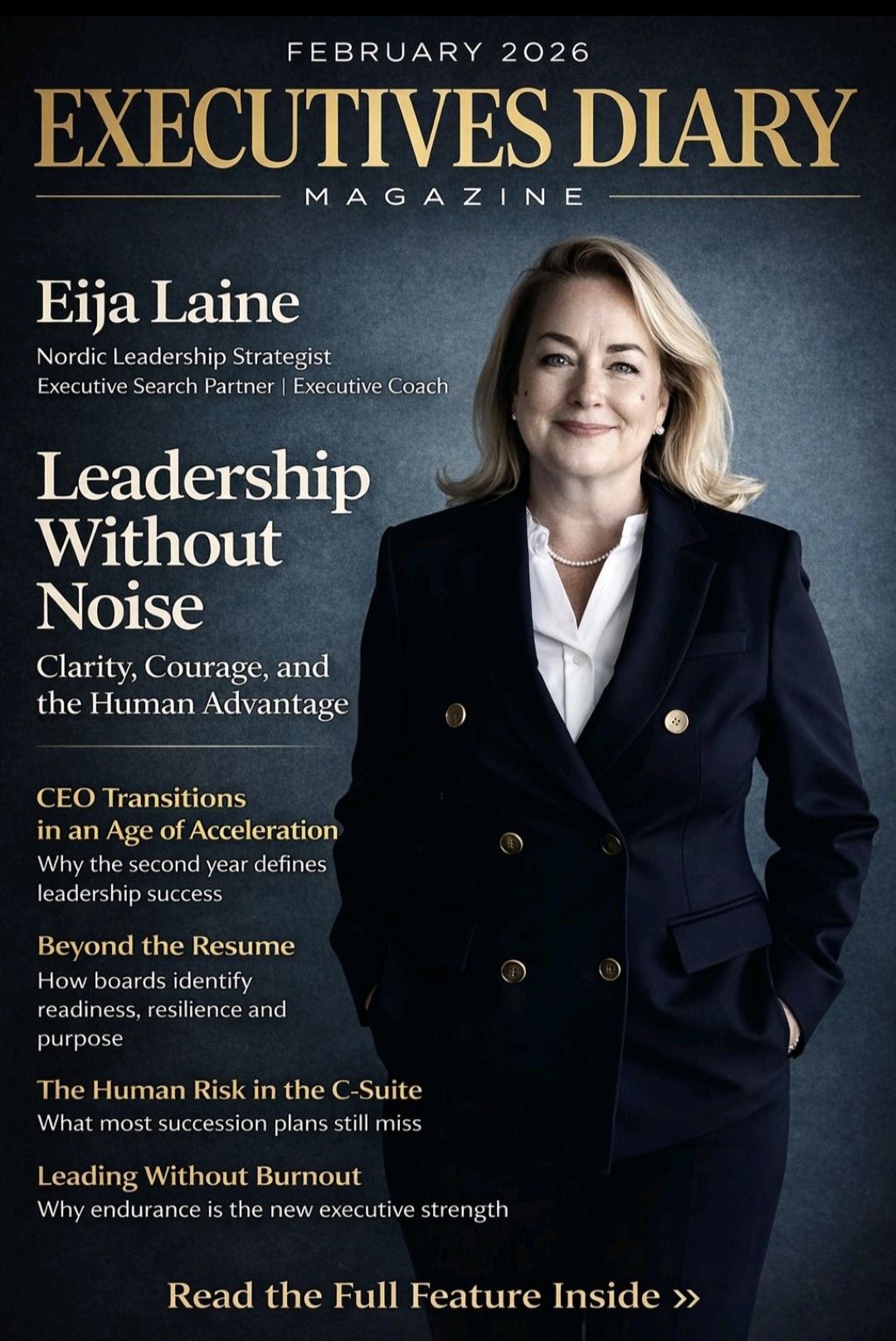
A woman sits in a conference room at 9 AM on a Tuesday. Her manager just finished pitching a new initiative. It’s been pitched before. It failed once. It will fail again. She knows exactly why. She has the answer. The words are already formed in her mind, sharp and clear and true.
She opens her mouth.
Nothing comes out.
Not because she doesn’t know. Not because she isn’t capable. But because somewhere between her throat and her voice, a question intercepts her: What if they think I’m difficult? What if this makes me visible in the wrong way? What if speaking costs me more than staying quiet?
So she doesn’t speak. She nods. She takes notes. She goes home and tells herself that next time will be different.
Next time never comes.
This is the quiet death that happens in thousands of rooms every day. Not rejection. Silence. Not failure. Self-editing. A woman with answers becomes a woman with questions about herself. And the room never even knows what it lost.
Meet Maryam Jan Akbari
She is the founder of Abundance of Clients AB, an identity and visibility coach based in Stockholm who has spent the last five years teaching women founders and coaches how to stop shrinking. She is the author of The Woman Who Refused to Be Silenced, a memoir that traces her journey from a refugee child denied a name in Iran to a woman who now helps other women reclaim the voice the world tried to take from them. She has spoken at TEDx Stockholm. She advises founders on go-to-market strategy. She invests in early-stage startups built by people solving real problems with real conviction.
But none of that is the thing that defines her.
What defines Maryam is this: she knows, with absolute certainty, that the problem keeping women small is not their competence. It is their permission. And she has spent her entire adult life teaching women to give it to themselves.
The Cost of Running
Maryam’s childhood was built on silence. Not the peaceful kind. The kind that saves your life.
In Iran, she was born into a world where girls were not always named, not always counted, not always meant to exist in ways that could be fully claimed. Her early years were defined by absence. Absence of choice. Absence of voice. Absence of a future that belonged to her.
Then came Afghanistan. A young woman in a country where speaking up meant risking everything. She was intelligent, observant, reaching for understanding in a place designed to keep women contained. But speaking, asking, refusing to accept the role prescribed for her—these were not acts of courage. They were acts of danger.
So she learned what millions of women learn: survival tastes like silence.
By the time she reached Sweden as a young adult, Maryam had been running so long that she no longer recognized the distance between fear and truth. She had built her entire identity around the art of not being fully seen. It was the only skill that had kept her alive.
Sweden promised safety. But it did not promise healing. For years, she carried the weight of everything she had learned not to say. She worked in journalism, then in career coaching, then in education development. She was competent. She was trusted. She was also exhausted from the constant negotiation between who she was and who it was safe to be.
The turning point came when she realized something simple and devastating: silence doesn’t protect you anymore. It shrinks you.
That realization became the foundation of everything she has built since.
The Architecture of Unshamed Visibility
When Maryam started Abundance of Clients AB in 2021, she was not trying to teach women how to be louder. She was trying to teach them something much more radical: how to stop performing safety.
The women who came to her were not broken. They were brilliant. Many had survived their own versions of displacement, loss, and the constant code-switching required to move through a world that rewards accommodation. They had built businesses. They had found clients. But they were doing it from a place of perpetual apology. Their visibility came with a whisper. Their authority came with a question mark.
“The problem was not that they needed more confidence,” Maryam explains. “The problem was that they were trying to build their entire business from a place of inherited shame. And shame is exhausting. It makes you small before anyone else has to.”
Her method is rooted in a single principle: your story is not just your past. It is your positioning. When a woman owns what she has lived through, when she stops treating her experience like a liability and starts treating it like evidence of her expertise, everything shifts. She stops sounding generic. She starts sounding like herself. And people trust what is real far more than they trust what is polished.
This is what she means by “unshamed storytelling.” It is not therapy dressed as marketing. It is not oversharing on LinkedIn. It is the precise, strategic act of turning lived truth into professional power.
“I help women identify the part of their story that builds trust,” she says. “Not all of it. Not the parts that belong to a therapist. The parts that prove they understand their clients’ deepest problem because they have lived it. That is where authority lives.”
Her clients tell the same story over and over. They come to her stuck. Invisible despite being capable. Overwhelmed by the gap between what they know and what they are willing to say publicly. Within weeks of working with her, something shifts. Not because they become different people. Because they stop trying to become safer versions of themselves.
One client, a Navy veteran and trauma survivor named Susan, came to Maryam knowing she had something powerful to share but paralyzed by shame. Maryam did not tell her to post more. She helped her unshame her story first. Within months, Susan went from hiding her trauma to building an entire coaching business on it. The transformation was not in the content. It was in the permission.
“Without working with you,” Susan told her afterward, “I don’t think I would have shared my story publicly. I would have gotten there later, but not sooner.”
This pattern repeats constantly in Maryam’s work. Women do not need better strategies. They need to stop betraying themselves before they step into the room.
What Visibility Actually Requires
In 2024, Maryam published The Woman Who Refused to Be Silenced. The book is a memoir, but it is also a manifesto. It traces her journey from a child denied identity to a woman who spent decades rebuilding hers across three countries. But underneath the narrative arc runs a deeper current: an argument about what real leadership requires.
Most women are taught that leadership means performance. Be strong. Be polished. Be certain. Have the answers. Control the room. Prove your place.
Maryam learned something different from being forced to rebuild her life multiple times.
“If your identity is built only on titles or status or external certainty, life will eventually shake you,” she says. “But if your identity is rooted in values and voice and inner truth, you can rebuild from almost anything. Reinvention is not weakness. It is leadership.”
This distinction matters deeply in her current work. She has become increasingly vocal about the hidden cost of women’s invisibility. Not the cost to opportunity, though that is real. The cost to identity itself.
When a woman stays silent to survive a room, she teaches herself something dangerous: that belonging matters more than truth. Over time, that becomes her default. She stops speaking up in small ways. Then in larger ways. Then she stops knowing what she actually believes, because she has spent so long filtering it through what others will accept.
This is why Maryam’s posts on LinkedIn, which regularly reach hundreds of thousands of women, are not inspirational quotes. They are interventions. Direct addresses to the part of women that has learned to shrink.
“One of the most dangerous things a woman can do is stay too long in a room that is already shrinking her,” she wrote recently. “From the outside, staying can look responsible, loyal, even wise. But inside, something starts fading. Your voice gets softer. Your ideas stay in your head. Your standards drop to match the room.”
She is not theorizing. She is describing the architecture of how women disappear.
And she is naming the antidote: the decision to stop performing safety and start practicing truth. Not loudly. Not recklessly. But with clarity. With boundaries. With the deep knowledge that your visibility is not selfish. It is necessary.
The Akbari Playbook: 5 Lessons on Unshamed Leadership
Silence Does Not Protect You Anymore Staying quiet to stay safe is a survival strategy until it becomes an identity. The moment safety is possible, silence becomes a choice to shrink. Name what you are actually afraid of instead of hiding behind vague fear.
Your Story Is Not a Liability—It Is Your Competitive Advantage The part of your experience that feels most risky to share is often the exact part that builds the deepest trust with your ideal clients. Stop treating your lived truth like a secret. Start treating it like evidence.
Visibility Requires Permission Only From Yourself You do not need validation before you speak. You need clarity. The moment you have clarity about what you know and who you serve, visibility stops feeling like performance and starts feeling like truth-telling.
A Woman’s Growth Will Make Some People Uncomfortable—That Is Not a Sign You Are Wrong When you become clearer, more visible, more boundaried, people who were used to you shrinking will react. Their discomfort is not information about your path. It is information about the version of you they preferred.
The Right Room Does Not Require Your Self-Erasure Real leadership happens in spaces where you can think clearly, speak honestly, and recover from mistakes without humiliation. If you are constantly editing yourself, you are not in the wrong strategy. You are in the wrong room.
The Architecture of Real Authority
Maryam’s expansion into angel investing is not separate from her coaching work. It is the same conviction expressed in a different way.
She has become increasingly aware of a pattern: exceptional founders, especially women, are often overlooked not because they lack vision but because they lack positioning. They are solving real problems from lived understanding. But they do not know how to communicate that depth in a way that makes investors, users, and partners see them fully.
“I am drawn to founders who are building from lived insight,” she explains. “Those founders understand their users at a deeper level. They build with more urgency and integrity. But many of them are invisible not because their idea is weak, but because they have not learned to speak about it from a place of congruence.”
This is the word that keeps appearing in her work: congruence. Not confidence. Not polish. Not performance.
Congruence is what happens when your inner conviction and your outer voice finally align. When you stop translating yourself into language you think will be acceptable and start speaking in your own voice. When a woman reaches congruence, people feel it. They trust it. They back it.
The Woman Who Refuses to Stop
There is a scene Maryam describes from her own life that reveals something essential about how she thinks.
There were years, she says, when she was doing extraordinary work that nobody could measure yet. She was building capacity. Deepening conviction. Learning skills that would only matter later. But from the outside, it looked like nothing was changing. And invisibility, she has learned, can distort self-trust.
A woman can be doing everything right and still feel like she is falling behind. Because progress that is not yet visible can start to feel like it does not exist at all.
This is the season many women leaders are in right now. Not behind. Building. But the distinction matters only if someone helps them see it.
Maryam has made that her work. Not to make women louder. Not to convince them they are good enough. But to help them stay connected to their own voice while the world catches up to what they already know.
“Women need to stop interpreting delayed recognition as proof that they are not meant for more,” she has written. “Sometimes the race is not lost. Sometimes the visible part of it just has not arrived yet.”
But here is the part that matters: staying in the race does not mean staying passive. It means getting clearer. It means refusing to let silence be your default even in seasons when visibility has not yet been rewarded. It means moving with self-trust instead of moving for approval.
This is what separates Maryam’s approach from motivational content. She is not asking women to believe in themselves harder. She is asking them to stop betraying themselves first.
The woman in the conference room at 9 AM on a Tuesday—the one with the answer she never spoke—she is the woman Maryam is reaching for. Not by making her louder. By making her real. By helping her see that the cost of her silence is always higher than the cost of her truth.
And by refusing to let her disappear before she even has a chance to arrive.
Maryam Jan Akbari is the founder of Abundance of Clients AB, an identity and visibility coaching practice based in Stockholm, and the author of The Woman Who Refused to Be Silenced. She works with women founders and coaches on brand positioning, storytelling strategy, and leadership development. To connect with Maryam or learn more about her coaching, angel investing opportunities, or upcoming speaking engagements, visit her LinkedIn profile or www.abundanceofclients.se.