Donna Cryer
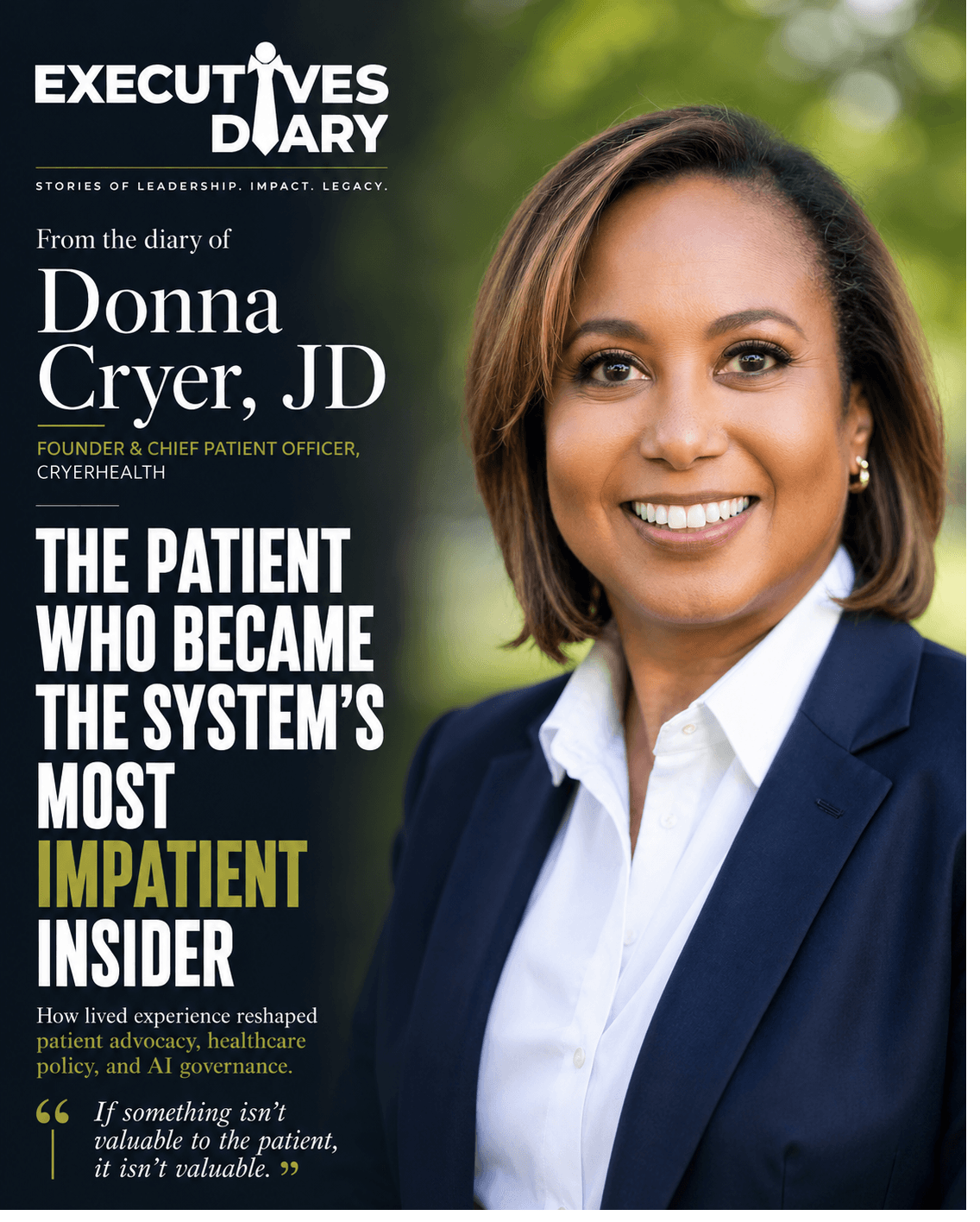
The Patient Who Became the System’s Most Impatient Insider: The Donna Cryer StoryThere is a particular kind of authority that no credential program confers, and no board appointment creates. It comes from having done the math at your own kitchen table. How many work hours can I miss for this infusion. Which specialist visit gets delayed. Whether the medication that might save my life will be covered when I reach the pharmacy counter. Donna Cryer has run those calculations repeatedly across inflammatory bowel disease, rare autoimmune liver conditions, transplantation, orthopedics, and vision care. She is alive today because innovations arrived just before she ran out of time. That proximity to mortality did not make her grateful to a slow-moving system. It made her determined to control which innovations reach everyone else.
The Insider Who Never Forgot Being Outside
Donna Cryer, JD, is the Founding Partner and Chief Patient Officer of CryerHealth, an FDA Patient Representative, and one of healthcare’s most strategically consequential figures operating at the intersection of patient advocacy, health policy, and healthcare investment. She treats “patient-centered” not as corporate messaging, but as a fundamental redefinition of who gets to make decisions when lives hang in the balance.
The Education That Happened on Two Tracks
Her formal credentials tell part of the story. Harvard University for government, where she learned how institutions distribute power and how policy becomes the quiet architecture of people’s lives. Georgetown University Law Center for the language of rules and the mechanics of systemic change. But her most valuable education happened simultaneously in hospitals, clinics, and at pharmacy counters, where she learned what it costs when those systems get it wrong.
Early professional roles at the United Network for Organ Sharing, Hill & Knowlton, the Advisory Board Company, and Amerigroup’s Public Policy Institute gave her structural fluency in how healthcare decisions actually move through committees, legal frameworks, and political relationships. Each role added a different layer: patient affairs, communications, consulting, public payer systems. By 2005, when she co-founded CryerHealth, she was not building a traditional patient advocacy firm. She was building a consulting practice that could tell pharmaceutical companies, biotechs, and payors exactly what they were missing, and charge them appropriately for that clarity.
The Decade That Rewrote the Rules
In 2014, Cryer founded the Global Liver Institute and spent the next decade proving that patients could drive policy if they refused to accept the traditional boundaries. She built disease-specific councils covering liver cancer, fatty liver disease, and pediatric and rare liver conditions, but the structural choice that made everything stick was simple: she refused to let industry, medical societies, patients, and government meet in separate rooms.
Her signature move was counting what healthcare systems refused to count. Not just direct medical costs, but caregiver time, delayed productivity losses, costs scattered invisibly across a system that had never bothered to add them up. That reframing helped GLI win on GLP-1 access in Medicare where obesity advocates alone had stalled, because Cryer brought liver and cardiovascular consequences into a single, more compelling economic story.
The fatty liver disease breakthrough became her masterclass in systemic change. When the first approved therapy for the condition, resmetirom, approached regulatory review, she saw that patients had no formal channel into decisions that would shape not only that drug but the entire pipeline behind it. So she built one. Working with patients, she designed an externally-led, patient-focused drug development meeting that put detailed data and lived experience directly in front of FDA regulators.
One message landed with unusual clarity: patients’ deep aversion to liver biopsy and a well-reasoned case for non-invasive diagnostic approaches. Trials soon began arriving without biopsy requirements at all. There was no press release, just a quiet shift in what regulators and sponsors now considered acceptable practice.
She kept everyone accountable with literal scorecards. Each stakeholder could see their role and GLI’s progress, year over year, long before any headline win arrived. That discipline is why the victories stuck and why bipartisan liver health legislation followed.
The Investment Frontier and the Algorithm Problem
Today, as a Founder and CEO Emeritus, Cryer is building what she calls a portfolio career. The newest and most energizing piece is moving upstream into venture capital and private equity to help direct capital toward technologies that solve problems patients actually have. Her advisory work with PathAI, combined with MIT training in healthcare AI, has positioned her at the center of a debate most of healthcare is not yet having honestly.
Her safeguard is not a single guardrail but a principle: patients embedded at every level of AI governance, training, testing, and deployment, with regular evaluation and trained clinicians still in the loop. The blind spots that have always existed in healthcare do not disappear when handed to machine learning models. They scale at the speed of compute.
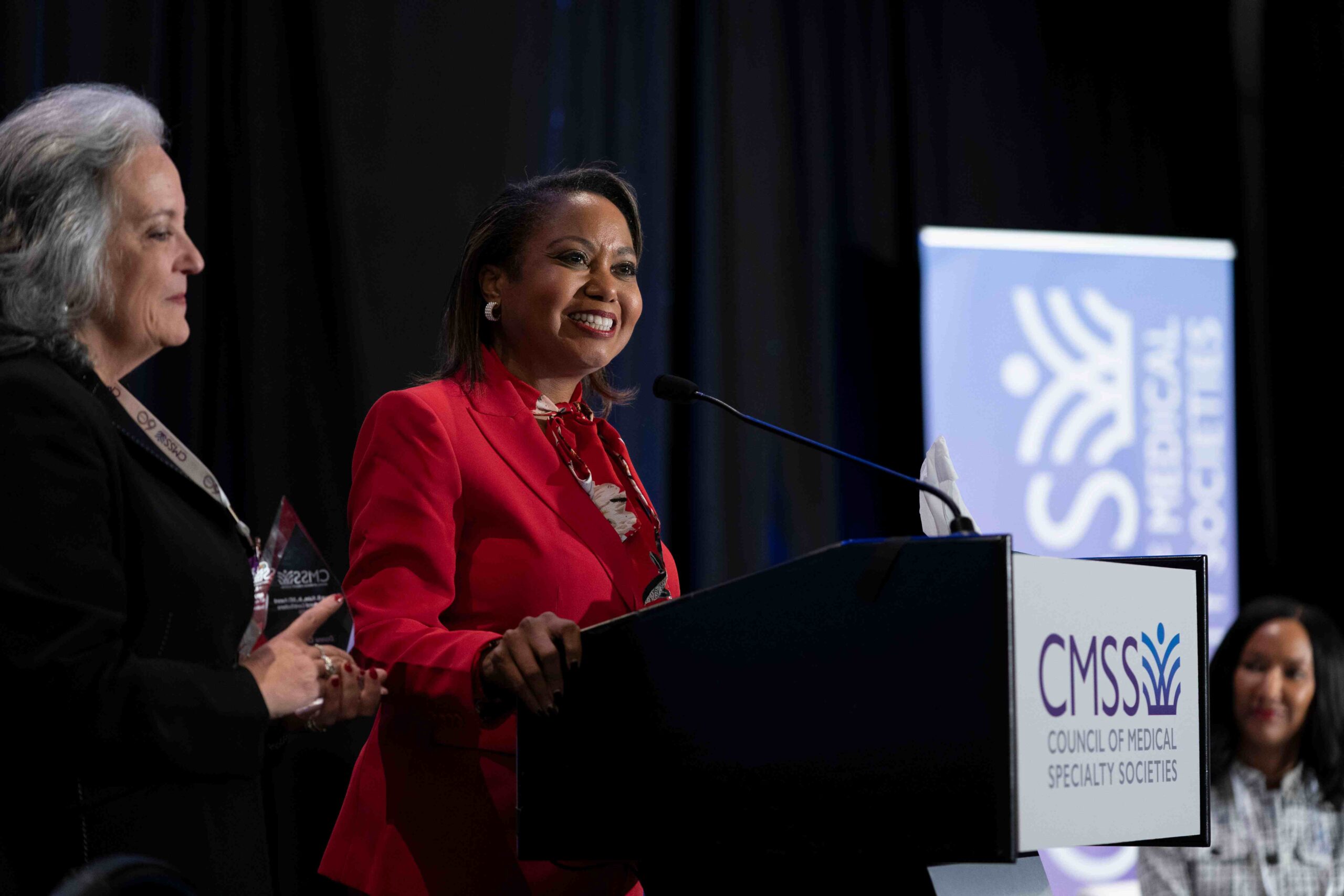
Through the Advanced Advocacy Academy, she has trained hundreds of advocates globally, many of whom now run their own organizations. Many of those advocates went on to participate in FDA-facing processes, ensuring that regulators heard directly from patients about treatment burdens, diagnostic barriers, and the realities of living with liver disease. For Cryer, patient testimony was never a symbolic exercise. It was a way to ensure that people making decisions about therapies understood what life with the condition actually felt like beyond the clinical data.
The same philosophy shaped her work in health technology assessment and value evaluation. Cryer became a leading voice in expanding how healthcare systems define value, pushing beyond narrow calculations of direct medical costs and clinical outcomes. She advocated for the inclusion of factors that patients and families experience every day: caregiver burden, productivity losses, quality-of-life impacts, and the hidden costs that traditional economic models often overlook.
That broader perspective helped shift conversations about how therapies should be evaluated and funded. Rather than asking only whether a treatment worked, Cryer pushed decision-makers to ask what outcomes mattered most to the people living with the condition and whether existing frameworks were measuring them at all.
The Authority That Cannot Be Unwound
There is a reason Donna Cryer describes her work as making herself healthcare’s most impatient insider. She understands what it costs when the important rooms get it wrong, and she has spent three decades making exclusion the irrational choice. The legislation that passed, the drug access that moved, the FDA approaches that shifted, none happened because the system invited her in. It happened because she built cases so thoroughly, so economically, so structurally sound that ignoring them became impossible.
The woman who once counted hours and dollars at her own kitchen table now spends her days ensuring those calculations finally appear where they belong: in the decisions that determine who gets care, when, and on what terms.