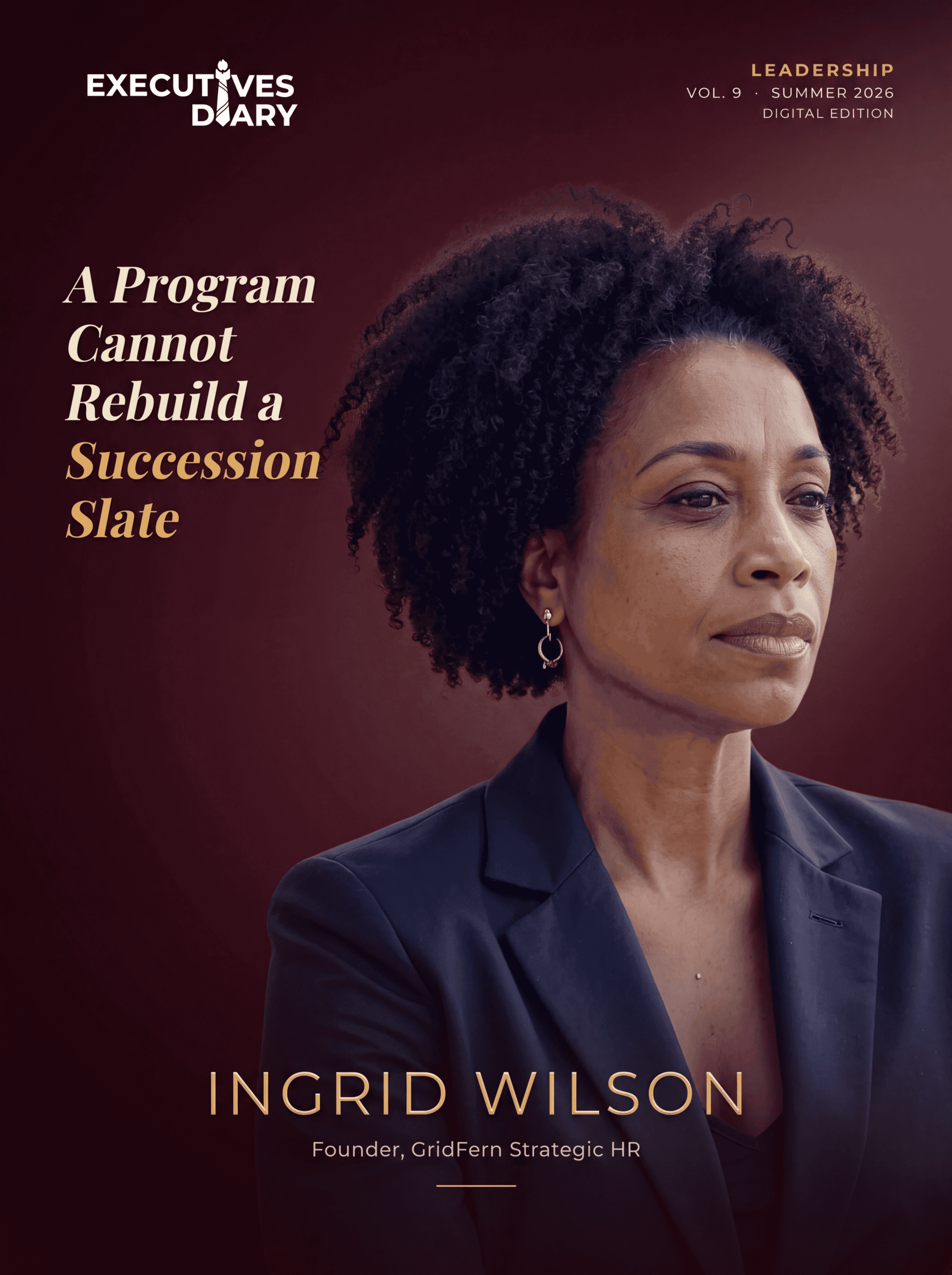
“Inclusion is not a line you fund once a year and report on in a townhall,” Ingrid Wilson says. “It is a decision made every time you choose who gets hired, who advances, who is paid equitably, who is prepared to lead, and who gets to design the systems everyone else has to work inside.” Those five decisions belong to the executive table and the board. Wilson spent three decades at that table before she began advising the people who sit there now.
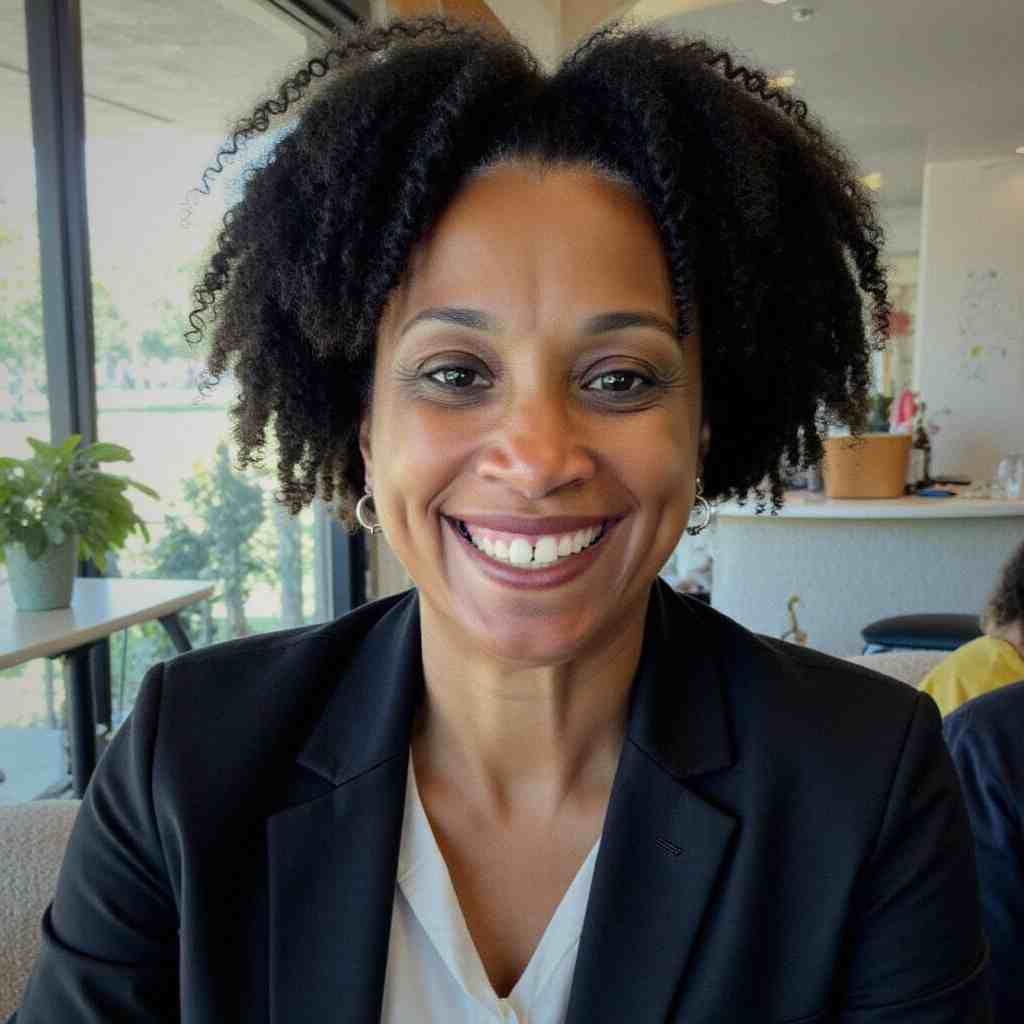
Ingrid Wilson is the founder and principal of GridFern Strategic HR in Mississauga, Ontario, and a 2024 Women Changing the World Americas Awards winner.
Inclusion Outcomes Are Produced by Systems That Already Exist
Her argument rests on location rather than intent. Whatever an organization produces by way of representation, promotion, and pay, it produces through machinery already running: hiring, the succession slate, the compensation structure, the performance cycle. Anything bolted alongside that machinery does not reach it. “HR is a system, not a collection of disconnected programs,” Wilson says.
She learned that by sitting inside it. Wilson joined Echelon Insurance in 2002 and spent ten of her seventeen years there as Vice President, Human Resources and CHRO, accountable for succession planning, executive and board compensation, governance, and integrations across its Canadian, US, and European divisions. “Sitting in the chair where those decisions were actually made showed me where good intentions often break down,” she says. “They break down in a succession slate that is built the same way it has always been built, in a compensation structure no one has gone back to question, and in a hiring process that still relies too heavily on ideas like culture fit versus culture add.”
One chair could fix one company, not the pattern. “What I could not change, from inside a single structure, was the broader pattern I kept seeing: inclusion work only has staying power when it is connected to the people and processes that already control hiring, compensation, succession, governance, and risk.” Echelon was sold, and in November 2019 Wilson left to found GridFern Strategic HR, trading the security of one executive seat for access to many.
The Function That Had to Be Built From Nothing
The test came at scale. Wilson joined Walmart Canada in 2021 in a newly created role, Senior Director, Culture, Diversity, Equity and Inclusion, with no existing function to inherit and a national workforce of more than 100,000 associates. The build was structural before it was educational. Wilson and her team stood up the CDEI framework, charter, and constitution, designed the curriculum used to train associates nationally, and pushed the work into, in her words, “parts of the business that are often left out of corporate inclusion efforts, including unionized transportation and distribution centres.” She opened Indigenous partnership work around the Surrey, British Columbia distribution centre launch, and rebuilt Women in Retail from a networking group into a leadership development program ahead of its FY23 relaunch.
The contested question was never whether inclusion mattered. “Everyone could agree that it did,” Wilson says. What she argued for was authority and operating discipline. “We could not build this as a communications campaign or a calendar of events. If the work was going to mean anything, it had to show up in the systems people experienced every day: how associates were hired, how leaders were developed, how opportunities moved through the organization, and how accountability was built into the operating rhythm.”
A strong mandate moves quickly, and it leaves with the executive who granted it. That is the half of the lesson Wilson carried back to her own practice. “Momentum is hard to sustain if the work depends too heavily on one executive sponsor or one standalone program,” she says.
What Boards and CEOs Can Take From Thirty Years Inside the Decisions
The portable part of the practice starts before any diagnosis, with four questions Wilson puts to a new client rather than a set of findings she brings to them. “What are you trying to build? What part of the current framework is no longer working? Where are decisions getting stuck? And what risks are showing up as people enter the organization, move through it, and eventually leave?”
The test she runs across the answers is IDEA, which she reads as Inclusion, Diversity, Equity, and Accessibility and treats as four working questions rather than a banner. “Inclusion asks whether people can participate, contribute, and be heard in a meaningful way. Diversity asks who is present, whose experience is represented, and where voices or perspectives are still missing. Equity asks whether the systems, policies, and decisions are producing fair outcomes, especially for people who have historically faced barriers. Accessibility asks whether the workplace, the process, the language, the tools, and the expectations are designed so people can actually engage, not just be invited in.”
Four moves follow, and the sequence is the argument.
Four Strategic Moves
- First: place the work next to real authority before staffing it. “If the people leading it do not have influence over hiring, compensation, succession, and governance, they are being asked to change outcomes without access to the systems that produce them,” Wilson says.
- Second: treat executive sponsorship as a start date rather than an insurance policy. A mandate moves fast under a strong sponsor and survives a leadership change only once it has been embedded into the organization’s systems and decision-making routines.
- Third: bring the people closest to the barrier into the design, not the review. “Consultation after the fact is not the same as intentional co-design, and it rarely changes the system in a meaningful and sustainable way.”
- Fourth: translate the work into operating language or lose it. If it cannot be expressed as how leaders hire, promote, pay, develop, and hold people accountable, it stays an intention.
The reason to run the sequence now, in Wilson’s account, is that the machinery is being automated. “With innovation and AI already changing how work gets done and how decisions are made, organizations cannot afford to leave those biases unexamined. If they do, they risk scaling inequity, automating flawed assumptions, losing trust, and making less effective talent decisions.”
Her closing line to the chief executive or board chair still treating the work as a budget question is a diagnosis, not a recommendation. “If a CEO or board chair is still treating inclusion as a program instead of a set of business decisions, they have not made the decision yet.”