Aaron Strout
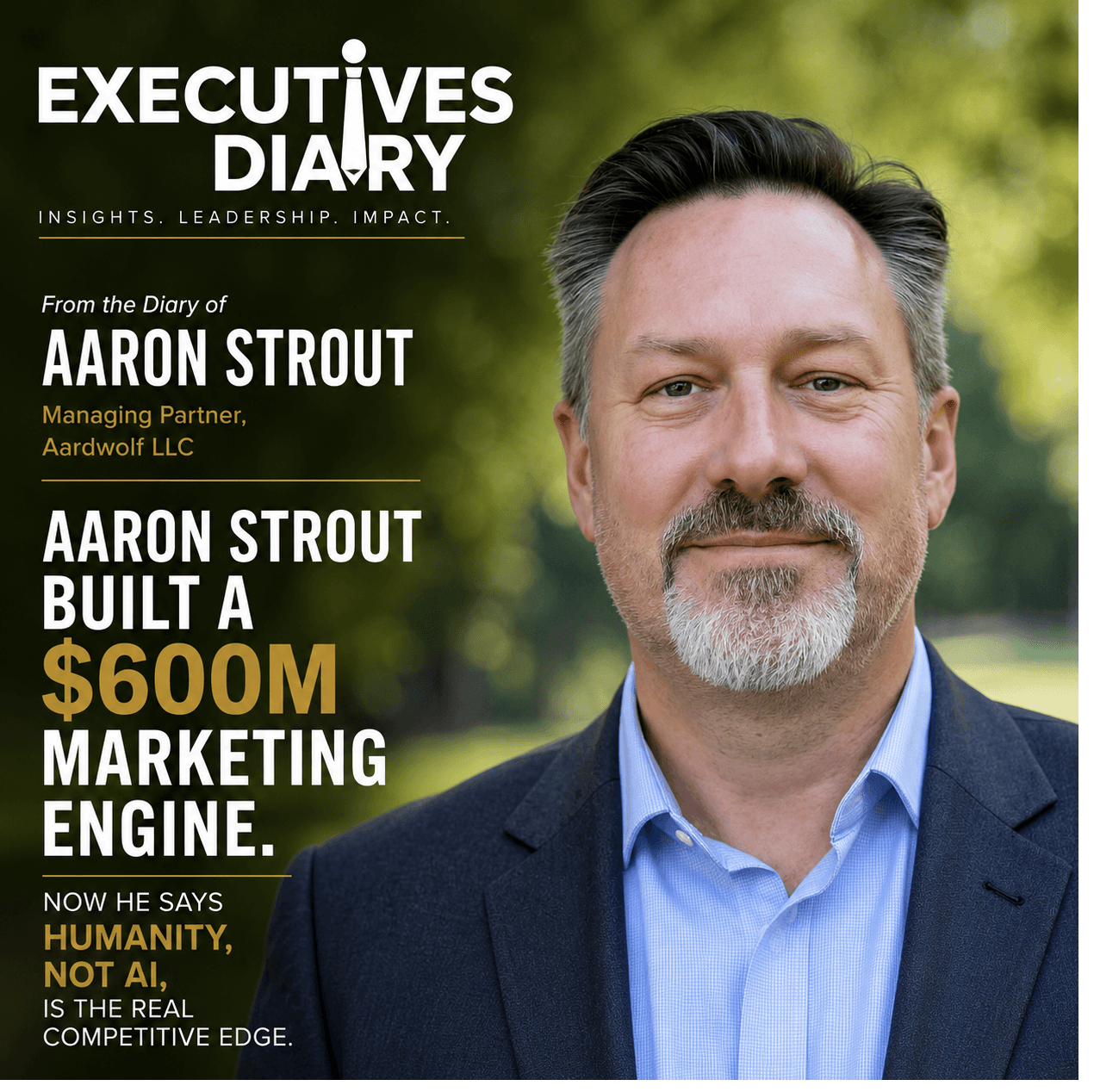
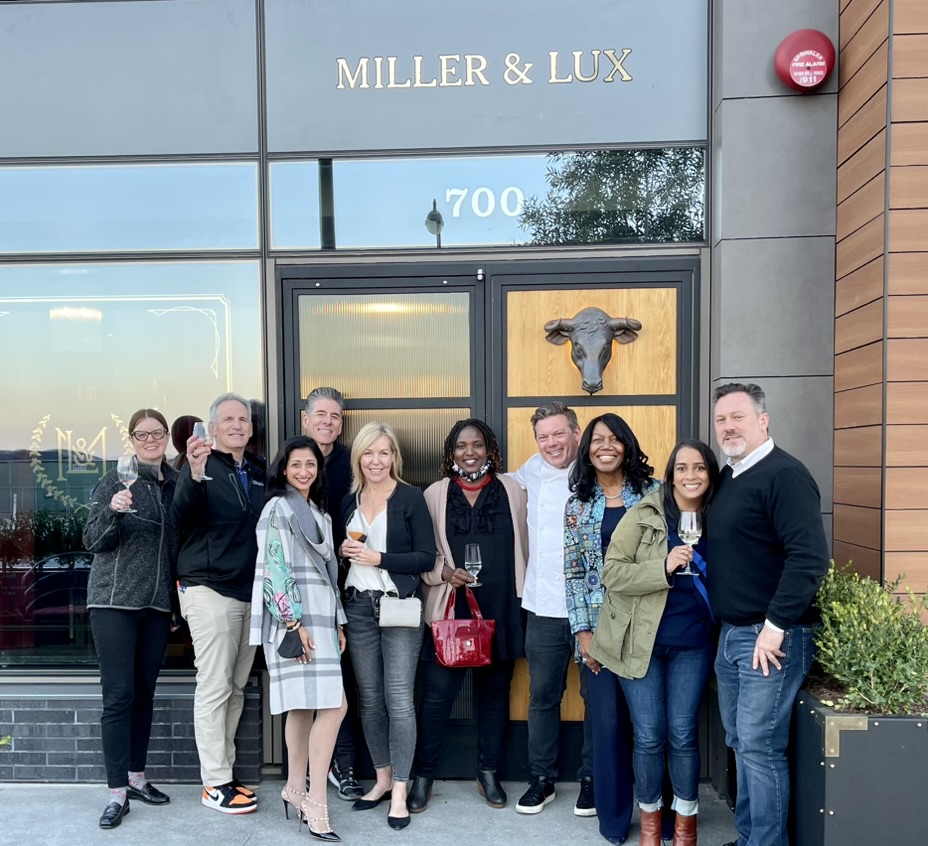
Built a $600M Marketing Engine. Now He Says Humanity, Not AI, Is the Real Competitive Edge.The dinner table had a Rolling Stones musician on one side, a Facebook executive on the other, and somewhere in the middle, a senior official from the Department of Health and Human Services. Nobody was selling anything. Nobody had an agenda printed on a lanyard. Aaron Strout had designed it that way on purpose. The goal was not a meeting. It was a collision, the kind that produces ideas no single industry could have generated alone. By the end of the night, every person at that table had five new collaborators they did not walk in with. That, Strout will tell you, is what real marketing looks like.
Aaron Strout is the Managing Partner of Aardwolf LLC, host of the Reaching Higher Podcast, and author of the newly published Wired for Purpose: Why Humanity is the Biggest Differentiator in a Digital World. He spent more than a decade as CMO of Real Chemistry, where he helped scale the firm from $47 million to over $600 million in revenue. The number is real. So is the argument he is now making about what actually drove it.
From Russian Literature to the Digital Frontier
The path from a Russian Studies degree at the University of Massachusetts Amherst to the top of a global healthcare marketing agency is not an obvious one. But for Strout, it was never really about the subject. It was about the discipline of learning how people think, how systems of meaning are constructed, and how language shapes belief. A pursuit of a master’s degree in Russian Area Studies from Georgetown followed, and then the economy made its own argument. The early 1990s were not a golden era for Kremlinologists. Strout moved toward what was emerging rather than what was established.
His first years in marketing were built on the unglamorous fundamentals: managing marketing databases at Logica, generating sales leads, and developing print campaigns at a small agency in Boston. These were not glamorous roles. They were, however, the kind of roles that teach you what the machine actually runs on before anyone hands you the controls. By the time Fidelity Investments brought him in, Strout had several years of that foundational work behind him.
Nine years at Fidelity shaped him in ways that pure agency work rarely does. He ran digital marketing for one of the most data-driven financial institutions in the country, managing content strategy for Fidelity.com, overseeing banner ad campaigns, and email, and working across branch and phone channels to build integrated campaigns. The discipline of proving marketing value inside a large, skeptical organization is a specific kind of education. Strout got it early.
The move to Shared Insights in 2006, a company that would eventually become Mzinga, was his first CMO role. He led a team of eight, managed a moderate marketing budget, and co-created the Community 2.0 conference in 2007, one of the early landmark events in what would become the social media industry. When Mzinga absorbed the company, he stayed, and when Powered, a social media agency in Austin, came calling in 2008, he moved again. At Powered, he helped acquire three boutique firms and built a digital-first brand equity model that became the template for his next chapter.
That next chapter was W2O Group, later renamed Real Chemistry, where Strout would spend thirteen years building something that outlasted every platform shift, every algorithm change, and every wave of marketing technology that promised to make human judgment obsolete.
The Engine That Nobody Saw Coming
The $600 million number gets attention. What built it is more interesting.
“For nearly a decade, the goal was simple: bring the best thinkers together across tribes, tech, health, policy, media, and let them cross-pollinate,” Strout says of the integrated marketing engine he and his colleagues built at Real Chemistry. The firm eventually worked with all 30 of the top 30 pharmaceutical and biotech companies in the world and topped MM+M’s Agency 100 rankings in 2023. The engine behind that growth was not a software platform. It was a philosophy about how trust actually forms.
Strout built the firm’s demand generation around marquee industry events, SXSW, JP Morgan Healthcare, ASCO, HLTH, treated not as isolated moments but as the ignition points of a continuous content and relationship operating system. The events were engineered for serendipity. The guest lists were deliberately mixed. The agenda was deliberately absent. And the metrics that kept the system honest were specific: first-touch attribution to event-driven content, engagement depth with target accounts rather than surface-level click rates, and MQL-to-sales-qualified opportunity conversion as the ultimate accountability measure.
“Make the room valuable for everyone else, and you’ll never have to ask for business,” Strout says. That sentence is not a motivational poster. It is the operating principle behind a decade of growth that survived the shift from social to mobile to AI.
Now, through Aardwolf LLC, he is applying that same operating philosophy in a new context. His current fractional CMO work includes leading communications and marketing for an AI-native healthcare and pharma marketing agency, including elevating the profile of its AI practice. The irony is not lost on him. The man making the most pointed argument about the limits of artificial intelligence is also helping build the infrastructure for it. That tension is, he would say, exactly the point.
“Tools are accelerants, not strategy,” Strout says. “The marketers getting hurt right now are the ones who confused the accelerant for the engine.”
Wired for Purpose, published in 2026, is where the argument gets its full treatment. The book draws on thirty years of experience to make the case that gratitude, connection, and calm leadership are not personality traits but operating systems. Strout describes keeping a running thank-you ledger, not as sentiment but as strategy, broadcasting credit publicly, pulling the analyst who cracked a measurement problem into the next client meeting, and building the next product iteration around their insight. He describes hiring for two signals above all others: does this person light up when they talk about someone else’s win, and can they stay calm in ambiguity.
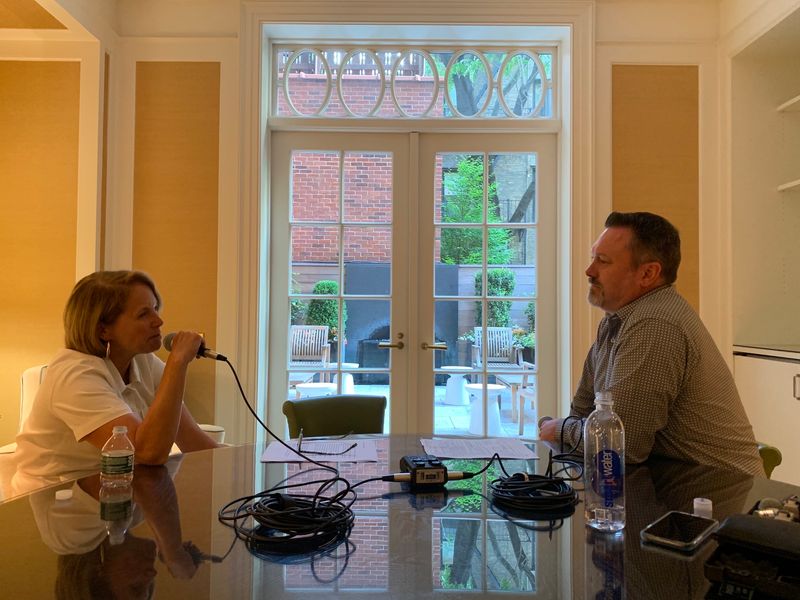
The Reaching Higher Podcast, which he has hosted since May 2025, is the platform where those ideas meet the people living them. The show brings influential voices together to discuss societal good, and Strout produces it with the same philosophy he applies everywhere else: let the software handle the lift, and let human judgment handle the landing. His son engineers the audio. The rhythm, the pauses, the occasional unedited moment, those are kept in deliberately.
The Argument That Took Thirty Years to Make
There is a version of Aaron Strout’s story that reads as a straightforward ascent: Russian literature to digital marketing, databases to CMO, $47 million to $600 million. That version is accurate. It is also incomplete.
The more honest version is about someone who spent three decades watching the industry fall in love with each new tool, and who kept noticing that the results everyone actually wanted, trust, loyalty, deals that closed without a pitch, came from somewhere the dashboards could not measure. The power dinners worked not because of the guest list but because of the intention behind it. The ABM engine worked not because of the software but because of the relationships the software was built around.
Aaron Strout is not arguing against technology. He is arguing for what technology cannot replace. After thirty years of building the engine, he has a very clear view of what makes it run.