


How Can You Call Yourself a Leader When You Don’t Know Yourself?
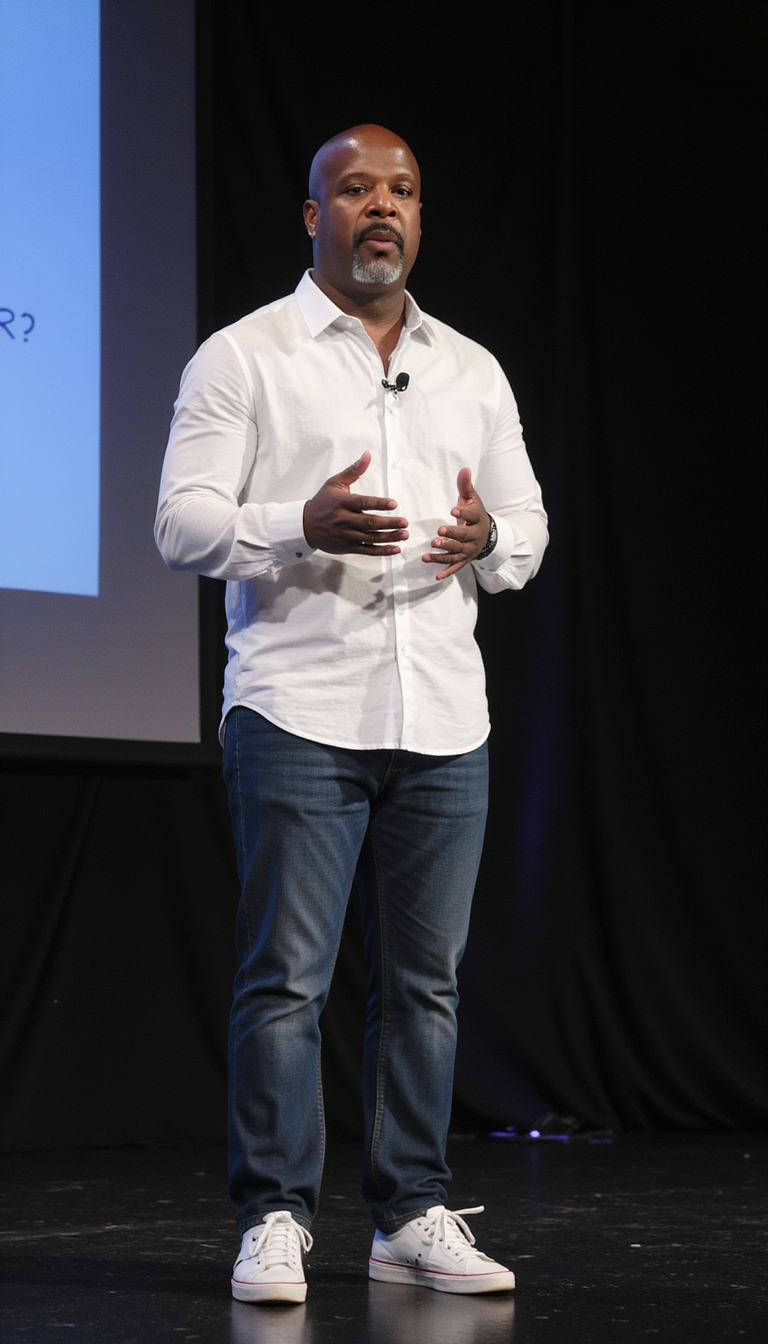
Stephen GarthStephen Garth spent thirty years inside warehouses, production floors, and logistics operations, in rooms where a delivery either hit its window or it didn’t, where a defect either shipped or it didn’t. Efficiency was the language. Then he left that world to ask executives, supervisors, and frontline managers a question no dashboard has ever measured.
How can you call yourself a leader when you don’t truly know yourself?
Why should anyone trust you with their career, their livelihood, or their family’s future, when your own inner life is in chaos?
That question is the reason Stephen Garth built Healingdivination Coaching, and it’s the reason his work refuses to sit neatly inside the C-suite. He coaches CEOs. He also coaches the supervisor two years into her first team, and the frontline manager who has quietly stopped recognizing the life he built. His clients share one symptom more than any title: they are succeeding by every external measure, and they cannot explain why it doesn’t feel like enough.
The Mirror, Not the Model
Most leadership coaching sells a framework: a new communication model, a productivity system, six steps to better feedback. Stephen Garth is doing something else.
“I’m holding up a mirror to the leadership world and asking, ‘What do you really see?'” he says. “Then I help people understand what’s being reflected back so they can consciously choose who they’re meant to become.”
That distinction matters to him because he isn’t interested in reinforcing traditional leadership. He’s challenging it. The industry has spent decades teaching people how to manage others. Almost none of it teaches leaders how to face themselves.
A production report can measure output. A spreadsheet can measure cost. Neither one measures resentment, or explains why a capable employee disengages months before they resign. Stephen spent three decades reading dashboards. What he learned to read instead was the gap between what a report says and what a person is actually carrying.

When the Version of You That Worked Stops Working
Stephen doesn’t describe burnout as a breakdown. He describes it as evidence.
“A crisis isn’t usually the problem. It’s the alarm clock.”
He watched the pattern in himself before he ever coached it in anyone else. Thirty years leading high-pressure operations, and then a point where the external markers of success no longer matched what life felt like from the inside. Not failure. A shift, the word that became the title of his first book, The Storm Before the Shift, and the throughline of his second, the award-winning Get Your Shift Together.
That line is the reason his coaching doesn’t stop at executives. A supervisor who has built her entire sense of worth around being reliable is running the exact same program as a CEO who has built his around the next title. The rank is different. The trap is identical.
Six Sigma for the Soul
The strangest part of Stephen’s method is also the most literal. He spent decades removing waste from production systems. Now he applies the same discipline to something far less visible.
Operational Comparison Framework
- Six Sigma asks: “What’s creating unnecessary waste?”
- Spiritual coaching asks: “What’s creating unnecessary suffering?”
Fear. Limiting beliefs. Old identities a person has outgrown but never examined. To Stephen, these aren’t soft concepts, they’re the exact inefficiencies he used to hunt for on a production floor, just relocated to the inside of a person instead of the inside of a warehouse. Find where the energy is leaking. Remove what no longer serves the system. Let performance follow, because it always does.
“When leaders become internally aligned, their decisions become clearer, communication improves, and performance follows naturally.”
Pressure Doesn’t Build Character. It Exposes It.
Business likes to celebrate people who perform well under pressure. Stephen has watched enough of it to know pressure isn’t a performance test. It’s an X-ray.
“Pressure doesn’t create character. It reveals it.”
He’s seen teams hit impossible deadlines without losing an ounce of trust in each other. He’s also watched talented managers poison a room under far lighter conditions. The difference was never technical skill.
“People don’t follow titles. They follow consistency. They follow honesty. They follow leaders who are willing to own their mistakes instead of protecting their ego.”
That’s not a management tactic he teaches. It’s the standard he’s watched separate the leaders people would follow anywhere from the ones people merely report to.

The Person Behind the Position
Stephen Garth isn’t asking leaders to abandon ambition. He’s asking them to stop paying for it with the parts of themselves that ambition quietly consumes.
“I help leaders reconnect with the person behind the position, because authentic leadership isn’t another communication technique. It’s what naturally happens when your inner life and your outer life stop pulling in opposite directions.”
It’s a question that doesn’t care what’s on your business card. Whether you run a division or run a shift, the mirror asks the same thing: what do you actually see, and are you willing to become someone different from what’s reflected back?
Because the most meaningful promotion in anyone’s career was never the next title.
It is becoming someone who no longer needs that title to know who they are.
