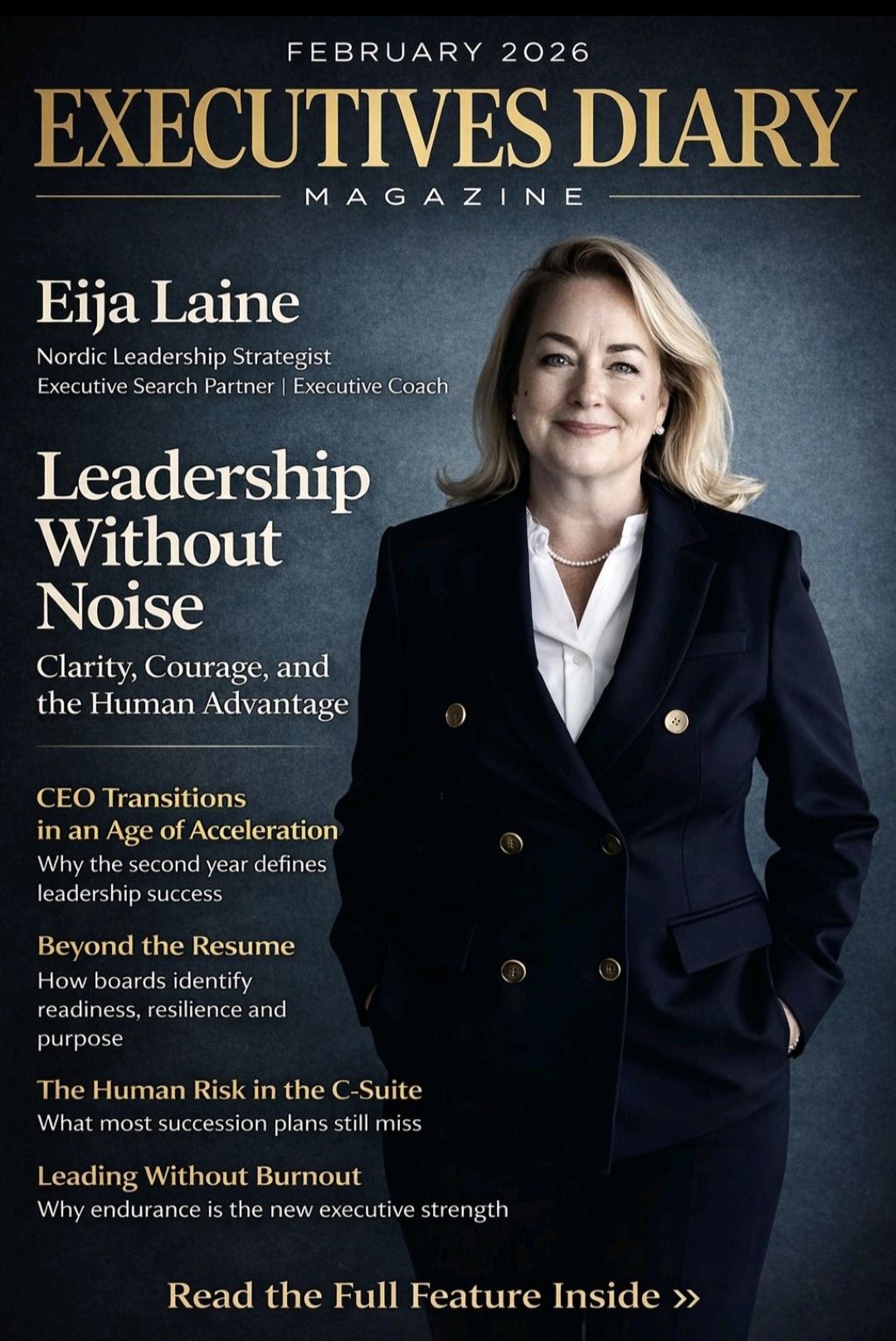
A woman arrives at a border checkpoint on a motorcycle. It is midnight. The guards do not know what to do with her. She is alone. She is a woman. She has a bike. She has a map that suggests she belongs nowhere they recognize.
She waits. She watches them try to categorize her into boxes that do not fit. And then she realizes something that will stay with her forever: the system was not built to see people like her. The system was built to see what it expected. Everything else becomes invisible.
She keeps riding.
Twenty years later, that woman is in a laboratory. Not on a bike anymore, but the principle is the same. Scientists are trying to understand hormones. They are trying to measure them. They are trying to build medicine around them. But they keep hitting the same wall: the data is too complicated. Women are too complicated. So they leave women out of the clinical trials entirely. For centuries, medicine has simply not looked.
The system was not built to see this either.
Meet Ida Tin
Ida Tin coined the term “Femtech” in 2016, but she did not invent the category because she was trying to name a market. She named it because she could no longer ignore what everyone else had decided was too messy to measure. Over the past eighteen years, she built Clue into the world’s most trusted female health app, reaching ten million active users across 190 countries. She is now the Director of Femtech Assembly, a think tank dedicated to proving that investing in women’s health is not a humanitarian gesture. It is an economic imperative and a path to planetary regeneration.
But the real work is just beginning.
The Education of Seeing
Ida grew up on a motorcycle. Not metaphorically. Her parents strapped her to the front of a bike when she was one year old and drove across South America, the former Soviet Union, Africa, and Southeast Asia. By the time she was old enough to understand geography, she had already lived in more countries than most people visit in a lifetime.
This was not tourism. This was her reality. Her childhood was not a series of moments she collected in a photo album. It was a way of being. It taught her something that most people never learn: that her perspective was not the only one. That the world was absurdly large. That the way things worked in one place could be completely different in another. And that people, everywhere, wanted the same thing: meaning and purpose.
When she was five, her parents let her guide motorcycle tours through Mongolia. When she was old enough to work, she co-founded MotoMundo with her father, leading expeditions through Cuba, Vietnam, and the remote deserts of the western United States. For five years, she lived on a bike. She wrote a book about it. She became comfortable with being the unexpected thing in every room.
Then she went to business school, but not the kind that taught spreadsheets and case studies. The KaosPilots, in Denmark, was a school for social entrepreneurs. They taught process leadership. Project leadership. How to create space for others to do their best work. How to build something that mattered beyond profit.
She absorbed that too.
In 2008, when she was twenty-six, she had an idea: a digital tool to help people understand their fertility and their period. It seemed simple. It was not. Period tracking apps existed, but they were pink and reductive. They treated the female body like a problem to be managed, not a system to be understood.
She called it Clue. And she decided it would not be pink.
The Data Revolution Nobody Saw Coming
Clue became the fastest-growing period tracking app in the world. Major investors backed it. Time Magazine called it one of the Most Genius Companies of 2018. But here is what Ida knew that most people did not: Clue was never just about periods.
It was about data. Specifically, it was about the absence of data.
For centuries, medicine has excluded women from clinical trials. The reason, officially, was that the menstrual cycle made data “too complicated to make sense of.” Doctors could not control for the hormonal backdrop. So instead of learning how to work with it, they simply left half the population out of the research. Cardiovascular disease. Neurological disorders. Bone health. Brain health. All of these conditions affect women differently than men, and for centuries, science just did not know.
“The first hurdle is to be able to turn these molecules into data,” Ida explained. “And doing it continuously so we get not just data points but a data stream. It’s very difficult to do and so far no one has been able to.”
But she believed someone could.
In 2024, Clue received FDA clearance to launch as a digital contraceptive. Ten million people were already using the app to understand their bodies. Now the science could finally catch up to what women had always known: their bodies are not too complicated. Medicine was just built to ignore them.
This was the moment Ida had been working toward for sixteen years without saying it directly. The moment when women’s bodies became worth measuring.
She stepped back from running Clue’s day-to-day operations and started Femtech Assembly, a think tank with a specific thesis: investing in women’s health drives economic growth, prevents disease at scale, and regenerates planetary systems.
The Architecture of a Movement
Most executives build a company. Ida builds a field.
“Creating a field where others can create,” is how she describes leadership. It is not about being the smartest person in the room. It is not about controlling the narrative. It is about creating conditions where other people can do their best work. Where their strange ideas are not anomalies but contributions.
This comes directly from those years on a motorcycle, arriving at borders where she did not fit. “When you arrive by motorcycle, especially as a woman, you’re used to people looking and you being an odd thing,” she said. “That is probably good to be somewhat comfortable with that as a leader.”
She takes this seriously. Femtech Assembly is not a top-down think tank. It is a coordinating structure. It connects female founders across Africa, Asia, the Middle East, and Europe. It identifies funding gaps. It builds bridges between men who have capital and women who have ideas. It creates space for the uncomfortable questions that nobody else is asking.
Most recently, she is leading the Hormone Challenge for SPRIND, the German federal agency for breakthrough innovation. The goal is explicit: propel the biosensor industry toward continuous hormone monitoring. Not in five years. Now.
“Once we manage to generate reliable hormone data,” she said, “we will get a new level of insight into our fluctuating hormones, especially as women. We can start to make sense of it. It will enable us to do both more preventive and personalized medicine across cardiovascular, brain and bone, neurological and reproductive health.”
But the deeper belief runs underneath all of this: regenerative systems require different governance. Women’s bodies are regenerative systems. Medicine treated them as problems. She is rewriting that story in data.
The Tin Playbook: Five Lessons
Visibility is the first form of power. Make the invisible visible, and you change what gets measured, funded, and believed.
Your oddness is not a liability. It is your credential. Build spaces where people who do not fit are exactly what you need.
Include the people who have the power to exclude you. Bridge, educate, build alongside them. Anger is fuel, but collaboration is strategy.
A field is stronger than a company. Create conditions where others can create, rather than controlling every outcome.
Reach your outer work by deepening your inner work. Bold and humble are not opposites. They require each other.
The Thin Sliver
Twenty years from now, someone will take continuous hormone data for granted. A woman will wake up and check her hormone levels the way she checks her email. Medicine will be personalized to her fluctuations. Prevention will replace crisis. The system will finally see her.
She will not know that this happened because a woman on a motorcycle decided that women’s bodies were worth measuring.
Ida knows something most people do not: her perspective is a thin sliver of reality. She has seen enough of the world to know how much she has not seen. And that knowledge keeps her from building systems that only serve people like her. It keeps her humble. It keeps her building fields instead of kingdoms.
The border guards could not categorize her. The medical system could not measure her. And so she became the woman who decided that if the world refused to build the tools women needed, she would.
The revolution is not happening because she is the loudest voice. It is happening because she created a field where thousands of other voices could finally be heard.
Ida Tin is the Director of Femtech Assembly and the co-founder of Clue, the world’s most trusted female health app with ten million active users across 190 countries. She is also leading the Hormone Challenge for SPRIND, the German federal agency for breakthrough innovation, scoping a grant program on biosensors for continuous hormone monitoring. Based in Berlin, Ida is a speaker, author, and global advocate for the economic and planetary importance of women’s health innovation. To connect with Ida or learn more, visit her LinkedIn.