Melo Calarco
Cycled 30,000 Kilometres Across Five Continents to Understand Human ResilienceLeading Global Organisations Are Paying Close Attention.
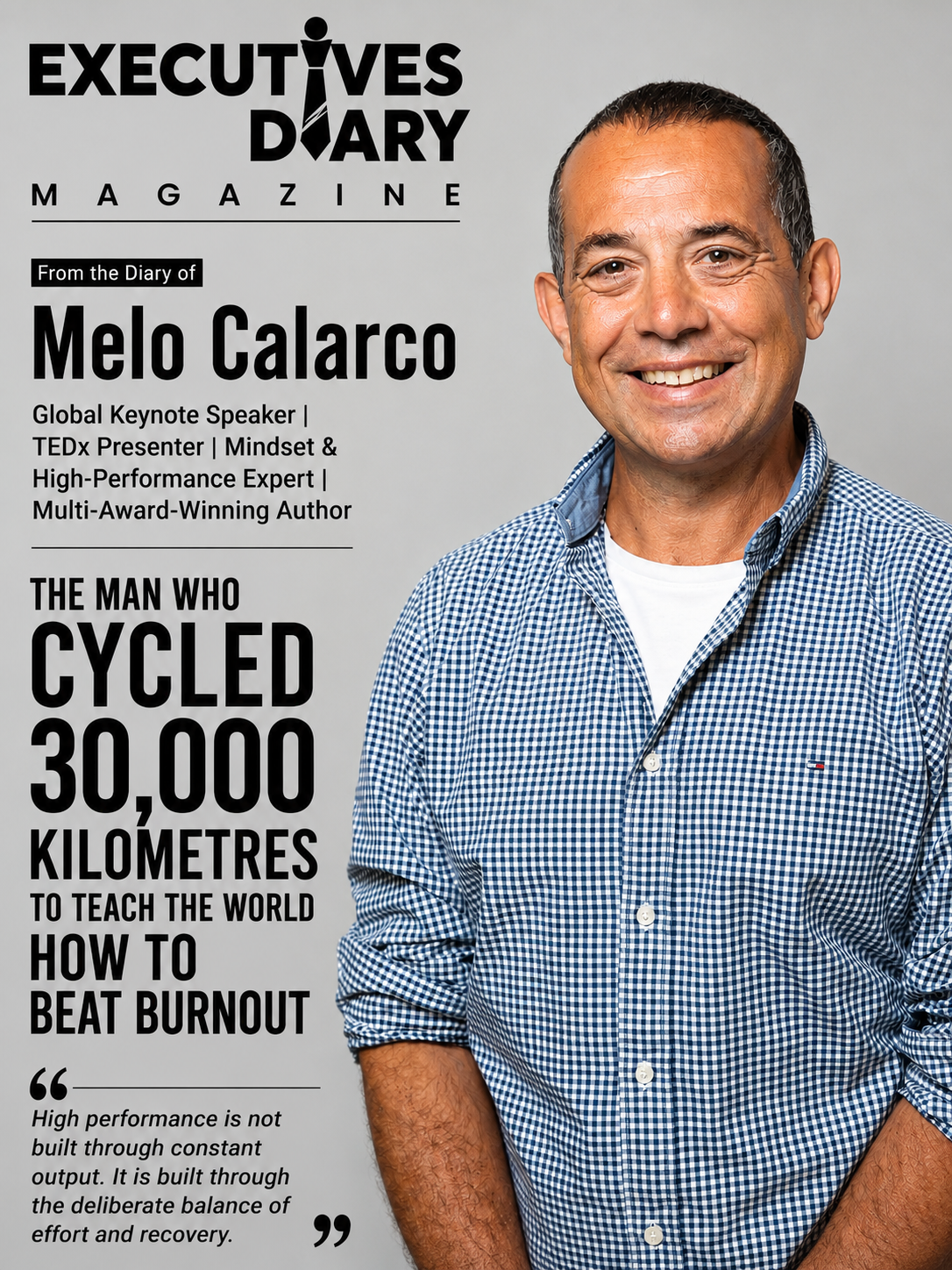
There is a moment, somewhere between exhaustion and collapse, where the human body delivers an unmistakable message. Stop now. Recover now. Or pay a price you cannot afford later. Most executives never push far enough to hear it clearly. Melo Calarco heard it on remote mountain passes, in high-pressure corporate environments, and during a confrontation in Rwanda where a soldier’s gun pressed against his ribs. Over 30,000 kilometres of cycling and trekking across five continents, he did not just survive those moments. He studied them. What he discovered about human limits is now quietly reshaping how leaders at LinkedIn, Deloitte, KPMG and other leading global organisations think about sustainable performance.
The Expert Built Through Extremes
Melo Calarco is a global keynote speaker, TEDx presenter, and multi-award-winning author whose corporate resilience programs are sought by Fortune 500 companies, Olympic athletes, and executive teams worldwide. For more than 25 years, he has operated at the intersection of clinical mental health, extreme endurance, and elite performance coaching. His authority comes from a rare combination: someone who has worked in psychiatric clinics, studied Eastern philosophies and tested the outer limits of human resilience in environments where mental endurance meant survival.
From Psychiatric Clinics to Mountain Roads
Melo did not arrive at corporate performance through business school or consulting. He came through the clinical trenches. For nearly thirteen years, he designed and delivered mental health programs at various mental health clinics across Melbourne, delivering programs to patients managing depression, anxiety, and acute mental health problems. Day after day, he witnessed what happened when capable, committed people pushed past their breaking points without recovery, without support systems, and without permission to stop.
During the same period, he was teaching meditation, Tai Chi, and Qigong, bringing mindful practices into workplaces and everyday life since 1995. But the experiences that would define his approach were still ahead. Beginning in the early 2000s, Melo embarked on extended expeditions that would take him more than 30,000 kilometres across Europe, Asia, Africa, and beyond. These were not leisure trips. They were deliberate experiments in real-world resilience, testing himself mentally and physically against the harshest possible conditions. He learnt many of his life lessons on the road, and he also spent a lot of his time staying in monasteries and temples, immersing himself in the spiritual practices of the region.
There were near-death encounters, including an incident on the back roads of Africa that he talks about in his TEDx presentations. There were days when forward motion required the kind of mental regulation that no textbook could prepare him for. Each extreme situation added layers of insight about where the line exists between stress that strengthens and stress that destroys. Those lessons did not stay on the road. They became the foundation of his corporate methodology.
Solving the Crisis Hidden in Plain Sight
Around 2010, Melo launched his full-time practice and transitioned into facilitating corporate programs, speaking and coaching. Today, his programs operate inside some of the world’s most demanding professional environments. His client list includes Coca-Cola, LinkedIn, FedEx, Deloitte, KPMG, L’Oréal, and executive teams who understand performance matters but need sustainable ways to protect it. The formats range from one-hour sessions to twelve-month embedded programs. The core problem they bring him is almost always identical.
Technology has erased the boundaries between effort and recovery. The people most at risk are not the disengaged. They are the most committed, capable, and conscientious professionals who equate slowing down with falling behind.
When Melo enters an organisation, he does not begin with motivational presentations. He starts with a diagnosis. His process includes structured leadership interviews, confidential employee surveys, and gaining an understanding of workload patterns, communication habits, and cultural norms. He looks for systemic drivers rather than surface symptoms: role ambiguity, chronic lack of recovery, psychological safety gaps, and the invisible pressures that accumulate long before anyone mentions burnout.
Within 30 to 90 days of intervention, organisations typically see measurable improvements in team energy, leadership effectiveness, employee engagement, and communication quality.
His multi-award-winning book, Beating Burnout, Finding Balance, published by Wiley (2023), translates these insights for individual application. It combines neuroscience, mindfulness research, and stories gathered from mountain monasteries to executive boardrooms. One tool he shares widely in his corporate workshops is a 90-second breathing practice designed to regulate the nervous system during high-pressure moments.
“One leader told me it completely changed how they responded under pressure,” Melo recalls. “Instead of reacting impulsively, they found themselves calmer and more focused.” Recently, someone who downloaded the audio version from his website wrote to say the practice had not only changed his life but saved it. “This is what inspires me to continue doing this work for the rest of my life,” Melo says.
Scott Chapman, ex-CEO of the Royal Flying Doctor Service, describes Melo’s rare ability to guide individuals on reflective journeys to surprising destinations, building safe environments where people open up and leave with practical tools. Tony Bongiorno of Bongiorno Financial Group has engaged his programs for over 10 years, citing measurable gains in team focus and self-awareness.
What Elite Athletes Know That Executives Forget
Olympic training programs structure entire systems around this principle. They track recovery as carefully as they track exertion. They protect rest with the same discipline they apply to preparation.
The organisations now paying attention to this principle include some of the most recognized names in global business. The ones still running their people at maximum output without recovery strategies are producing exactly the kind of results Melo spent many years teaching in corporate environments and treating in psychiatric facilities. The road taught him that the body always sends clear signals before it breaks. The only question is whether anyone with authority is listening closely enough to respond.