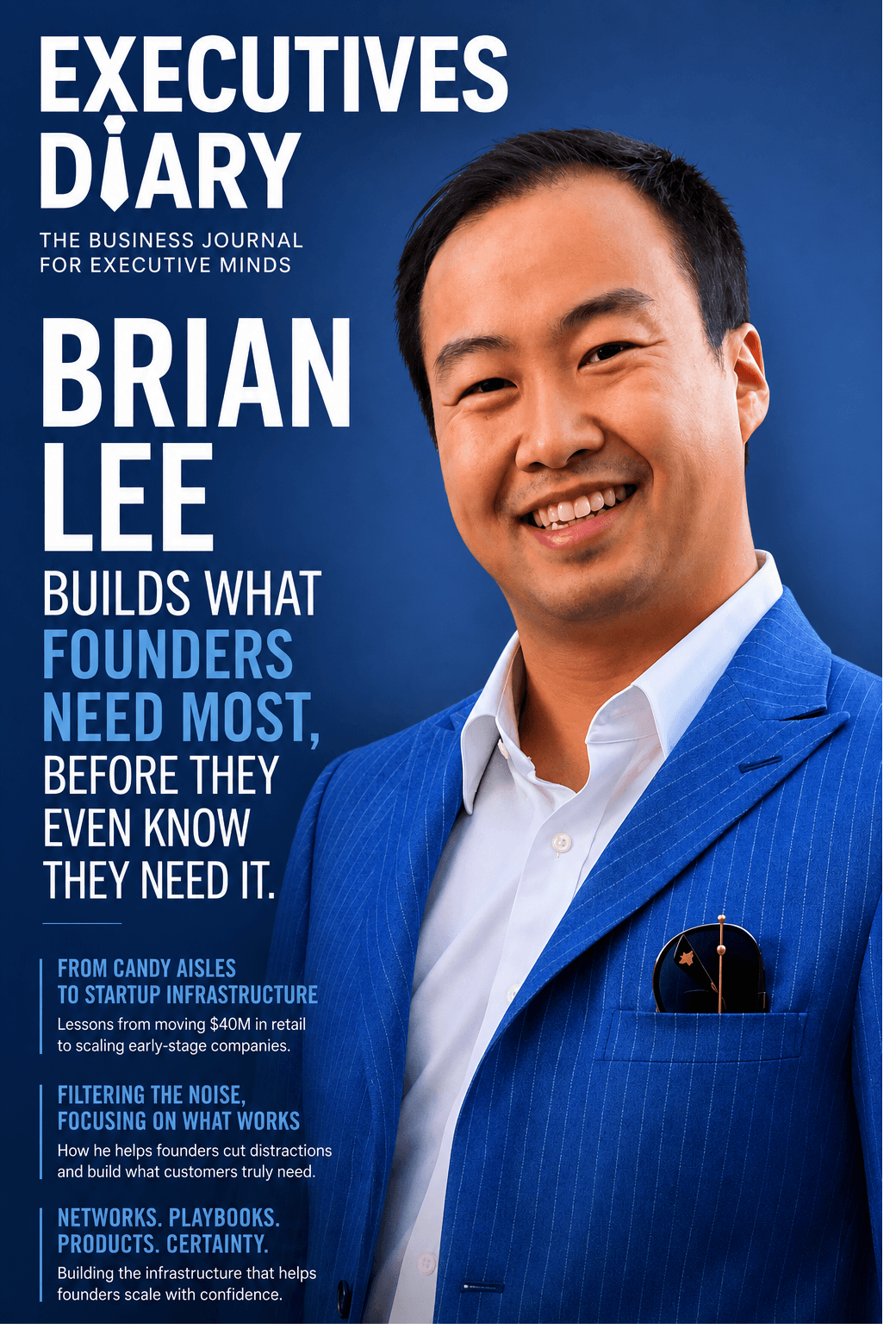
Brian Lee Spent a Decade Selling Candy. Now He Builds the Infrastructure Founders Wish They Had on Day One. Moving millions of dollars of consumer goods through massive retail chains teaches a person something fundamental about human behavior. You learn very quickly what people actually buy versus what they say they want. Brian Lee took those brutal retail lessons from the aisles of national grocery chains and carried them directly into the startup ecosystem. The transition was highly unusual, but the underlying commercial mechanics remained exactly the same.
Filtering the Startup Echo Chamber
Today, Brian Lee is the Co-Founder and Managing Partner at Gildre and the Chief Product Officer at Roamli. He operates as an advisor, investor, and builder for founders scaling toward their first five million in annual recurring revenue. His career is defined by a singular focus on stripping away the distractions that kill early-stage companies and replacing them with operational certainty.
From Regional Retail to Global Accelerators
The foundation of his approach was not built in Silicon Valley. It was constructed across thirty-five states while managing forty million dollars in annual sales for Ferrara and The Hershey Company. He spent years solely responsible for growth, forecasting, and planning for national retailers like Aldi and SuperValu. In that high-volume environment, there is no room for theoretical product-market fit. A product either moves off the physical shelf or it dies.
He learned to analyze market-wide sales data to develop incremental programming and drive revenue. He managed profit and loss statements across branded, seasonal, and private label categories. That intense commercial discipline eventually led him to the technology sector. He joined Astralabs as Head of Product, overseeing the development of an accelerator supporting hundreds of startups per cohort with a $500M warrant portfolio.
The shift from consumer packaged goods to software as a service required a completely different vocabulary but very similar commercial instincts. He managed engineering teams, launched two software products that exceeded year-one sales expectations by three hundred percent, and guided founders through complex scaling challenges. He eventually guided two companies to successful exits, generating a nine-times aggregate return.
Those financial milestones validated his methodology entirely. But the real value was the pattern recognition he developed along the way. He saw exactly why certain companies scaled effortlessly while others burned capital on the wrong priorities.
Building the Playbook for Founder Certainty
That precise pattern recognition is the engine behind his current work. Through Gildre, Brian Lee builds networks and playbooks for founders who execute. He serves as an Entrepreneur in Residence at Watson Institute and has mentored companies through accelerators including Techstars and Founder Institute. His entire focus is on reducing the expensive trial and error that plagues early-stage operators.
He sees community as a distinct competitive advantage, but only when it is built correctly. “Often times community builders mistake activity and noise for authentic engagement,” he notes. He believes that genuine rituals and habits are what keep members returning. When founders are surrounded by peers who have actually built and scaled companies, their decision-making accelerates dramatically.
At Roamli, he applies this same rigor to product development. He established a system that increased the engineering delivery rate by twenty percent simply by listening better. “There’s a lot of noise out there when it comes to every facet of being a founder, so being able to filter through the feedback (especially from users) helps create a better product without waiting months at a time,” he explains. By identifying the outliers and focusing strictly on essential features, he prevents his teams from building products nobody wants to use.
This philosophy extends directly to the founders he advises on go-to-market strategy. He frequently helps entrepreneurs navigate the difficult shift from founder-led sales to building a dynamic growth engine. “The most practical advice I would share is make sure you are building a ‘need-to-have’ instead of a ‘nice-to-have’ solution, and listen to your customers,” he says. That clarity forces founders to confront whether their product actually solves a painful problem or merely acts as a temporary distraction.
The Mechanics of Undeniable Demand
The gap between selling physical products and scaling digital platforms is incredibly wide. Yet the fundamental truth remains the same across both environments. Whether managing a national retail account or advising a software founder on early revenue, success requires ignoring the noise and focusing entirely on what the customer actually values.
Brian Lee spent his early career figuring out how to get products onto store shelves. Now he builds the infrastructure that keeps startups from falling off the map entirely. He replaces the chaos of early-stage building with the quiet confidence of knowing exactly what to do next.
Key Takeaways / Playbook
- 1. Filter the Noise: “There’s a lot of noise out there when it comes to every facet of being a founder, so being able to filter through the feedback (especially from users) helps create a better product without waiting months at a time.”
- 2. Core Strategic Imperative: “The most practical advice I would share is make sure you are building a ‘need-to-have’ instead of a ‘nice-to-have’ solution, and listen to your customers.”