Daniel Murray
The Man Who Turned Empathy Into MathOn a Tuesday morning in a Sydney boardroom, a senior executive sits across from a consultant. The executive has built a career on precision. Numbers don’t lie. Data doesn’t disappoint. But the spreadsheet in front of him tells a story his instincts refuse to accept. The project is technically sound. The timeline is realistic. The budget is locked. Everything should work.
It doesn’t.
The team moves slowly. Deadlines slip. People push back on decisions that look perfect on paper. The executive leans back in his chair and asks the consultant a question he already knows the answer to: “Why won’t they just do the work?”
The consultant leans forward. “What if the people don’t want to?”
That question hangs in the air like a door opening onto a room the executive has never entered. It seems obvious now. Obvious and impossible. Because if you cannot measure something, how do you manage it? If you cannot control it, how do you lead it?
This is the gap that swallows projects. This is the space where logic and reality collide.
Meet Daniel Murray
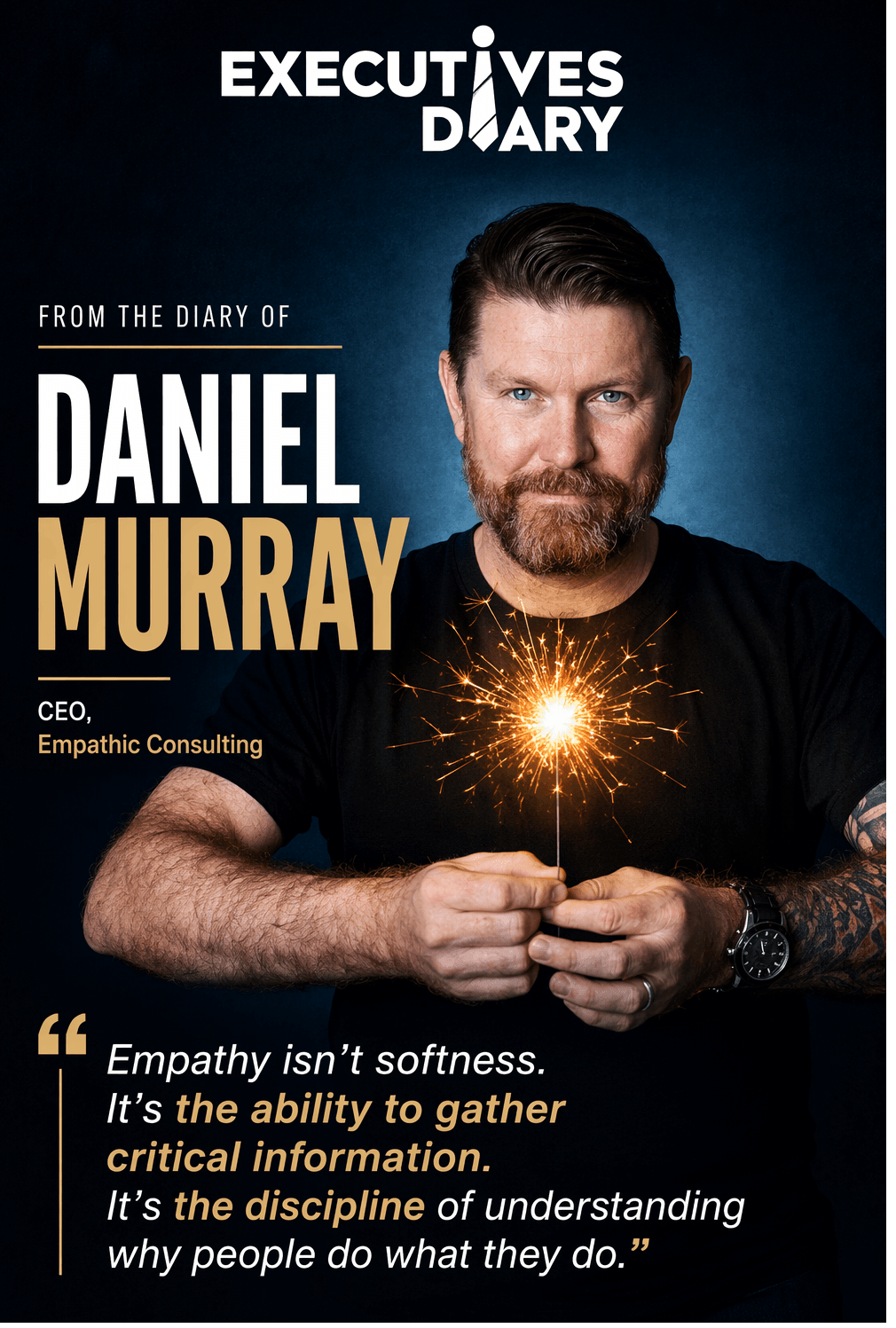
Daniel Murray is the CEO of Empathic Consulting and a keynote speaker who has spent the last eight years teaching executives that empathy is not the opposite of performance. It is the key to it. He is a mathematician by training, an MBA by credential, and a student of human behavior by choice. He moves through the world asking one relentless question: What if we treated people like the complex, dynamic, unpredictable beings they actually are?

The Moment Numbers Stopped Being Enough
Daniel grew up without much. His early years were defined by constraint, by making do, by understanding the weight of limited resources. Mathematics found him young and made sense immediately. Numbers were clean. Numbers were honest. Numbers didn’t change their minds.
He pursued that clarity through university. A degree in mathematics from the University of Queensland felt like holding a key to the world. It was. But not in the way he expected.
The key opened doors in corporate strategy and management consulting. For years, he built logical frameworks and data-driven plans. He was good at it. His work landed at major banks and large organizations. He could identify inefficiencies, model solutions, forecast outcomes. On paper, everything he designed should have worked.
Then he kept watching it fail.
Not the math. The execution. The implementation. The moment when a brilliant plan met a room full of people who did not believe in it, did not understand it, or did not care enough to fight for it. Over and over, he sat in client meetings reviewing resource plans and asking: “What if the people don’t want to do the work?”
The question stopped being rhetorical. It became obsessive.
He enrolled in an MBA. That was not enough. He went deeper into behavioral economics. Then deeper still into neuroscience and psychology. For a decade, he did not build new strategies. He studied why existing strategies failed. He studied people.
What he discovered was not a flaw in his analysis. It was a blind spot in his worldview. He had treated people like fixed resources in an equation. They were not. They were dynamic, weird, complex, driven by desires and fears and needs that no spreadsheet could capture.
If he could understand what people actually wanted, what actually drove them, what made them willing to go the extra mile, then he could close the gap. Not with better math. With better questions.
The Process That Changed Everything
By the early 2010s, Daniel was running the Group Advisory division at Commonwealth Bank, leading major strategic initiatives and managing teams across complex transformations. He was still the mathematician. He was becoming something else too.
He moved into the IAG Foundation in 2014, managing programs that connected corporate employees with community work and charitable initiatives. The experience deepened something that had started in his twenties. While traveling through Thailand in his early 20s, he had caught an overnight train from Chiang Mai to Bangkok. In the early hours of the morning, exhausted and disoriented, he awoke to a conductor collecting payment for meals. He reached for his wallet and found nothing. Panic came instantly.
But the conductor looked at him. Really looked at him. She saw the person before her, not the transaction. She reached into her own purse, paid for his meal from her own money, touched his shoulder gently, and continued down the aisle.
That moment shaped everything that followed. For nearly 20 years, Daniel has supported Hands Across the Water, a charity serving vulnerable children in Thailand. But the charity has given him far more than he has given it. Every connection, every act of genuine empathy he has witnessed, has taught him something essential about how humans actually work.
In 2018, he launched Empathic Consulting and stepped fully into his calling. He built something he calls the Empathy Process™. It is not a philosophy. It is not a feeling. It is a practical, evidence-based model that makes empathy learnable, implementable, and measurable.
To executives who spent their entire careers running on logic, he makes a radical claim: “Empathy isn’t softness. It’s the ability to gather critical information. It’s the discipline of understanding why people do what they do.”
The mathematical mind understands immediately. Data is data. Whether it lives in a spreadsheet or lives in a person’s values, fears, and motivations, it is still information waiting to be understood. The difference is that most leaders stop gathering it too early.
Why Uncertainty Breaks Trust
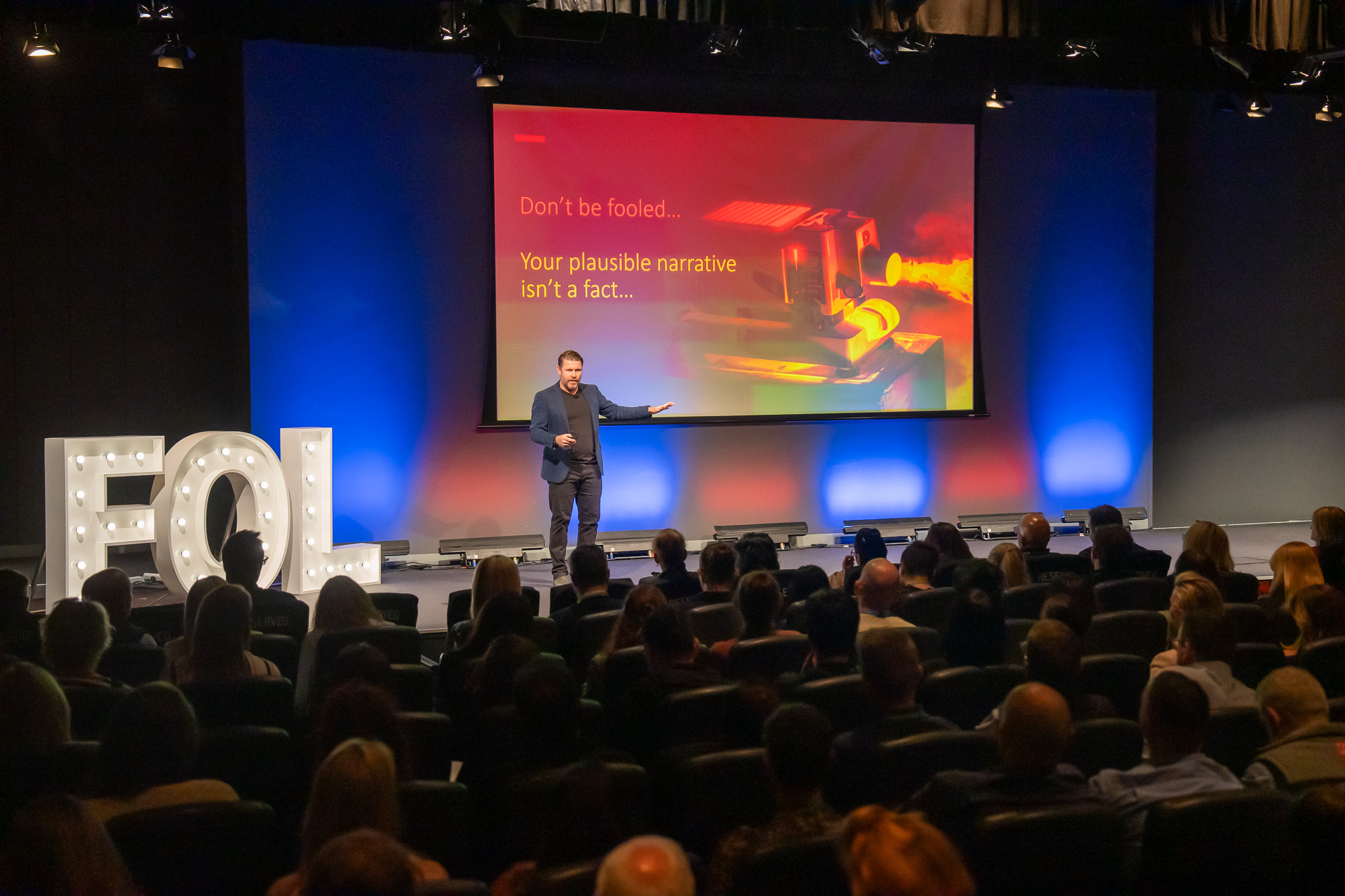
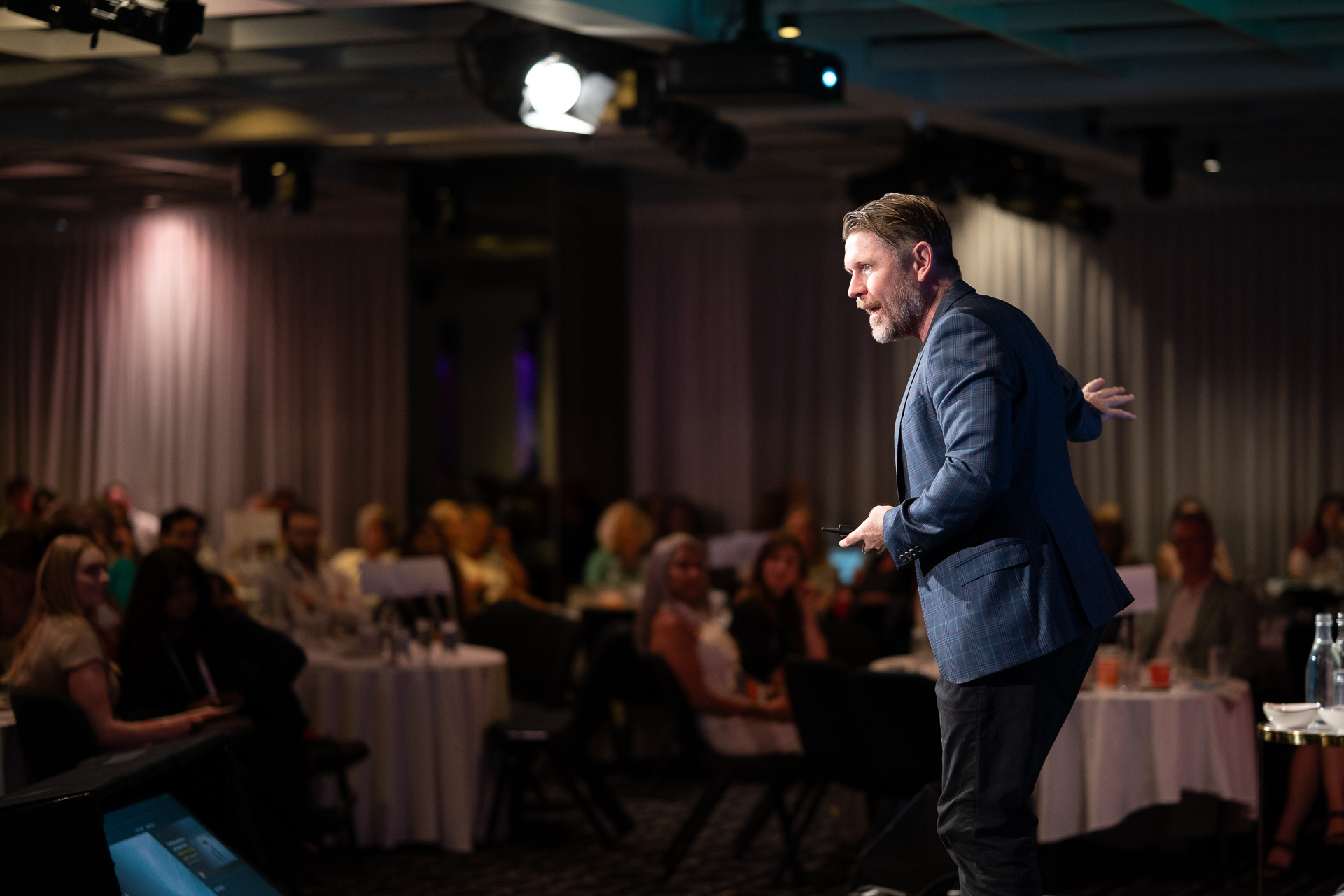
Daniel speaks on keynote stages across mining companies, banks, government departments, and global conferences. His message is always precise. Empathy is not the opposite of performance. It is the mechanism that unlocks it.
But the core insight that drives his work is neuroscience, not sentiment. He has studied what happens inside the human brain when people face change, when they feel uncertain, when they do not know if they can trust their leader.
“We don’t hate change,” he explains. “What humans are much more fearful of is uncertainty. We don’t like not knowing. This includes not knowing if I can trust my leader, if they have my back, if they care about me.”
Most leaders get this backwards. When change is coming, they withdraw. They shield their people from information they believe will frighten them. They maintain control through silence. They think they are protecting their teams.
They are actually creating the thing they fear most.
That silence becomes a vacuum. Into that vacuum rushes speculation, anxiety, and the slow erosion of trust. People stop believing their leader has answers because their leader stopped speaking. The uncertainty grows. Control tightens. The gap widens.
An empathic leader does something harder. They show up. They speak truth. They have the courage to say “I don’t know” and mean it. They create what Daniel calls transparency and safety. Not because it feels good. Because it works.
“In times of uncertainty, trust is being stress tested,” Daniel says. “Transparency and safety are critical elements of trusted leadership and they are more critical than ever during times of change.”
The mathematics of this is elegant. Remove silence. Add truth. Watch trust stabilize. Watch performance improve. It is not magic. It is information flow.
The Murray Playbook: 5 Lessons
- 1. Systemic View: Stop treating people like resources and start treating them like information systems. People are not fixed inputs in your equation. They are complex, dynamic sources of data about what actually motivates performance.
- 2. Curiosity Over Control: Replace the question “How do I control this?” with “What do I need to understand?” Curiosity is harder than control. It is also more effective.
- 3. Break the Silence: In times of change, silence creates uncertainty, and uncertainty kills trust. Tell people the truth, even when the truth is that you don’t know what comes next.
- 4. Rigorous Empathy: Empathy is not the opposite of rigor—it is a disciplined way of gathering critical information. Apply the same precision to understanding people that you apply to understanding markets.
- 5. Motivation by Connection: The people who go the extra mile are not motivated by compliance—they are motivated by connection. They need to feel seen, understood, and cared for by their leaders.
When Numbers Become Human
Years from now, when someone reads this article and thinks about their own leadership, what will shift?
Daniel hopes it is this: the realization that people are not algorithms to be decoded. They are wonderous. They are complex. They deserve to be understood with the same rigor that we apply to everything else in business.
He has spent 20 years learning from a woman on a train who saw him in his panic. He has spent a decade building a process that teaches hardened executives to do the same for others. And he believes, genuinely, that this moment in history demands it. AI will transform the world. But as machines learn to think like us, we may finally remember what it means to see like us.
The gap between perfect plans and human reality has never been wider. And it has never been more obvious that closing it requires something a mathematician spent half his career learning: the most rigorous discipline in business is not control. It is curiosity.