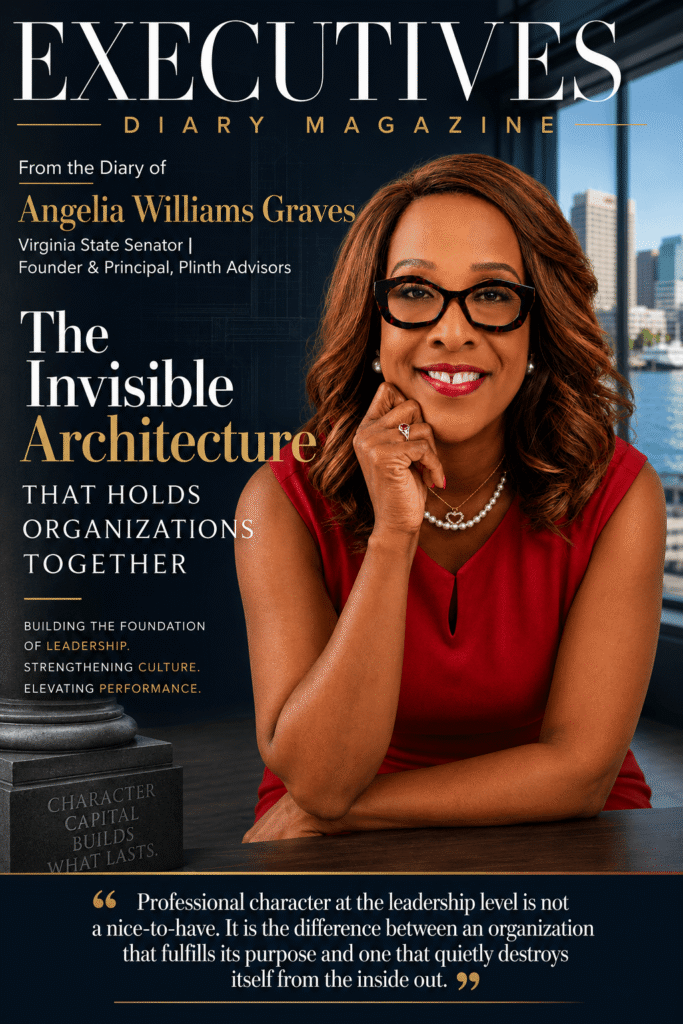
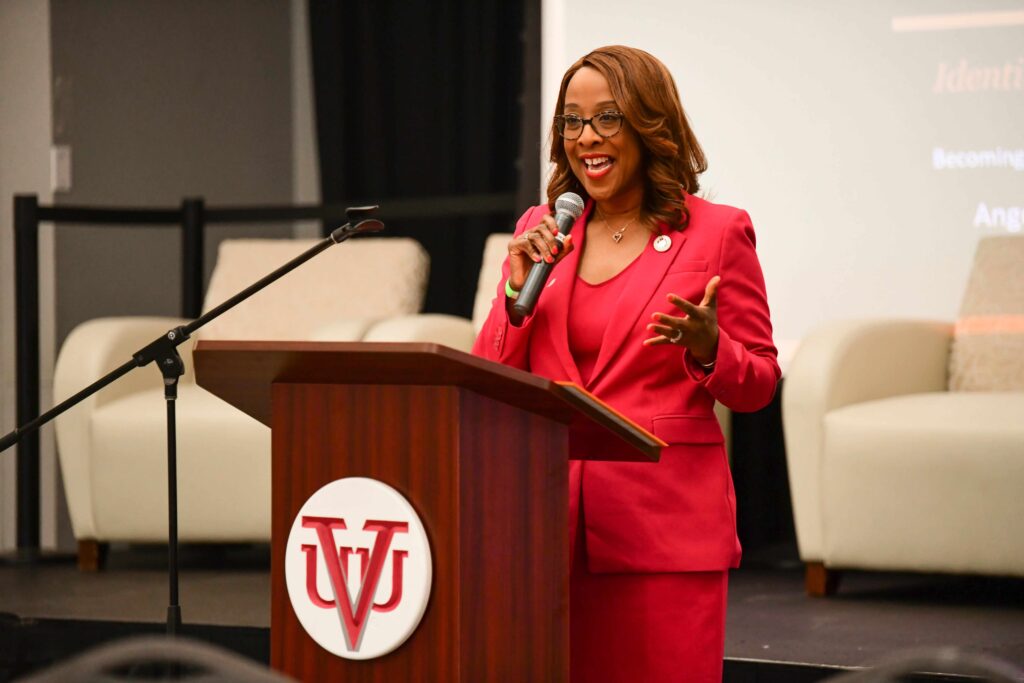
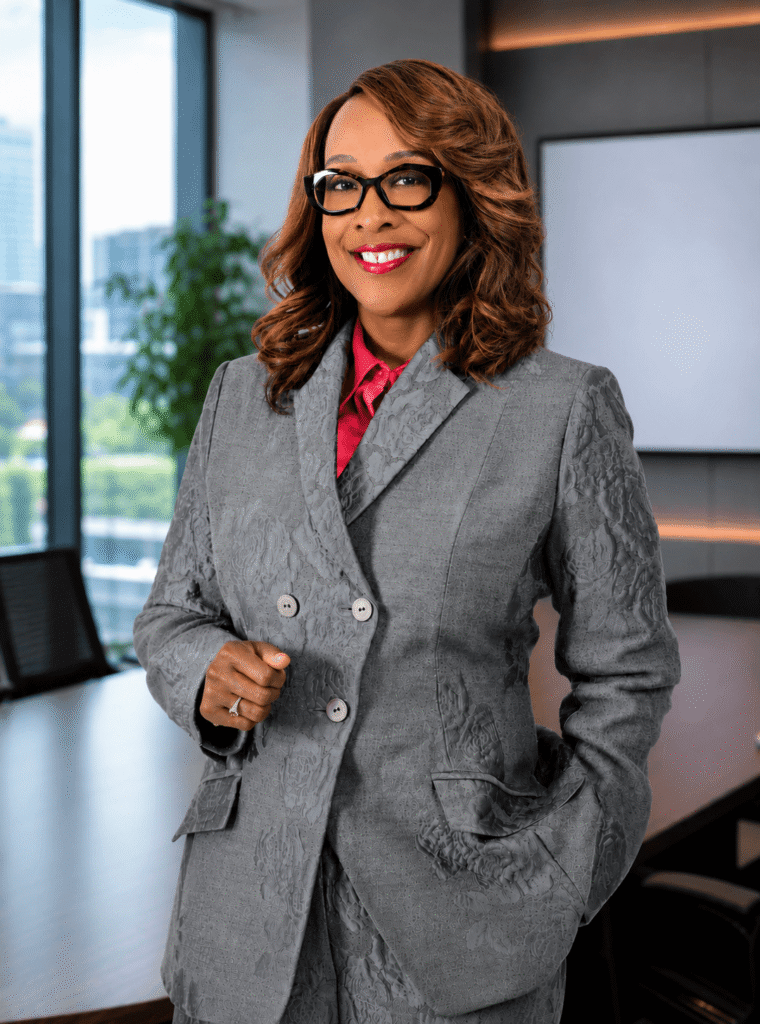
Who is Angelia Williams Graves?
Angelia Williams Graves has spent twenty-five years watching this pattern. Not in one company or one industry. Across retail floors and government offices, council chambers and boardrooms, in the spaces where people are trying to do real work and something invisible keeps getting in the way.
She is the Founder and Principal of Plinth Advisors, a workforce character and leadership-readiness advisory practice built on a conviction that most organizations have mistaken for soft skill:
“Professional character is not optional. It is the infrastructure of organizational performance.”
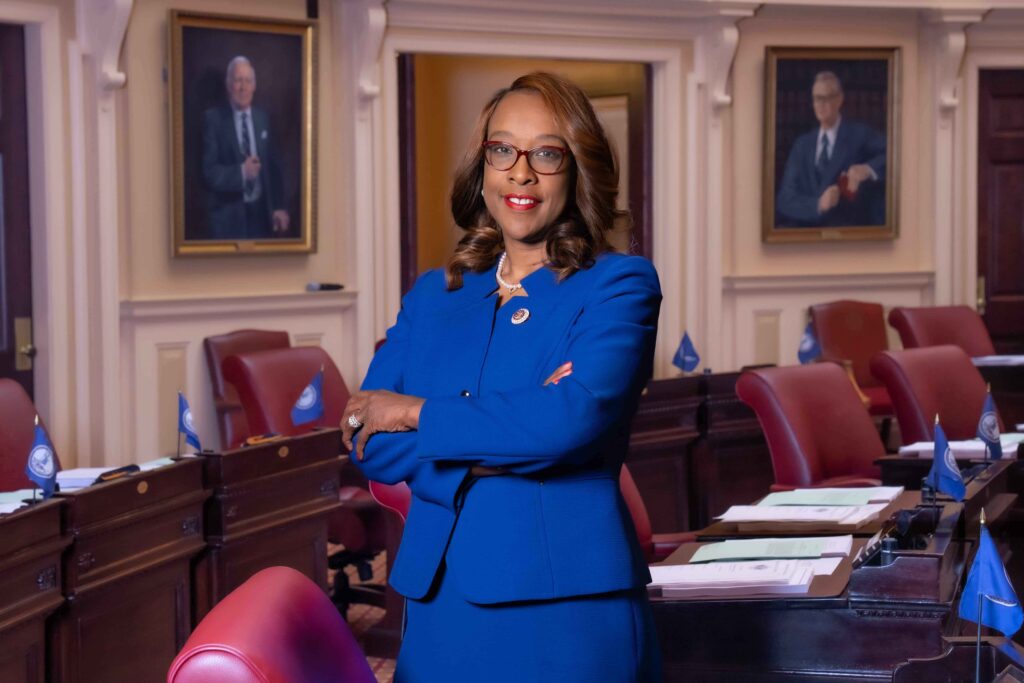
She is also a Virginia State Senator, a real estate broker, and someone who speaks with the clarity of someone who has seen what happens when leaders stop paying attention to what cannot be seen. She does not offer motivation. She offers diagnosis. And then she offers something harder: the work required to rebuild from the foundation up.
The conference room falls quiet. Twenty people. Twelve of them have been here for three years. Four arrived six months ago. And the newest member, smart and capable, just made a commitment she will not keep.
Everyone in the room knows it already. They can feel it in how she said the words, in the way her eyes moved sideways instead of forward, in the hesitation that lasted a half-second too long. She means well. She believes what she is saying in this moment. But something underneath is not solid enough to hold the weight.
The meeting moves forward. No one names what they felt. The manager makes a note. The team adjusts their expectations downward. And in the small, quiet ways that nobody measures, the culture shifts again.
This happens every day in organizations everywhere. Not because people are failing. Because the foundation beneath them was never built to hold weight.
Built by Conviction
Angelia grew up watching people who understood what invisible infrastructure meant. Her father was a pastor. Her mother was a missionary and schoolteacher. Both are gone now, but what they left behind shaped everything she does.
“They gave me a deep, genuine love for people and the conviction that character is not innate. It is taught. By parents. By mentors. By great managers. And it is not being taught anymore.”
She entered the workforce like most people do: prepared to pass tests, armed with credentials, ready to work hard. But no one told her that how she showed up mattered as much as what she could do. She learned the way most people learn it. Through mistakes. Through enough hard feedback from people who cared. Through years of watching how decisions actually get made in rooms where the official story and the real story never matched.
Her early career moved through real estate and local government service, then into city council, where she represented Norfolk’s Superward 7 for a decade. She moved into the Virginia House of Delegates in 2021. But the pattern she kept noticing did not change with titles or offices. It stayed the same.
Leaders who meant well but deflected blame downward. Teams told they were unified but functioning like strangers. Emerging professionals arriving with real potential and slowly absorbing the worst of what they saw modeled above them. The gap was not in what people could do. It was in who they were within the ecosystem. And no one was building that deliberately.
The moment everything crystallized came in 2024, while she was working with a cohort of Senate interns. Smart. Motivated. Technically capable. But missing something that every organization needs: the professional character foundation that determines whether capable people actually advance.
“The gap was not generational. It was structural. And it was fixable.”
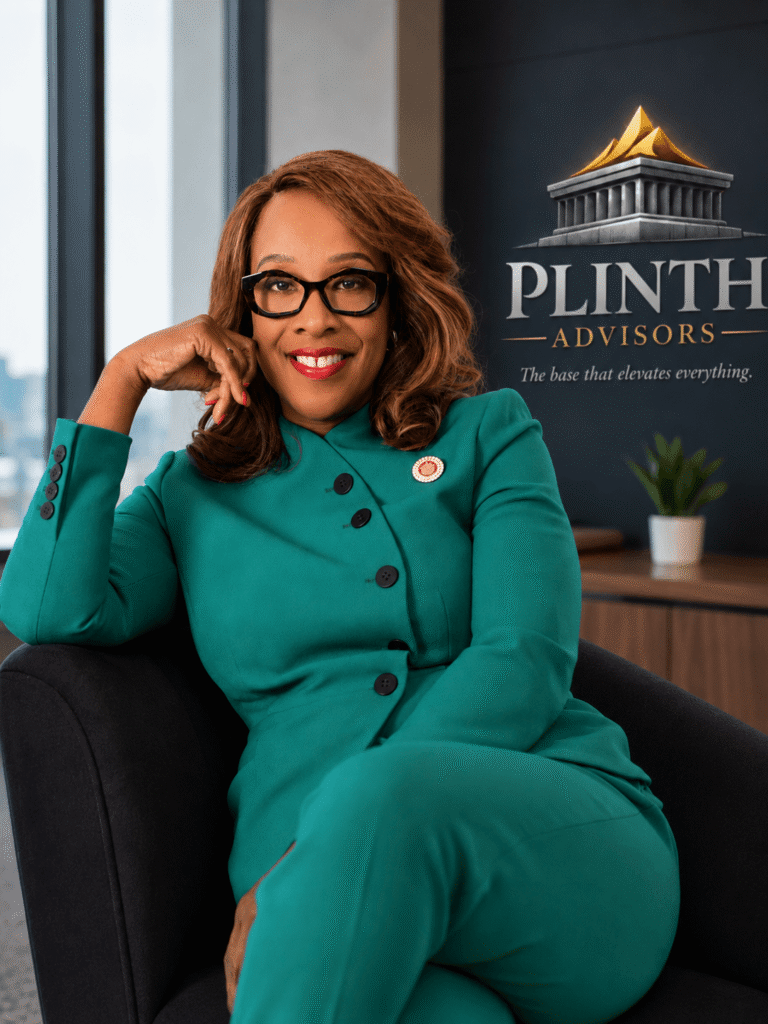
That recognition did not produce a business plan. It produced a moral obligation. Plinth Advisors exists because Angelia recognized something that most organizations treat as optional: the values and habits that sustain high-performing organizations are not innate. They are taught. They are built. And right now, most organizations are not doing that work.
Where the Real Work Begins
When Angelia walks into an organization, she starts with the same question every time: What is the one thing, if it were stronger, that would make everything else work better?
The answer is almost always the same. Not the strategy. Not the technology. Not the compensation structure. The professional character of the people inside it.
She calls it the plinth. Think of every trophy you have ever seen, every statue, every monument. Your eyes go straight to what is elevated. The figure. The achievement. The thing being celebrated. But nothing stands without the base beneath it. No one sees the plinth. No one remarks on it. Yet without it, there is nothing to elevate.
This is the core of what she teaches organizations and leaders through her proprietary Character Capital Framework™. At its center are the Eight Foundations of Character Capital: the habits, behaviors, and dispositions that distinguish people who struggle in their roles from those who grow through them, create value, and eventually lead others. These are not simply virtues. They are economic assets that shape performance, culture, and long-term organizational success.
Her work operates across three levels simultaneously. Speaking generates awareness. Consulting builds infrastructure. Coaching embeds the change. But the foundation is always the same: naming the gap that everyone feels and few people articulate.
Angelia sees what most leaders never slow down long enough to notice. She sees the exhaustion that builds in rooms where trust has been replaced by performance. She sees the way a single leader’s inability to own their mistakes infects entire organizations. She sees the moment when a young professional watches their manager deflect accountability and learns that this is how the game is played.
And she refuses to let organizations pretend that gap is not costing them.
“42% of voluntary departures are preventable,” she says. “The investment with exponential return isn’t another training program. It’s the foundation beneath it all.”
This conviction came from lived experience. Years ago, Angelia witnessed a leadership transition that revealed everything she needed to understand about what happens when professional character fails at the top. The losing candidate unraveled completely. Yelling. Cursing. Belittling. Then came a year of quiet sabotage, designed to undermine the new leader’s authority. And slowly, invisibly, the organization’s culture began to suffocate under the weight of one person’s inability to accept an outcome he did not control.
Angelia reached her limit.
She stood up in a meeting and made something clear to the executive team. Not an accusation. Not a rant. A direct appeal. She reminded everyone how esteemed the organization was, how meaningful its work had been, and how none of that could continue if leadership could not find a way to be the adults in the room. A house divided cannot stand. Leadership divided cannot lead.
She did not raise her voice. She did not need to. Everyone in that room knew exactly who the problem was.
What happened next changed her understanding of her own purpose. The leadership team engaged a crisis management consultant. They did the work. And Angelia walked away knowing two things with absolute clarity: the leader she would never become, and the work she was put here to do.
“Professional character at the leadership level is not a nice-to-have. It is the difference between an organization that fulfills its purpose and one that quietly destroys itself from the inside out.”
Most organizations fail to build a sustainable professional character culture because they treat it as a soft skill, which means they treat it as optional. A one-day training. A wellness initiative. Then quietly forgotten when the quarter gets hard. That is not culture building. That is a one-time investment in a permanent problem.
The accountability gap usually lives closest to the top. The behaviors that erode culture, the deflection, the inconsistency, the failure to follow through, are most visible and most damaging in leadership. But those are also the conversations no one wants to have. So organizations invest in developing people at the bottom while protecting the problem at the top.
Angelia’s approach is different. She helps organizations name it, measure it, and build it systematically. Not as a culture campaign. As a performance strategy. When professional character becomes the expectation, the standard, the organizational norm, it stops being something you have to motivate people toward. It becomes the way work gets done.
“Systems can be optimized, talent can be recruited, and culture initiatives can be launched,” she explains, “but if the people responsible for executing all of it lack the professional character to own their work, communicate with maturity, follow through under pressure, and grow when they are challenged, the investment above that base will not hold.”
This is not theoretical for her. She has watched it happen. She has watched capable people with no character foundation struggle in roles where they should have thrived. She has watched leaders with titles but no integrity poison entire teams. She has watched emerging professionals absorb the culture around them like a sponge, for better or worse, depending entirely on what was modeled above them.
The work she does now is designed to interrupt that cycle. To make visible what has always been invisible. To treat professional character the way every organization should treat financial capital: as something that can be built, measured, and invested in with intention.
Plinth Principles
Principle 1: Professional character is not a personality trait. It is a measurable economic asset that every organization can build deliberately.
Principle 2: The culture you actually have is not the one on the wall. It is the one lived in the hallway, and only leadership behavior can change it.
Principle 3: The gap between what someone can produce and who they are within an organization’s ecosystem determines whether they build the place or slowly take it apart.
Principle 4: Bad leadership does not stay contained at the top. It travels downward, teaching everyone who watches that this is how the system works.
Principle 5: A culture without accountability goes nowhere. It is a slow and expensive unraveling that most organizations never see coming until it is too late.
The Architecture That Holds
The conference room falls quiet again. This time, it is a different room, a different organization, one that has decided to do the work.
Someone makes a commitment. This time, the words are grounded. The eyes are steady. The hesitation is not there because this person understands something that was never explicitly taught before: follow-through is not a courtesy. It is a trust signal. People are tracking it. It tells them whether they can count on you. And in an organization where professional character is the standard, not the exception, this person has learned to show up differently.
The invisible architecture holds. Not because the individual is perfect. Because the foundation beneath them was built with intention, measured with clarity, and protected by leaders who understand that nothing elevates without it.
This is the legacy Angelia Williams Graves is building. Not a consulting firm. A foundation. One that outlasts her, reaches people she will never meet, through the leaders who were in the room when the real work began. The base that elevates everything starts with someone brave enough to name what everyone already knows and then do the work to rebuild it.
Angelia Williams Graves is a Virginia State Senator and the Founder and Principal of Plinth Advisors, a boutique advisory firm built on the belief that professional character is not a soft skill. It is an economic asset. Based in Norfolk, Virginia, she partners with mid-market and enterprise organizations, government agencies, and universities through keynote speaking, consulting, and cohort coaching. She is also the host of the Earned Equity podcast, launching in September 2026.