From the Diary of Carmen J. Ostermeier
Leadership Beyond Titles
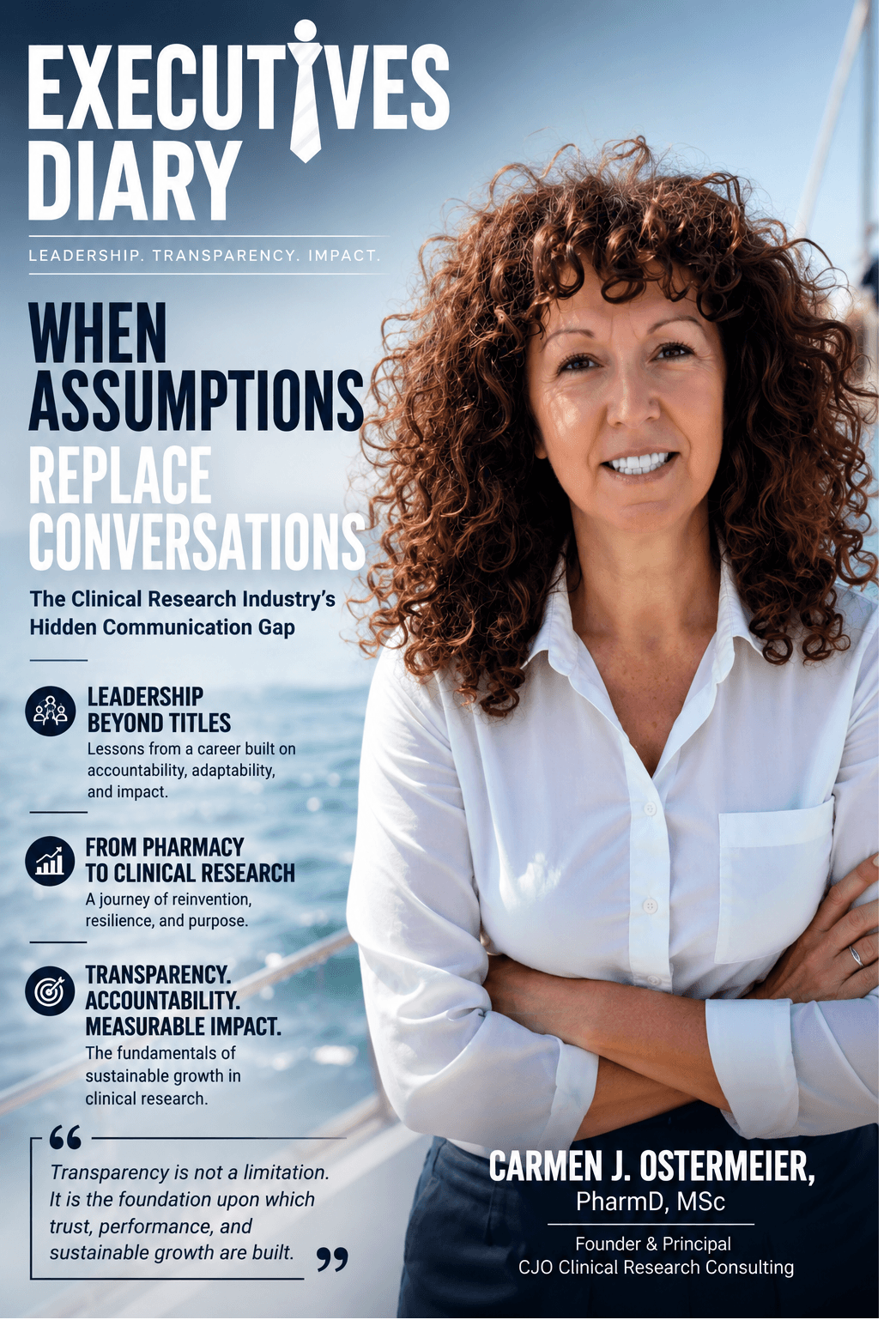
Leadership extends far beyond titles. Over more than three decades, Carmen J. Ostermeier has built her perspective through operational responsibility, continuous learning, community engagement, and a willingness to challenge assumptions. Today, she guides organizations to navigate complexity, embrace change, and transform potential into measurable performance.
Throughout her career, Carmen J. Ostermeier has worked at the critical juncture of strategy, operations, and execution across the pharmaceutical, medical device, and clinical research industries. From independent research sites and health systems to site management organizations and sponsors, one theme has remained consistent: the gap between what organizations aspire to achieve and what can be operationally demonstrated.
Rather than viewing this as a flaw unique to any one organization, Ostermeier sees it as one of the industry’s most persistent opportunities for improvement. Her work focuses on guiding stakeholders to translate complexity into clarity, transforming assumptions into measurable performance and enabling more informed decision-making across the clinical research ecosystem.
Today, as Founder and Principal of CJO Clinical Research Consulting, she applies more than three decades of international experience to advice organizations navigate growth, change, and operational complexity with greater transparency, accountability, and confidence.
Learning to Lead Through Change
Ostermeier’s professional foundation was built in Germany, where she trained as a pharmacist and pharmacologist at Universität Greifswald during a period of significant political and economic transformation. Entering the workforce in a rapidly changing environment reinforced the importance of adaptability, continuous learning, and the ability to evaluate complex situations beyond assumptions and appearances.
Her leadership journey began in operational roles within the healthcare sector at Alliance Healthcare Deutschland AG (formerly Andreae-Noris Zahn AG), a pharmaceutical wholesaler. Through a series of promotions earned through performance, initiative, and leadership potential, she advanced into increasingly responsible management positions and ultimately assumed responsibility for two of the company’s branch operations. Leading up to 140 employees while carrying full financial accountability provided an early and lasting education in people leadership, operational excellence, organizational complexity, and business responsibility.

After establishing herself in operational leadership, Ostermeier transitioned into pharmaceutical sales, business development, and key account management with APS Pharma and later the MENARINI Group- Berlin Chemie AG. Over more than a decade, she deepened her expertise in diabetes and metabolic health while gaining firsthand insight into how healthcare decisions are made across providers, healthcare systems, industry stakeholders, and patient communities.
Her commitment to diabetes care extended beyond traditional commercial responsibilities. Working closely with healthcare professionals, patients, caregivers, and advocacy organizations, she helped initiate and support educational programs designed to improve diabetes management and patient outcomes. Several of these initiatives later evolved into reimbursed healthcare programs that continue to benefit patients today.
These experiences shaped a perspective that continues to define her work.Whether working in pharmaceuticals, clinical research, or advisory roles, Ostermeier has consistently sought to connect strategic objectives with real-world operational and human outcomes.
The Decision That Required Starting Over
Relocating to the United States in 2009 was not a career move but a family decision. Having raised their children to independence, Ostermeier and her husband chose to pursue a long-held dream of building a new life in the United States. In doing so, they left behind established careers, professional networks, and the familiarity of a country they had always called home.
The transition brought unexpected challenges. While her education, healthcare experience, and leadership background had been highly valued in Germany, she quickly discovered that professional credentials earned in a country that no longer existed were not easily recognized within the U.S. system. Rather than viewing this as a setback, she treated it as an opportunity to adapt.
Recognizing that rebuilding her pharmaceutical and medical qualifications from the beginning would require significant time and investment, Ostermeier sought opportunities that would allow her to combine her leadership, business development, and healthcare experience while learning an entirely new industry environment. That search ultimately led her into clinical research.
Joining ProSciento in California marked the beginning of a new professional chapter. Over the following years, she advanced through increasingly responsible roles in business development and market intelligence while developing a deep understanding of the clinical research ecosystem. The experience reinforced a lesson that would remain central throughout her career: expertise may open doors, but adaptability, continuous learning, and the willingness to reinvent oneself create lasting opportunities.
Where Sponsor Expectations and Site Reality Stop Talking to Each Other
Her years at AMCR Institute and later Headlands Research provided a unique vantage point into the growing complexity of the clinical research ecosystem. As organizations expanded, sites joined networks, acquisitions accelerated, and stakeholder expectations evolved, Ostermeier found herself operating at the intersection of sponsors, research sites, healthcare providers, operational teams, and investors.
The experience reinforced an observation that would become central to her professional philosophy: “Many of the industry’s challenges are not rooted in a lack of expertise or innovation”, she notes, “but in a lack of transparent communication across stakeholder groups”. Different stakeholders often evaluate the same situation through entirely different operational, financial, regulatory, or strategic lenses. As a result, critical information can become filtered, softened, or reframed depending on the audience, making it increasingly difficult to align expectations with operational realities.
Rather than viewing this as an individual organizational issue, Ostermeier came to recognize it as a broader industry challenge. Sustainable progress requires not only better technology and processes, but also a greater willingness to discuss constraints, risks, and opportunities openly across the ecosystem. In her experience, meaningful solutions emerge most often when stakeholders move beyond defending positions and begin collaboratively examining the realities they collectively face.
Leading through periods of growth, acquisition, and organizational transformation strengthened her ability to connect these diverse perspectives. It also helped shape the cross-ecosystem view that defines her advisory work today: translating complexity into clarity, helping stakeholders understand one another more effectively, and turning fragmented information into actionable insight.
The Trust That Data Alone Cannot Build
Beyond her professional responsibilities, Ostermeier became deeply involved with diabetes-focused nonprofit organizations, including the American Diabetes Association (ADA) and JDRF, now Breakthrough T1D. What began as volunteer engagement evolved over time into leadership, advisory, fundraising, and community-building roles.
Through years of working alongside patients, families, caregivers, healthcare professionals, and advocates, she gained a perspective rarely visible through operational metrics alone. The experience reinforced her belief that healthcare and clinical research ultimately succeed or fail based on trust.
The distinction carries real consequences for every feasibility assessment, every enrollment projection, and every site selection based on population data alone. Leading fundraising initiatives, educational efforts, and community engagement programs – including a cycling team of more than 130 riders, many directly affected by diabetes – provided direct exposure to the hopes, challenges, and realities faced by the people clinical research seeks to serve.
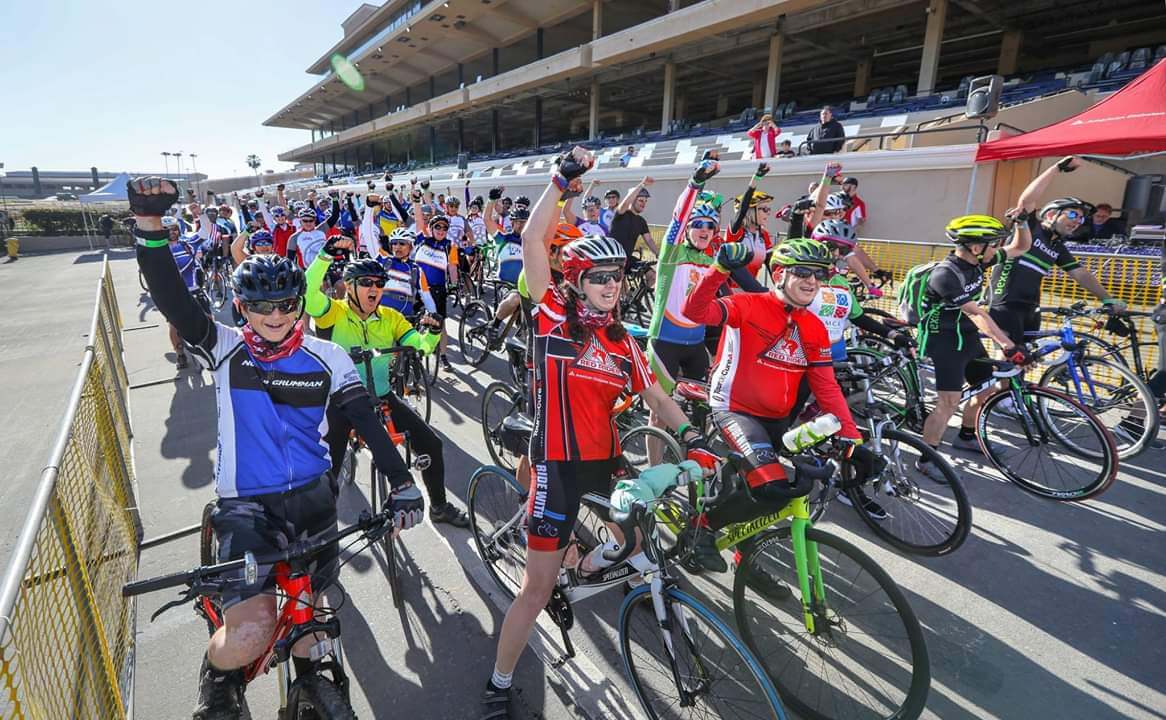
Today, she views community engagement not as a supporting activity but as an essential component of effective healthcare and clinical research. While technology, data, and operational excellence remain critical, meaningful progress begins with understanding and earning the trust of the communities at the center of the work.When Assumptions Replace Conversations In Ostermeier’s view, one of the industry’s greatest obstacles is not the absence of data but the assumptions built around it. Too often, stakeholders make decisions based on what they believe others are reporting, expecting, or filtering rather than engaging in transparent discussions about operational realities.
Over time, these assumptions can become embedded in processes, forecasts, and decision-making frameworks without ever being openly examined. The result is an environment where organizations increasingly respond to perceived expectations rather than measurable realities.
For Ostermeier, meaningful progress begins with a willingness to challenge those assumptions. Transparency is not a limitation, she explains. “It is the foundation upon which trust, performance, and sustainable growth are built”. Only then can stakeholders align expectations with reality and build more sustainable paths forward.
Technology, Transparency, and the Future of Execution
Ostermeier views technology and artificial intelligence as important catalysts for progress across healthcare and clinical research. However, she believes their greatest impact may not be automation itself, but the increasing visibility they bring to operational realities.
For decades, many decisions within the clinical research ecosystem have relied heavily on assumptions, fragmented information, and stakeholder-specific interpretations of performance. As data become more structured, connected, and accessible, the gap between perceived capabilities and demonstrated execution is becoming increasingly difficult to ignore.
In Ostermeier’s view, technology does not create operational excellence. It reveals it.
Organizations with strong processes, realistic forecasting, meaningful performance metrics, and transparent communication will benefit significantly from advances in technology and AI. Conversely, organizations relying on outdated assumptions, disconnected workflows, or inflated expectations may find those weaknesses exposed more quickly than ever before.
“Technology can accelerate progress”, she notes, “but it cannot replace operational honesty”. The organizations that will benefit most from AI are not those that adopt it fastest but those that arrive at it with honest operational foundations already in place.
For Ostermeier, the conversation should not focus on whether AI will transform clinical research. That transformation is already underway. The more important question is whether organizations are prepared to use these tools to better understand reality rather than simply creating more sophisticated ways to describe it.
The Future of Clinical Research: Pause. Reevaluate. Adapt. Together.
When reflecting on the future of clinical research, Ostermeier believes the industry’s greatest opportunity is not tied to a specific technology, organizational model, or regulatory change. Instead, she sees a need for stakeholders across the ecosystem to periodically pause, reassess the realities of a rapidly changing environment, and collectively evaluate whether current priorities still align with the outcomes they seek to achieve.
Clinical research operates within an increasingly complex landscape shaped not only by scientific and technological advances, but also by shifting geopolitical dynamics, evolving regulatory frameworks, economic pressures, demographic changes, and growing expectations from patients and healthcare providers. As these forces continue to reshape the global environment, organizations naturally adapt. Research activities move to regions with different capabilities, regulatory requirements, patient access, or economic advantages. Such adaptation is neither unusual nor inherently problematic, it is a characteristic of every dynamic system.
However, Ostermeier believes it is important to periodically examine whether adaptations are solving underlying challenges or simply relocating them. Sustainable progress requires more than responding to change. It requires understanding why change is occurring, evaluating its broader implications, and ensuring that short-term solutions remain aligned with long-term objectives.
“The future belongs to organizations willing to replace assumptions with measurable reality”, she states. “Those are the organizations that will remain trusted partners in an environment where performance is increasingly visible”. For Ostermeier, sustainable progress requires transparency, continuous reassessment, and a willingness to challenge assumptions without abandoning collaboration. Most importantly, it requires readiness for change, the ability to adapt strategies, structures, and priorities as circumstances evolve while remaining connected to a shared purpose.
In an increasingly interconnected global research environment, she believes agility begins with understanding where we stand today, clarity around where we want to go, and the collective willingness to adjust course when conditions inevitably change.
Leadership Beyond Titles
After decades of leadership roles across healthcare, pharmaceuticals, clinical research, and community organizations, Ostermeier remains cautious of viewing leadership as a destination. In her experience, leadership is neither granted by a title nor defined by organizational hierarchy. It is earned over time through accountability, respect, trust, continuous learning, and a readiness to adapt. Leadership develops through experience, challenges, setbacks, and the willingness to continue moving forward when certainty is no longer available.
She often compares leadership to standing on the bridge of a ship. A trusted captain must remain aware of both the factors within control -people, processes, technology, and operations,and the forces that cannot be controlled, from changing conditions to unexpected challenges. Effective leadership is not measured by the absence of adversity. It is revealed by how leaders prepare for uncertainty, respond to setbacks, and continue learning from circumstances they cannot fully control.
For Ostermeier, leadership begins with a genuine passion for people regardless of role, status, background, or perspective. It requires listening, learning, and creating environments where different viewpoints can be shared openly and without judgment. It also requires the humility to recognize that no individual, organization, or industry possesses all the answers.
Throughout her career, one conviction has remained constant: knowledge gains value only when it is shared. Progress occurs when people challenge assumptions without attacking one another, remain curious enough to keep learning, and work together toward a common purpose.
In a world defined by constant change, Ostermeier believes the most effective leaders combine clarity of purpose with a readiness for change, remaining grounded in their values while staying adaptable enough to navigate whatever lies beyond the horizon.
The Carmen J. Playbook: 6 Lessons
- 1. On True Leadership: “Meaningful leadership is not created by titles alone. It is earned through experience, accountability, continuous learning, and a genuine understanding of the people we serve.”
- 2. On Clinical Frameworks: “Patient access is not the same as patient existence.”
- 3. On Operations: “Transparency is not a limitation. It is the foundation upon which trust, performance, and sustainable growth are built.”
- 4. On Strategic Alignment: “Many of the industry’s challenges are not rooted in a lack of expertise or innovation, but in a lack of transparent communication across stakeholder groups.”
- 5. On Technological Shifts: “Technology can accelerate progress, but it cannot replace operational honesty.”
- 6. On Execution Goals: “The future belongs to organizations willing to replace assumptions with measurable reality.”